
The journal
What a WDT tool does for espresso
A clear, practical explanation of how a WDT tool redistributes grounds through the puck, where it fits in the workflow, and its limits.
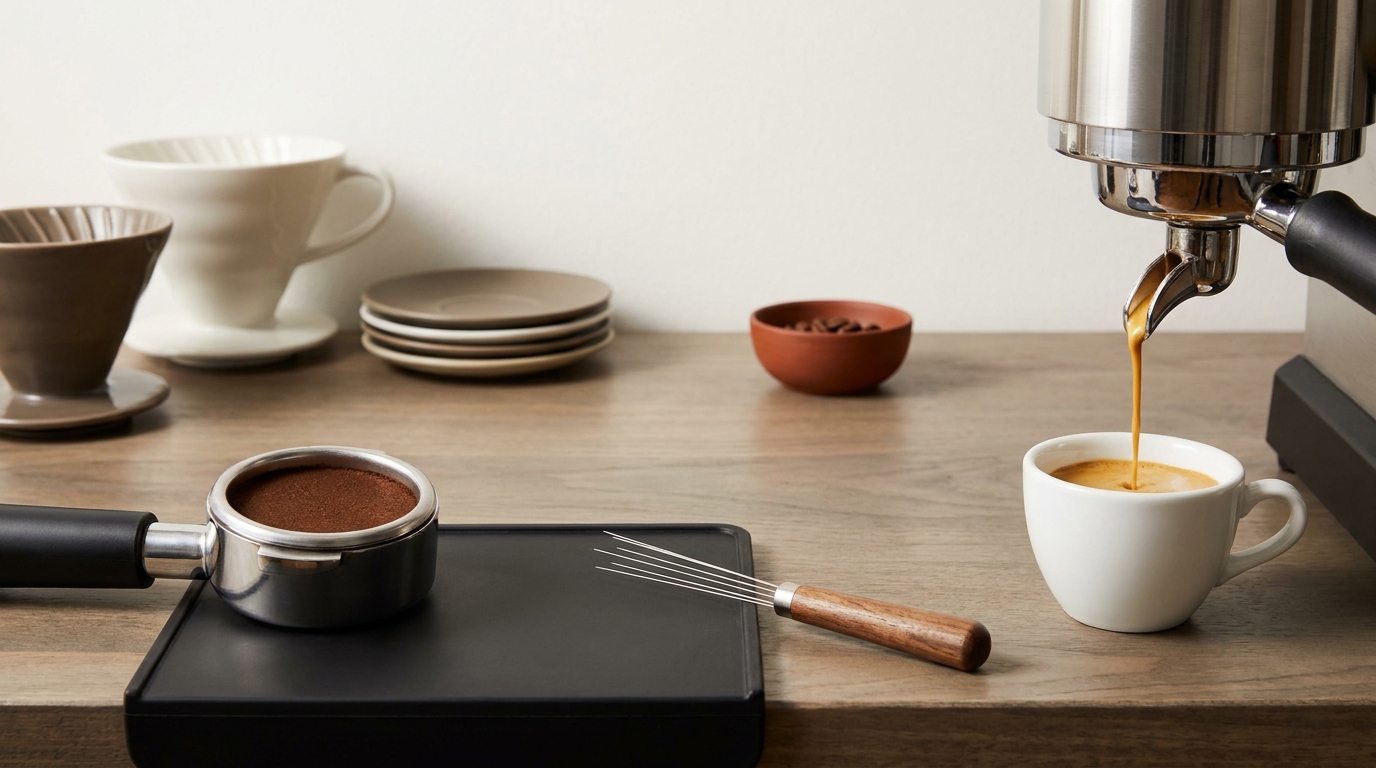
A WDT tool uses fine needles to break up clumps and redistribute coffee through the full depth of the basket before tamping. The goal is a more uniform coffee bed so water flows more evenly, which can reduce the risk of channeling when distribution was a weak point in your prep Pesado 58.5 WDT guide, HiBREW WDT guide.
What it actually does inside the puck
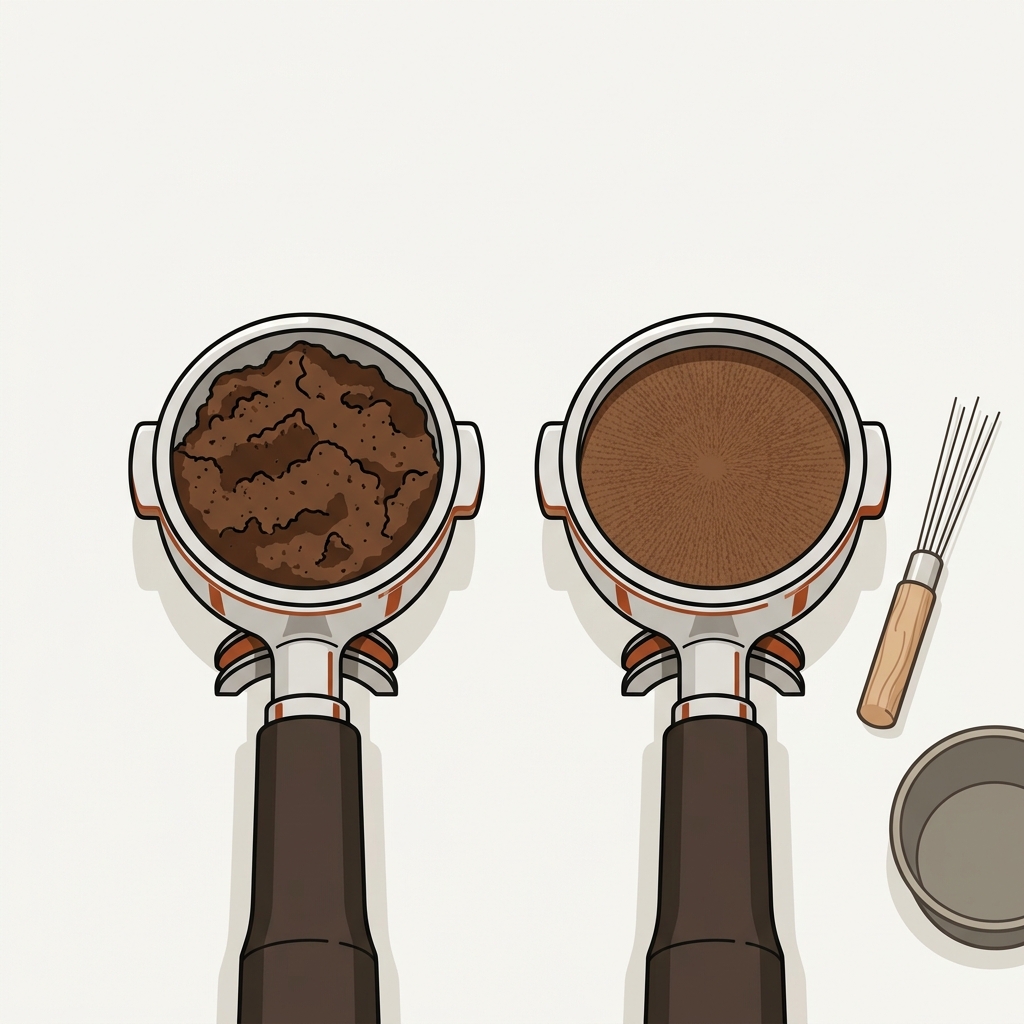
Ground coffee can clump during grinding and dosing. A WDT tool’s fine needles move through the grounds to separate those clusters and redistribute material throughout the basket, not just on the surface Pesado 58.5 WDT guide. This helps reduce density pockets that can steer water into narrow paths. By contrast, a surface distributor levels the top layer; WDT acts through the depth of the bed Bariscope: distributor vs WDT.
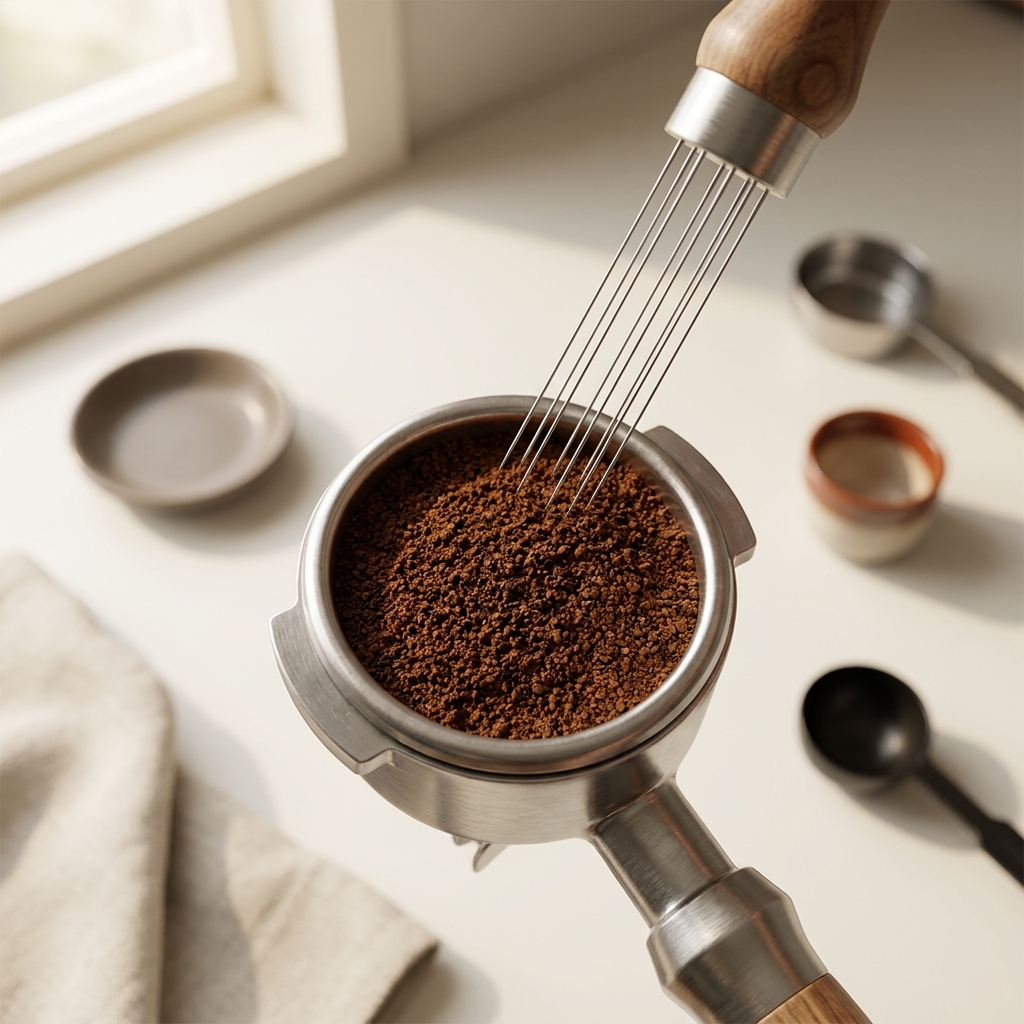
A simple, reliable WDT workflow
1) Dose and prep
Grind your measured dose into the basket. Keeping dose and yield consistent helps you see what WDT changes. If you’re not already using one, a scale makes this easy Do I need a coffee scale for espresso?.
2) Declump and redistribute (WDT)
Insert the WDT needles and use gentle, controlled motions that reach both the surface and the lower layers to break up visible and hidden clumps. A dosing ring can help keep grounds contained while you work HiBREW WDT guide, Pesado 58.5 WDT guide.
3) Level the surface
After WDT, level the top of the bed so tamping pressure will be even. You can use a distributor to flatten the surface or carefully level by hand. Do WDT first, then level, then tamp Bariscope: distributor vs WDT.
4) Tamp and brew
Tamp evenly to create a compact, level puck, then pull your shot using your usual recipe Pesado 58.5 WDT guide.
5) Assess the result
Look for a steadier, non-spurting flow and more repeatable shot times when distribution was previously inconsistent. A bottomless portafilter can make channeling signs easier to see Pesado 58.5 WDT guide, HiBREW WDT guide.
When WDT helps most, and its limits
WDT is particularly helpful if your grinder tends to produce clumps, you’re using very fine settings, or you see signs of channeling or erratic shot times. It addresses one source of uneven flow by improving distribution before tamping Pesado 58.5 WDT guide, HiBREW WDT guide.
It’s not a cure-all. WDT will not fix an unsuitable grind size, inconsistent dosing, or uneven tamping, and it cannot eliminate every possible cause of channeling Pesado 58.5 WDT guide. If your shots are already consistent and you mainly need a flat surface before tamping, a surface distributor handles that job Bariscope: distributor vs WDT.
Common mistakes to avoid
- Only stirring the top layer. Work through the lower layers to break up hidden clumps Pesado 58.5 WDT guide.
- Overly aggressive movements. Gentle, controlled motions are more effective and avoid creating new problems HiBREW WDT guide.
- Skipping tamping. WDT distributes loose grounds; you still need an even tamp Pesado 58.5 WDT guide.
- Messy workflow. A dosing ring can help contain grounds during WDT HiBREW WDT guide.
How to judge if WDT helped
Keep other variables constant for a few shots and compare with and without WDT. Look for steadier, non-spurting flow and more consistent shot times and taste when distribution was previously uneven Pesado 58.5 WDT guide. If static-induced clumps are common in your setup, consider also learning RDT to reduce static at the grinder source What is RDT in coffee grinding?.
WDT espresso workflow: quick checklist
FAQ
Does WDT replace tamping?
No. WDT distributes loose grounds; you still need to tamp to create a level, compact puck Pesado 58.5 WDT guide.
Do I need WDT for every shot?
Not necessarily. Some grinders produce fluffy grounds that need little corrective work. Test with and without WDT while keeping other variables steady and judge by consistency and taste Pesado 58.5 WDT guide.
What order should I use the tools?
WDT first to declump through the bed, then level the surface, then tamp Bariscope: distributor vs WDT.