The journal
How much caffeine is in your cup? Espresso, pour-over and AeroPress compared
Why the dose of coffee matters more than the brew method, how espresso, pour-over and AeroPress compare per cup, and how to keep count through the day.
Quick answer: which cup has the most caffeine?
Whichever cup used the most coffee. A single espresso is brewed from a small dose of grounds, so although it tastes strong, it usually contains less caffeine than a large mug of pour-over made from twice or three times as much coffee. As a reference point, the FDA estimates an 8 oz cup of coffee at about 80 to 100 mg of caffeine (FDA: how much caffeine is too much?). Treat that as a ballpark, not a label: beans, roast, dose and cup size all move it.
What actually sets the caffeine in a cup
- Dose. The grams of ground coffee you brew with. Double the dose, roughly double the caffeine.
- Serving size. A 12 oz mug made at the same strength holds half again as much as an 8 oz cup.
- The beans. Robusta coffee contains considerably more caffeine than arabica; blends vary.
- Extraction. Grind, time and water temperature change how much of the caffeine ends up in the cup, but less than dose does.
Roast level matters less than people expect. Measured by the scoop, darker roasts can come out slightly lower because the beans are larger and lighter; measured by weight, the difference is small. Weighing your dose, as in our espresso ratio note, is the best way to keep caffeine consistent.
Espresso, pour-over and AeroPress compared
| Method | Typical dose | What that means for caffeine |
|---|---|---|
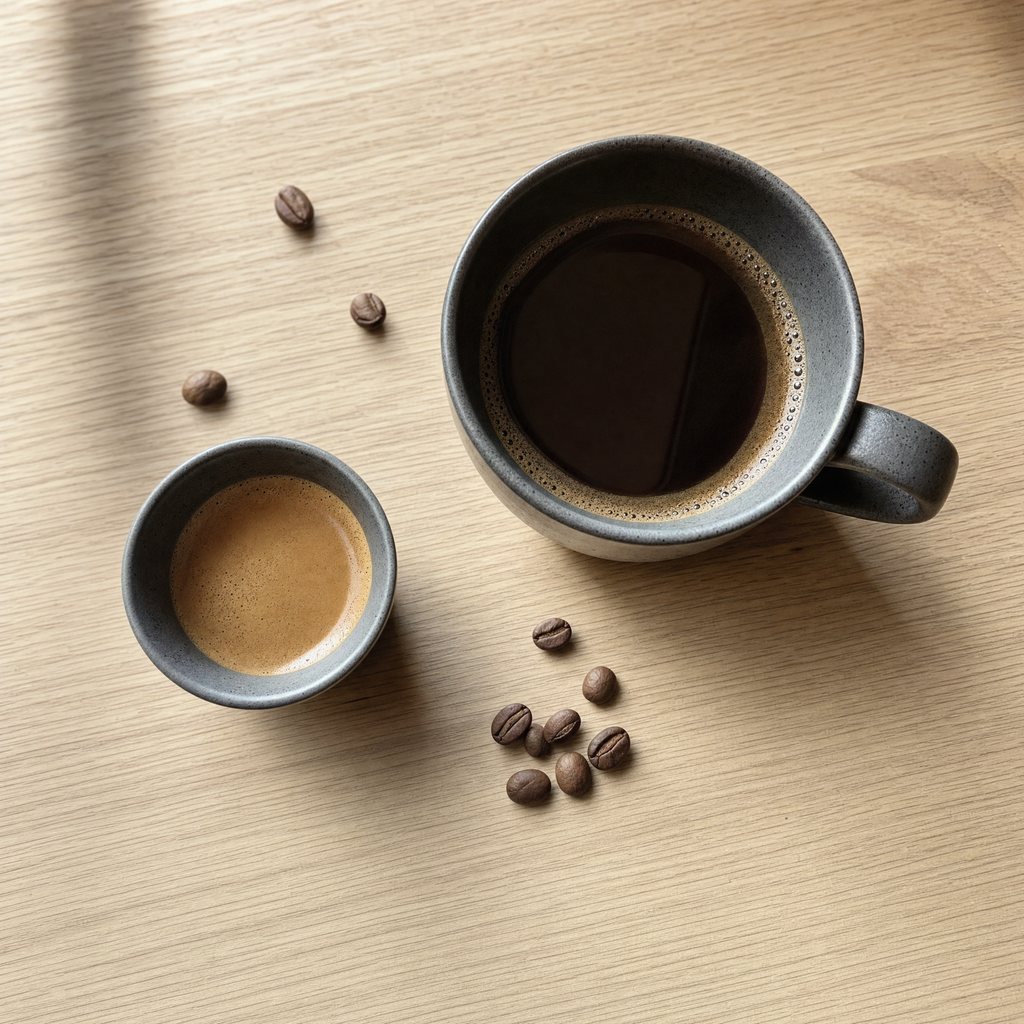
| Espresso | A small dose for a short, concentrated shot; double shots use roughly twice as much | Strong per sip, modest per serving; a double doubles it |
| Pour-over | A larger dose for a full mug; our 500 ml pour-over starts at about 31 g | Often the highest total, simply because the cup is big |
| AeroPress | Anywhere from a concentrate to a full mug, depending on your recipe | Depends entirely on the dose you choose |
| Milk drinks | The espresso shots inside them | Milk adds volume, not caffeine; count the shots |
Our AeroPress routine and the drink atlas entries, such as flat white and latte, list the number of shots in each drink, which is the number to count.
How much in a day?
For most healthy adults, the FDA cites 400 mg a day, about two to three 12 oz cups of coffee, as an amount not generally associated with negative effects. It is not a target, and people differ widely in how sensitive they are and how quickly they clear caffeine. Tea, soft drinks, energy drinks and some medicines count toward the same total, including an evening cup of green tea; TalkAboutSleep covers green tea before bed.
Caffeine and sleep
Caffeine stays active for hours, so the timing of the last cup matters as much as the number of cups. TalkAboutSleep covers sleeping after a late coffee. If afternoon cups are the issue, our guide to brewing good decaf keeps the ritual without most of the caffeine.
Frequently asked questions
Does espresso have more caffeine than drip coffee?
Per sip, yes; per serving, usually not. A single espresso is a small dose, while a mug of drip coffee is brewed from more coffee.
Does dark roast have less caffeine?
By weight the difference is small. By the scoop, dark roast can be slightly lower because the beans are larger and lighter.
How do I cut caffeine without giving up coffee?
Brew a smaller dose, use a smaller cup, switch the afternoon cup to decaf or half-caf, or move to a single rather than a double shot.