
The journal
Decaf that still tastes like coffee: how it is made and how to brew it
How coffee beans are decaffeinated, how much caffeine is left, and how to store, grind and brew decaf so it still tastes like coffee.
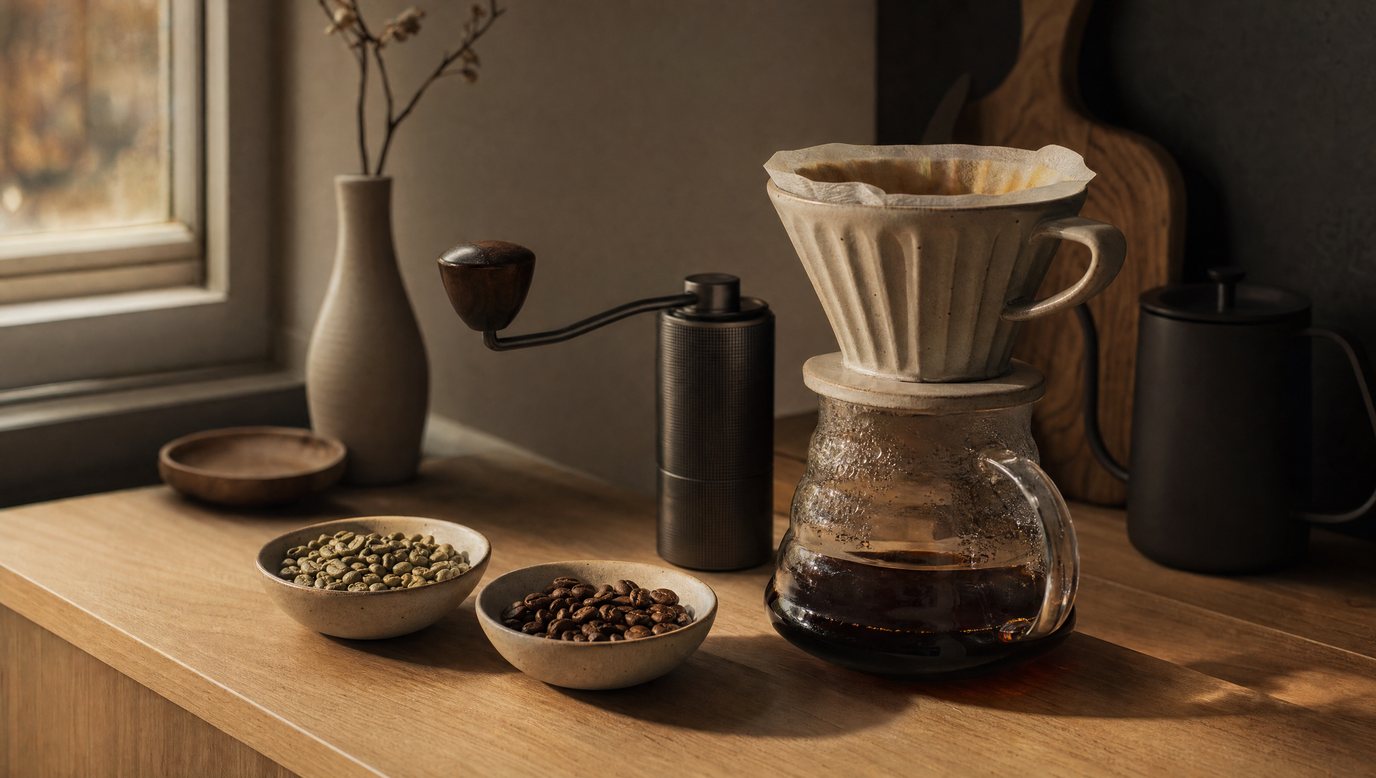
Quick answer: what is decaf?
Decaf is coffee whose green beans have had most of their caffeine removed before roasting. It still contains a small amount, so it is low-caffeine rather than caffeine free (National Coffee Association: decaf coffee). For the afternoon or evening cup, that difference is usually what people are after: the taste and the ritual with a fraction of the caffeine of regular coffee.
How beans are decaffeinated
All the common methods work on green, unroasted beans, softening them with water or steam and then drawing caffeine out. They differ in what carries the caffeine away.
| Method | What removes the caffeine | What you see on the bag |
|---|---|---|
| Water process | Water and a carbon filter, with no added solvent | Often a named water process |
| Solvent process | A solvent such as ethyl acetate or methylene chloride, removed afterwards during steaming, drying and roasting | Sometimes "sugarcane" or "natural" for ethyl acetate |
| Carbon dioxide | Pressurised CO2 that binds caffeine | "CO2 process" |
Each method affects flavour a little, but bean quality and roast freshness matter more. A fresh bag of well-processed decaf will beat stale regular coffee every time. Storage rules are the same as for any beans; see our guide to storing whole coffee beans.
Brewing decaf so it still tastes like coffee
- Buy whole beans and grind fresh. Decaf is often bought pre-ground and forgotten; ground decaf goes flat just as quickly as regular.
- Start from your usual recipe. Use the same ratio you brew regular coffee with, for example our 500 ml pour-over ratio.
- Adjust the grind. Decaf beans are more porous after processing and can extract faster. If the cup tastes bitter or dry, grind a little coarser; if it tastes thin or sour, go finer.
- Mind the water. A good water profile helps decaf most, because it has less body to hide behind. Our water hardness guide explains what to aim for.
Half-caf: a middle path
Mixing regular and decaf beans in the grinder gives you control over caffeine without changing your recipe. A 50/50 blend roughly halves the caffeine of your usual cup. It is an easy way to keep a second or third cup in the day while cutting the total.
Decaf and sleep
Switching the late cup to decaf is one of the most common suggestions for people whose coffee keeps them up. TalkAboutSleep explains how late coffee affects sleep; our guide to caffeine per cup helps you count what you drink before then.
Frequently asked questions
Is decaf completely caffeine free?
No. Most caffeine is removed, but a cup still contains a small amount, typically a few milligrams.
Does decaf taste worse?
It can, when the beans are old or poorly processed. Fresh, well-roasted decaf, ground just before brewing, tastes much closer to regular coffee.
Can I make decaf espresso?
Yes. Dial it in like any new bean: start with your usual ratio and adjust the grind, which often needs to be slightly coarser.