Texture changes the drink
Cappuccino, flat white and latte overlap in ingredients. Milk amount and foam texture help explain why they feel different. Start with the Drink Atlas to compare the intended experience before chasing exact cup volumes.
Practice one serving
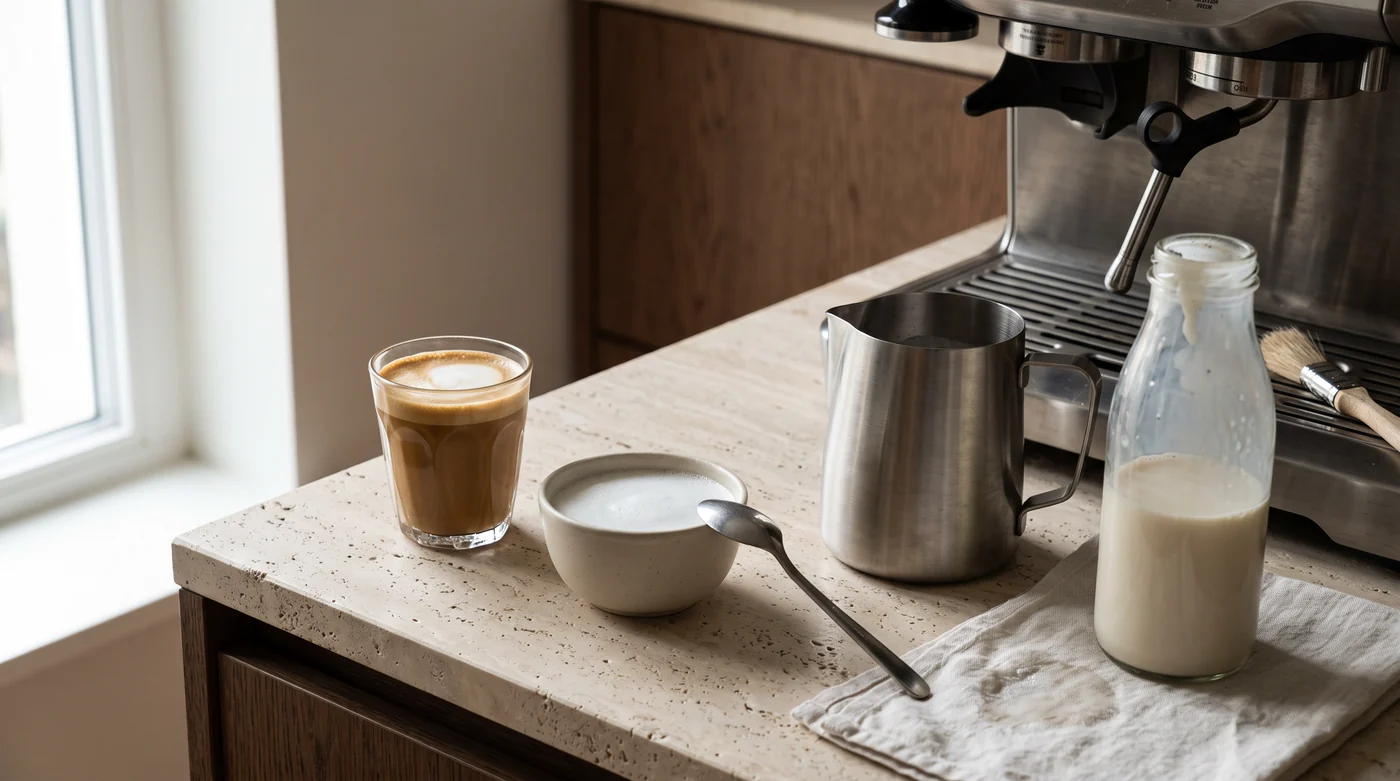
Use the minimum and maximum fill guidance for your pitcher and machine. Follow the manual’s steaming sequence, keep hands clear of steam and hot metal, and clean the wand as directed after use. Machine designs differ, so a purge instruction for one machine should not be treated as a universal button sequence.
Milk alternatives are their own ingredients
Different formulations behave differently. Check the product’s instructions and allergen information rather than assuming a plant drink will behave exactly like dairy milk. Keep the brand and formulation in your notes when comparing texture.
Separate learning from shopping
A more expensive pitcher will not automatically solve an inconsistent routine. Record the serving amount, equipment and texture you obtained. Once you can describe the problem—too much stiff foam, an awkward pour or too large a minimum serving—you can shop for a specific improvement.