
The journal
Can hard water ruin a coffee maker? Practical answers for home brewers
coffee water hardness brewing affects scale, flavor, and maintenance. Learn testing, descaling, and treatment choices to protect your coffee maker and cup quality.
How water hardness affects your coffee maker
What hard water is and how hardness is measured
Hard water contains higher concentrations of calcium and magnesium, usually reported as mg/L as CaCO3, and those dissolved cations are the main drivers of scale that builds inside boilers and flow passages. Understanding the measurement helps you interpret a strip or lab result and decide how often to act, because the mg/L as CaCO3 number predicts scale risk for appliances such as coffee makers; for background on hardness definitions see the USGS guidance on hardness of water USGS Hardness of Water.
How calcium and magnesium form scale when heated
When water with calcium and magnesium is heated during brewing, those ions tend to precipitate as carbonate and other mineral deposits; over repeated cycles the deposits harden into scale that narrows passages, clogs screens, and reduces heat transfer in boilers and coils. This mineral buildup changes how quickly water flows and how efficiently a heater can reach and hold brewing temperature, which in turn affects extraction and cup flavor, as well as energy use and the likelihood of service needs.
Why coffee makers show symptoms before other appliances
Coffee machines concentrate the effects of scale because they heat small volumes quickly and route that hot water through narrow tubing and small showerheads. Even thin layers of scale can slow flow, lower brew temperature, and produce uneven extraction or a muted cup; these are common signs that mineral buildup is affecting performance rather than an electrical fault. For broader context on hardness and drinking water, including appliance impacts but not health risk, see the World Health Organization overview WHO hardness background document.
How to test and read water hardness for coffee
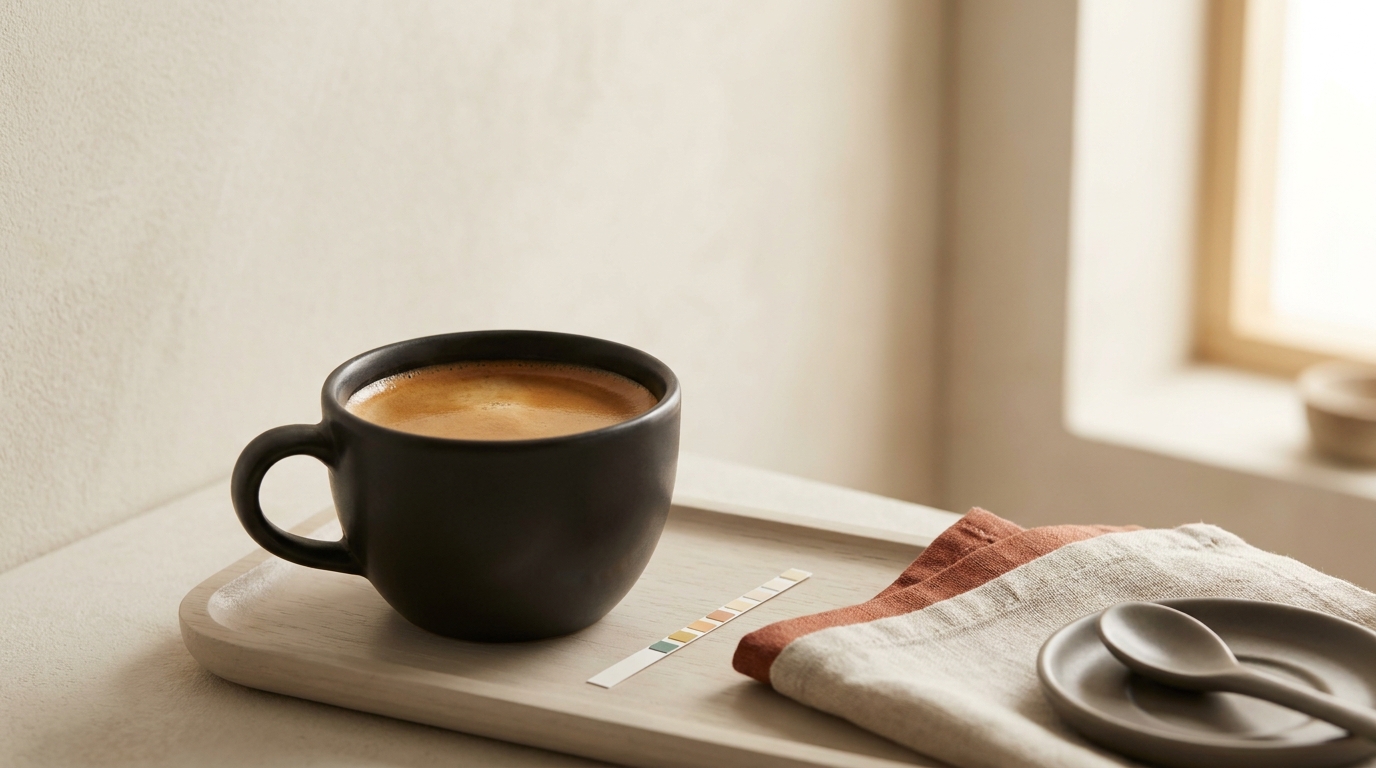
Start with a quick home test, then confirm with a lab or utility report if numbers will guide equipment choices. Test strips and simple home kits report a hardness band or an approximate mg/L as CaCO3; these are fast and inexpensive ways to place your water in a risk band and set a maintenance cadence. If you need formal mg/L values for system selection, a certified laboratory report or a local utility hardness statement gives a reliable measurement and can reveal seasonal changes; your state or utility may publish maps or reports that make that step unnecessary for many households, as the Minnesota Department of Health explains for residents checking local hard water conditions.
Can hard water ruin a coffee maker?
Yes, through mineral scale formation that clogs passages and reduces heat transfer, hard water can degrade performance, affect flavor, and shorten a coffee maker's useful life; regular testing and descaling or appropriate water treatment prevent most damage.
How to read a strip result and translate it to appliance risk: most strip kits give a qualitative band that you can convert to approximate mg/L as CaCO3; if your strip shows consistently high bands, expect more frequent descaling. Consumer guidance on test options and translating readings into maintenance needs can help you decide whether to run a lab test or act on a home kit result.
Interpreting mg/L numbers at a glance: a practical categorization for appliance risk is to treat lower mg/L readings as soft, mid-range as moderately hard, and higher readings as hard. That classification helps predict when scale will form and how often to descale; use your local test results to decide between a monthly, quarterly, or longer interval. A clear mg/L value from a strip, lab, or utility report is the simplest way to connect your water to expected maintenance needs. For an additional practical walkthrough of SCA ranges, see Third Wave Water's guide What is SCA Water Standard?.
Descaling: when to do it and safe methods
Food-safe acids such as citric acid and lactic acid are effective at dissolving carbonate scale and are commonly recommended because they leave minimal taste and are safe when used and rinsed according to instructions. These descalers react with mineral deposits to free up flow paths and restore heat transfer, returning a coffee maker's performance toward its original condition. For step-by-step cleaning and manufacturer cautions, see consumer guidance on cleaning and descaling and our gear care guide.
Typical cadence by hardness: in high-hardness areas many households find monthly or quarterly descaling keeps equipment reliable, while homes with softer water can often extend that interval to six months or longer. The exact schedule depends on brew volume, machine type, and whether you use a cartridge or softener that lowers incoming hardness; pay attention to earlier symptoms such as slower flow, longer heat-up, or changes in taste as cues to run a descaling cycle.
Basic descaling steps for drip brewers and single-serve machines are similar: run a measured descaling solution or a citric acid mix through a full cycle, let the solution sit if instructions recommend, then run multiple clear-water rinse cycles until no sour or chemical odor remains. For pump-driven espresso machines and heat-exchange boilers, follow manufacturer instructions carefully since internal valves and sensors can be sensitive to concentration and contact time; some manufacturers advise against using vinegar because odor or residues may linger or interact with sensors.
Safety and best practices: always unplug where instructed, use the recommended concentration, and complete thorough rinse cycles after descaling. Replace any water filters after a descaling cycle if the manufacturer suggests it, and consider professional service when scale is heavy or the machine shows performance problems that do not resolve after cleaning.
Water chemistry and flavor: balancing scale risk and extraction
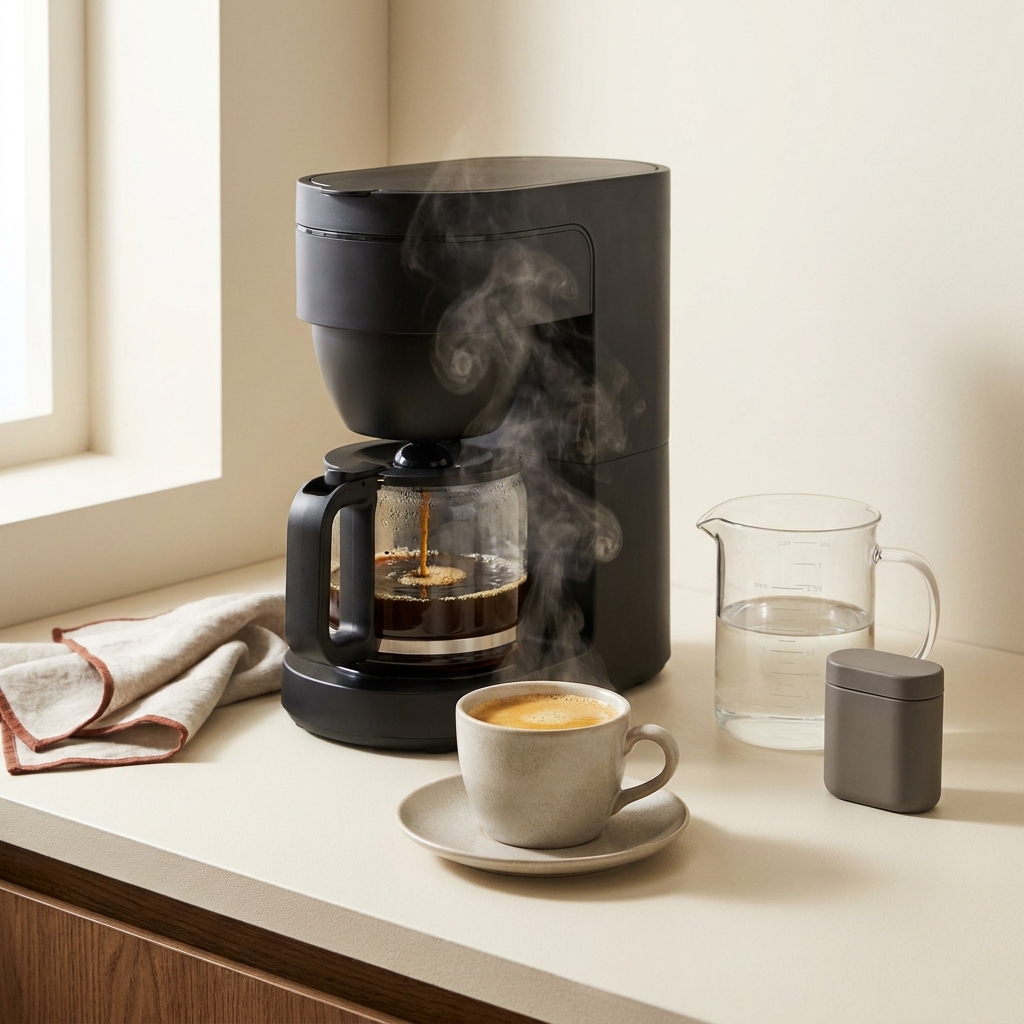
Specialty coffee guidance emphasizes balanced water chemistry because a small amount of dissolved calcium and magnesium helps extraction and perceived sweetness, while excess hardness increases scale risk; the Specialty Coffee Association summarizes the recommended ranges and rationale for brewing water SCA water for brewing standards. See our water guide.
At the extraction level, dissolved cations influence how acids and sugars are extracted and perceived, so water that is completely devoid of minerals can taste flat or thin even though it avoids scale. Laboratory studies that explore the role of calcium and magnesium in coffee extraction provide the chemical background for why modest mineral content is often preferable to distilled water for taste-focused brewers Journal of Agricultural and Food Chemistry study on cations.
Quick checklist to interpret hardness results against SCA ranges
Deciding how much treatment to apply is a trade-off: some homes choose partial treatment, such as point-of-use filtration that reduces scale without stripping all minerals, while others use reverse osmosis with remineralization to hit a specific target. The right choice balances taste priorities against the cost and maintenance of preventing scale. For a home brewer perspective on target ranges and options, see the Ionic Brews home brewer's guide SCA Coffee Water Standards.
Ways to reduce scale: filters, softeners and RO, with pros and cons
Point-of-use filters and cartridge systems can reduce scale-forming minerals or add scale inhibitors while remaining relatively inexpensive and easy to maintain; these are often the most practical first step for a kitchen coffee maker. For an overview of common options and what to expect, consumer guidance on cleaning and upstream treatments is useful to compare simple cartridges versus larger treatments.
Ion-exchange softeners exchange hardness ions for sodium or potassium so scale formation is reduced, and they are effective for whole-house treatment in high-hardness areas. Reverse osmosis systems provide stronger mineral removal; paired with a small remineralization stage they let you set a target mineral level that aligns with specialty coffee guidance, but RO systems have higher upfront cost and ongoing maintenance and waste water considerations. For local guidance on when to choose a softener versus RO, check state and health department resources on hard water treatment options.
Cost and maintenance trade-offs: cartridge filters are low-cost but need replacement at recommended intervals, ion-exchange softeners require salt and occasional regeneration, and RO systems need membrane and cartridge changes plus a remineralization option to restore desirable brewing minerals. Choose based on your measured hardness, budget, and how much hands-on maintenance you are willing to do.
Maintenance checklist, common mistakes and final recommendations
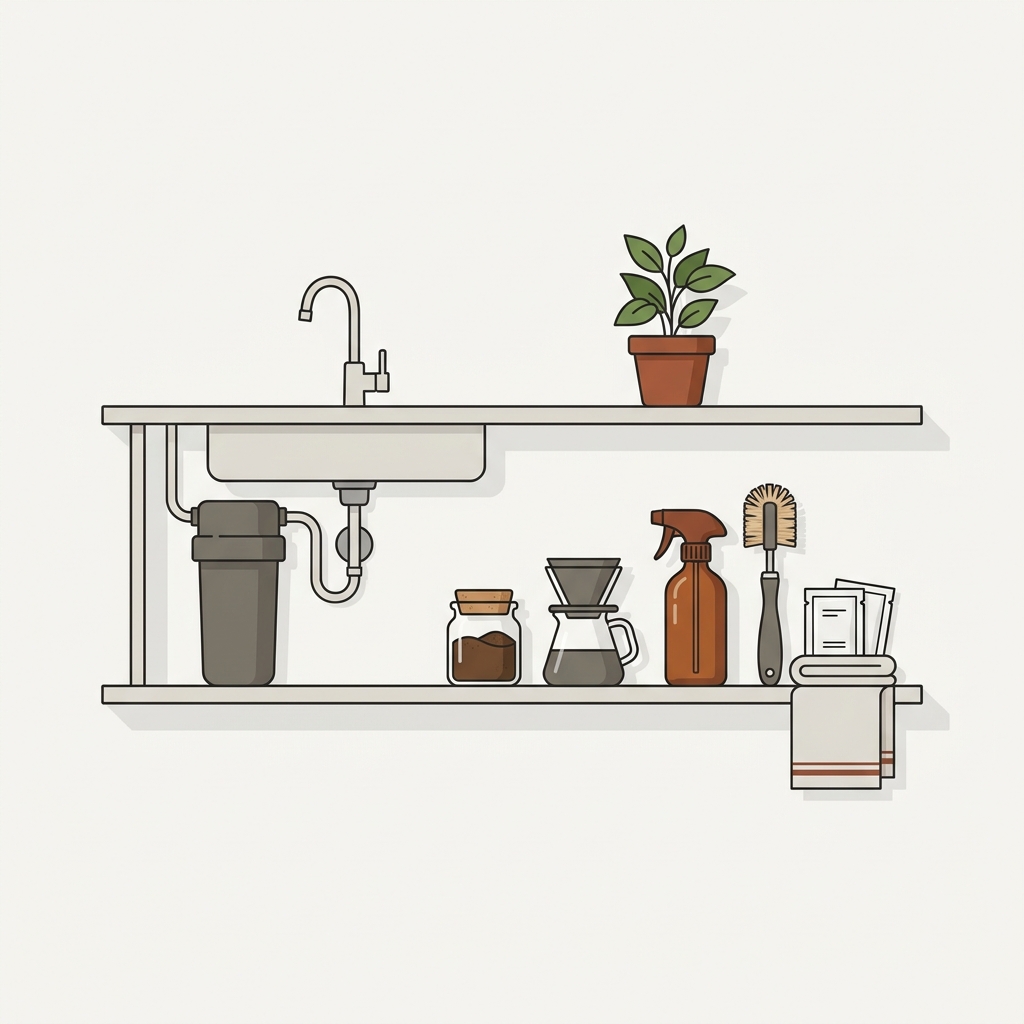
Use a short checklist to protect flavor and equipment: test your water to get an mg/L as CaCO3 number, set a descaling cadence based on that number, use a food-safe descaler when needed, and keep filters replaced on schedule to reduce mineral buildup. These practical steps reduce wear, restore proper temperatures, and keep extraction consistent, which extends machine life and preserves cup quality.
Common mistakes to avoid include skipping regular descaling until performance suffers, using undiluted vinegar in machines that advise against it, and ignoring filter replacement schedules; these choices can leave residues, void warranties, or accelerate wear. If a machine shows persistent flow or heating problems after proper descaling, consider professional service or manufacturer support rather than repeated home fixes.
Final recommendation: hard water can damage coffee makers by causing scale that affects flow and heat transfer, so treating and maintaining equipment is primarily about preserving taste, consistency, and energy efficiency rather than addressing a health risk. For the public health perspective on hardness and why mitigation is mainly for equipment and quality, see the WHO background on hardness in drinking-water WHO hardness background document. See the Drink Atlas for common recipes and serving notes.

Frequently asked questions
How often should I descale my home coffee maker?
Descaling frequency depends on measured hardness; in high-hardness areas monthly to quarterly is common, while softer water allows longer intervals. Watch for slower flow or lower brew temperature as cues.
Is hard water unsafe to drink?
No. Hardness is not considered a primary health risk; the main concerns are scale, taste, and equipment longevity rather than safety.
Will using bottled water fix scale problems?
Using low-mineral bottled water can reduce scale but may change cup flavor; a balanced approach or remineralized RO water is often preferable for taste and equipment care.
Protecting a coffee maker from hard water is mostly a matter of measurement and routine care. Test first, pick a descaling and treatment approach that fits your water and budget, and use gentle, food-safe descalers to restore performance. With regular attention, you can keep extraction consistent and extend equipment life without compromising cup quality.