
The journal
How do I remove mineral buildup in my moka pot? Safe descaling and care
how to clean a moka pot: stepwise citric acid and water-only cycles plus daily habits to reduce limescale and protect aluminum parts.
What is mineral buildup in a moka pot and why it matters
Mineral buildup, commonly called limescale, happens when dissolved calcium and magnesium in hard water precipitate and leave white, chalky deposits inside a moka pot. Understanding this process helps explain why brews slow or taste off, and it informs safe cleaning choices—especially for aluminum machines where aggressive cleaners can cause damage. USGS water hardness guide
What limescale is and how it forms
Limescale is mainly calcium carbonate that forms when hot water loses carbon dioxide or evaporates, letting minerals drop out of solution and stick to metal surfaces. In a moka pot the busy places are the boiler walls, the filter basket edges and the funnel where minerals concentrate as water boils and steam passes through.
Aluminum moka pots show white, powdery deposits more clearly than stainless models, and their construction makes them sensitive to harsh chemical or abrasive cleaning. Manufacturer care instructions stress gentle handling for aluminum because dishwashers, bleach and abrasive pads can harm the metal finish and rubber parts.
How can I remove mineral scale in a moka pot without damaging aluminum parts?
For a Bialetti model that permits descaling, follow its stated boiler-fill level, cleaner amount and rinse steps. Other moka pots may require a different method. Never mix cleaners or heat an empty boiler.
How mineral deposits affect extraction and taste
As scale builds it reduces the effective diameter of passages inside the pot, so water flows more slowly, the brew can sputter, and extraction changes enough to produce flatter or metallic notes. These sensory and performance signs are linked to mineral accumulation and typically improve after descaling. Bialetti limescale guidance
For home brewers the practical takeaway is simple: regular light maintenance keeps water flow steady and flavor clean; taking shortcuts with strong cleaners, or ignoring deposits, risks both taste and the integrity of gaskets and valves.

When to descale: signs and a sensible schedule
Look and listen. Visible white deposits, a longer-than-usual brew time, sputtering noises as pressure pushes through narrowed passages, or a change in taste are reliable early indicators that descaling is due. These performance signs often respond to a careful descaling cycle and flushing. The Kitchn how to clean a moka pot
How to spot early and advanced scale
Early scale shows as thin white film or fine residue in the boiler and on the funnel. Advanced scale appears as thicker crusts that can trap coffee oils and block the filter basket, creating slower, uneven extraction and off-flavors that do not go away with a regular rinse. Inspecting the boiler, funnel and filter basket before brewing helps catch buildup before it worsens. Bialetti limescale guidance Community discussion on moka pot buildup
A quick self-check before brewing: disassemble the pot while cool, look for chalky patches around the safety valve and rim, and notice if the normal gurgle and timing seem different. If you see visible residue or hear an abnormal sound, plan a descaling session. The Kitchn cleaning steps
How local water hardness changes frequency
Local water hardness is a practical predictor of how often a moka pot will need descaling. Areas with higher dissolved calcium and magnesium produce more rapid mineral deposition, so many home brewers in hard-water areas will descale more often than those using soft or filtered water. Checking your local water report or guidance helps you set a sensible maintenance rhythm. USGS water hardness guide
Safe descaling methods step by step for aluminum and stainless moka pots
Citric acid method: proportions and brewing cycle (how to clean a moka pot)
For a Bialetti model that permits descaling, follow its stated boiler-fill level, cleaner amount and rinse steps. Other moka pots may require a different method. Never mix cleaners or heat an empty boiler.
For a Bialetti model that permits descaling, follow its stated boiler-fill level, cleaner amount and rinse steps. Other moka pots may require a different method. Never mix cleaners or heat an empty boiler.
After the first flush, smell and taste-check using only plain water cycles. If any lingering odor or odd flavor remains, continue flushing. The goal is to remove mineral deposits while leaving no perceptible residue from the descaling solution. Exact dose calculators and safety notes appear in industry write-ups like the one from Alliance Chemical. Serious Eats moka pot guide
Commercial coffee descalers: compatibility and manufacturer notes
If you choose a commercial descaler, confirm that the product is marked as safe for aluminum or stainless use and follow the maker's instructions, then rinse thoroughly with multiple water-only cycles to clear residues. Consumer guidance for coffee equipment recommends following product directions and observing manufacturer compatibility notes.
For a Bialetti model that permits descaling, follow its stated boiler-fill level, cleaner amount and rinse steps. Other moka pots may require a different method. Never mix cleaners or heat an empty boiler.
Why to avoid bleach, abrasives and the dishwasher
Bleach and strong abrasives can etch aluminum and degrade rubber gaskets, and dishwashers expose the pot to harsh detergents and high temperatures that many makers warn against. For aluminum models, gentle manual cleaning and appropriate descaling protect both appearance and function. The Kitchn cleaning notes
When a gasket or valve shows signs of damage, stop aggressive cleaning and consult manufacturer guidance about replacement parts rather than continuing with harsh methods that could worsen wear.
Aftercare and prevention: habits that slow mineral buildup
Water choices that reduce scale
Using filtered or softer water reduces dissolved mineral load and therefore slows limescale formation inside a moka pot. For many home brewers a simple pitcher filter or softened supply makes a noticeable difference in how frequently descaling is needed. USGS water hardness guide
Reduce dissolved minerals using a simple household filter pitcher
Choosing water with lower hardness is one of the easiest preventive measures. Less mineral load means deposits accumulate slower, which can extend the time between planned descales and reduces the chance of clogged passages during a brew. Serious Eats moka pot guide
Daily rinse and drying routine
After each use rinse the boiler, funnel and filter basket with warm water and let parts dry before storage. Manufacturer guidance for aluminum moka pots specifies avoiding detergents and dishwashers for routine cleaning; a simple warm rinse prevents trapped oils and mineral film from building up and keeps gaskets supple.

Dry components fully to reduce the chance of mineral crust forming from evaporation. Emptying the boiler and leaving the pot open to air also prevents standing water from concentrating minerals on interior surfaces.
Adjusting maintenance by local hardness
Rather than following a fixed schedule, match your descaling interval to local water hardness and observed signs. In soft-water areas you may go many months between descaling; in hard-water areas schedule it more frequently and use visual checks to confirm timing. USGS water hardness guide
If you notice deposits return more quickly despite preventive steps, review your water source and consider a longer-term change such as a dedicated filter for brewing water.
Common mistakes, safety warnings and when to stop and replace parts
Do not use bleach or abrasive cleaners
Bleach and abrasive cleaners can irreversibly damage aluminum surfaces and accelerate gasket wear; manufacturers list these as prohibited cleaning methods for a reason. Avoid them to preserve both appearance and safety features.
Safety valve and gasket care
Keep the safety valve free of crust and check the gasket for signs of flattening, brittleness or deformation. A clogged valve or a deformed gasket can cause leaks or poor pressure behavior; if descaling and careful rinsing do not restore normal operation, replacement is the safer course. The Kitchn maintenance notes
If you find persistent leaks after cleaning, follow manufacturer guidance about obtaining the correct replacement gasket and valve parts for your model rather than improvising with incompatible materials.
When deposits indicate part replacement
If thorough descaling and flushing do not restore steady flow or if off-flavors persist, the pot may have worn parts or internal corrosion that require replacement or professional advice. Consult your model's care notes before attempting more aggressive restoration.
Replacing a gasket or a worn filter plate often resolves leaks and pressure issues without needing to replace the whole pot, and it is usually preferable to repeatedly using harsh chemicals that risk component failure.
Quick how-to checklist: a one-page routine to descale and maintain a moka pot
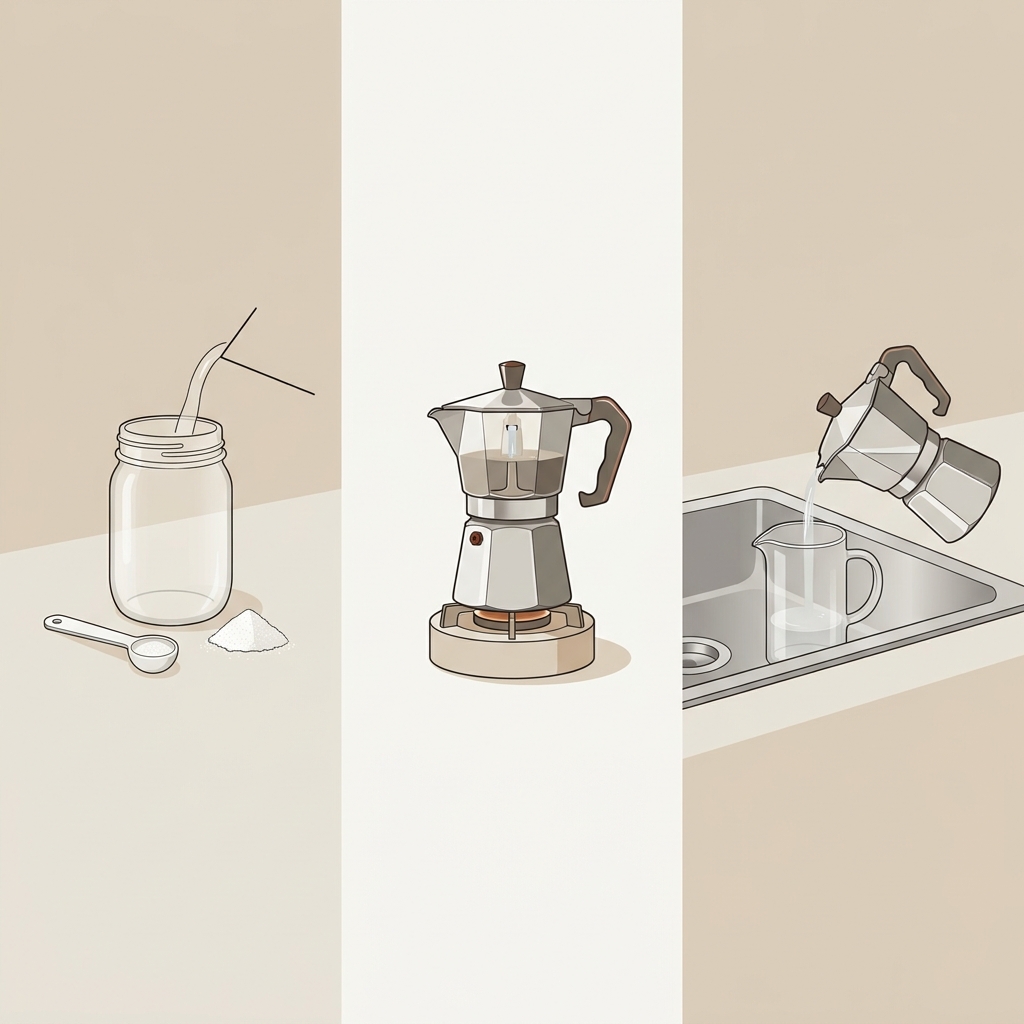
Below is a concise, sink-side checklist that covers the typical citric-acid quick cycle and the follow-up rinse steps to restore flow and flavor. Keep these steps near your brewing area so you can follow them without guessing.
30 to 60 minute citric acid quick guide
For a Bialetti model that permits descaling, follow its stated boiler-fill level, cleaner amount and rinse steps. Other moka pots may require a different method. Never mix cleaners or heat an empty boiler.
Stepwise rinse and rinse-check
After descaling, disassemble, inspect the gasket and safety valve for remaining deposits, rinse with warm water, and reassemble when dry. Run an additional plain-water cycle as a final confirmation that flow and aroma are normal. The Kitchn cleaning steps
When to contact the manufacturer
If a descaling routine does not restore normal flow, or if you are unsure about a descaler product's compatibility with your pot's alloy or gasket material, contact the maker for model-specific guidance and replacement part information. Manufacturer instructions are the primary source for alloy-sensitive care.
Keep this checklist as a printable or bookmarked reference and follow the manufacturer notes for your specific pot when in doubt. Printable cleaning record
Frequently asked questions
How often should I descale a moka pot?
Descale based on local water hardness and signs: visible white deposits, slower flow, sputtering or off-flavors. Harder water typically requires more frequent descaling.
Is vinegar safe for descaling a moka pot?
For a Bialetti model that permits descaling, follow its stated boiler-fill level, cleaner amount and rinse steps. Other moka pots may require a different method. Never mix cleaners or heat an empty boiler.
Can I put my moka pot in the dishwasher?
No. Many manufacturers advise against dishwashers, especially for aluminum models, because detergents and high heat can damage metal and gaskets.
For a Bialetti model that permits descaling, follow its stated boiler-fill level, cleaner amount and rinse steps. Other moka pots may require a different method. Never mix cleaners or heat an empty boiler.
References
- https://www.usgs.gov/special-topics/water-science-school/science/hardness-water
- https://www.bialetti.com/us_en/learn-and-brew/post/how-to-remove-limescale-from-a-moka-for-state-of-the-art-coffee
- https://www.seriouseats.com/how-to-use-a-stovetop-espresso-maker-moka-pot-espresso
- https://groundandgauge.com/guides/gear-care/
- https://groundandgauge.com/guides/beans-water/
- https://groundandgauge.com/journal/cleaning-record/
- https://www.home-barista.com/espresso-machines/citric-acid-how-much-to-use-for-heavy-descaling-t14596.html
- https://alliancechemical.com/blogs/articles/how-to-descale-an-espresso-machine-with-food-grade-citric-acid-exact-ratios-safety-tips?srsltid=AU7gw4WCQyRya9asGivSNyPdKltna40d5731pmPuElDRVJgC7B1YFD4l
- https://coffee.stackexchange.com/questions/1847/moka-pot-buildup
Manufacturer care
Bialetti: daily and deeper moka care. Match the guidance to your own model. Stop using a pot with a blocked valve, leaks or damaged components.