
The journal
How much coffee do you need for a 500 ml pour-over?
Start with 31 g of coffee for 500 g of water at a 1:16 ratio, then adjust to taste. Compare ratios, dosing and practical pour-over recipes.
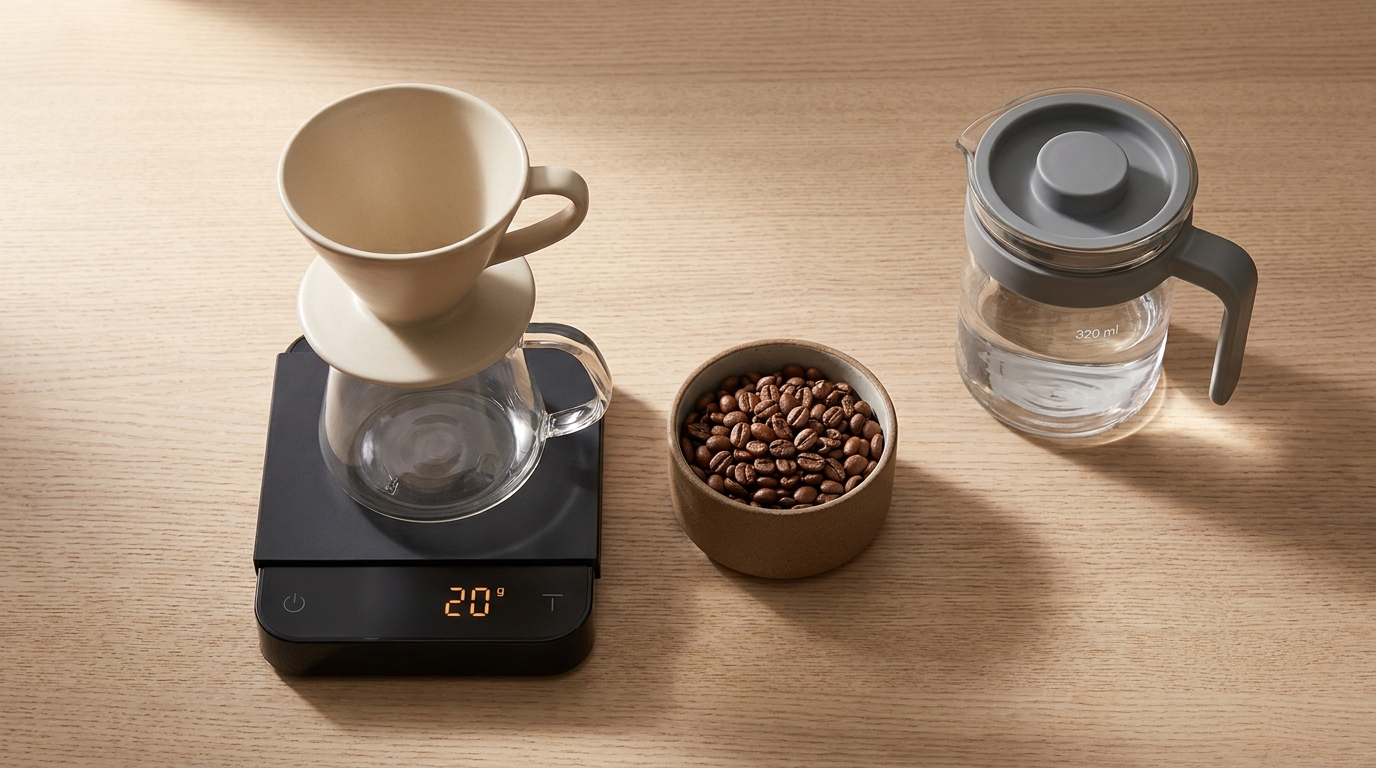
Quick answer: pour over coffee ratio for 500 ml
What most people want to know first
For 500 g of water poured into a pour-over brewer, start with about 31 g of coffee at a 1:16 coffee-to-water ratio. A 1:15 ratio uses 33.3 g and a 1:17 ratio uses 29.4 g. The beverage collected will be less than 500 ml because the grounds retain water.
Doses of 27.5 to 30 g per 500 g of water correspond to roughly 1:18.2 to 1:16.7. These are different starting points, not the same range as 1:15 to 1:17.
Quick numeric cheat sheet, copyable: 1:15 = ~33 g, 1:16 = ~31 g, 1:17 = ~29 g for 500 ml, with tablespoon equivalents only approximate because scoop density varies.
Short numeric cheat sheet
Use these quick values when you want to start brewing right away: 1:15 -> 33 g, 1:16 -> 31 g, 1:17 -> 29 g.
Tablespoon conversions are rough; expect variation by grind and bean density so prefer grams when possible.
Try the balanced 1:16 recipe and copy the cheat sheet to your phone before you brew.
Why the pour over coffee ratio matters
Brew strength (TDS) and extraction explained
The ratio you choose determines the concentration of dissolved solids in the cup, commonly measured as TDS, and influences perceived strength and balance.
Industry standards tie dose and extraction to specific target ranges so brewers can aim for consistent TDS and extraction yield rather than guessing from taste alone.
Industry standards that set the ranges
SCA home brewer certification requirements defines a brewed coffee standard with target total dissolved solids and an extraction yield window, and its dose guidance has historically centered near 55 grams per liter which explains the 27.5 g per 500 ml starting point.
The European Coffee Brewing Centre recommends around 60 grams per liter for filter coffee, which scales to about 30 grams for 500 ml and sits at the slightly stronger end of common home ranges.
Recent reviews of filter brewing emphasize that brew ratio is a primary control over strength and perceived intensity, and that tighter dosing improves consistency in pour over brewing.
How to calculate the pour over coffee ratio for 500 ml
Step-by-step math (easy method)
Start with grams per liter guidance, then scale to the volume you want. For example, 55 grams per liter becomes 27.5 grams for 500 ml by halving the per liter amount.
To calculate 1:15, 1:16 and 1:17 for 500 ml, divide the water mass by the ratio number. For 500 ml of water assume 500 grams of water, then 500 / 15 = 33.3 g, 500 / 16 = 31.25 g, 500 / 17 = 29.4 g.
Using percentages and scaling from g/L
If you prefer using the g per liter approach: multiply your liters by the recommended grams per liter. For 55 g/L, 0.5 L gives 55 * 0.5 = 27.5 g; for 60 g/L, 0.5 L gives 30 g.
Quick mental shortcuts: halve the g/L number for 500 ml, or use 500 divided by the ratio number for the 1:x method. Both give results that are equivalent when volume is expressed in grams.
Tool: simple ways to measure - scales, spoons and apps
Why a scale is best
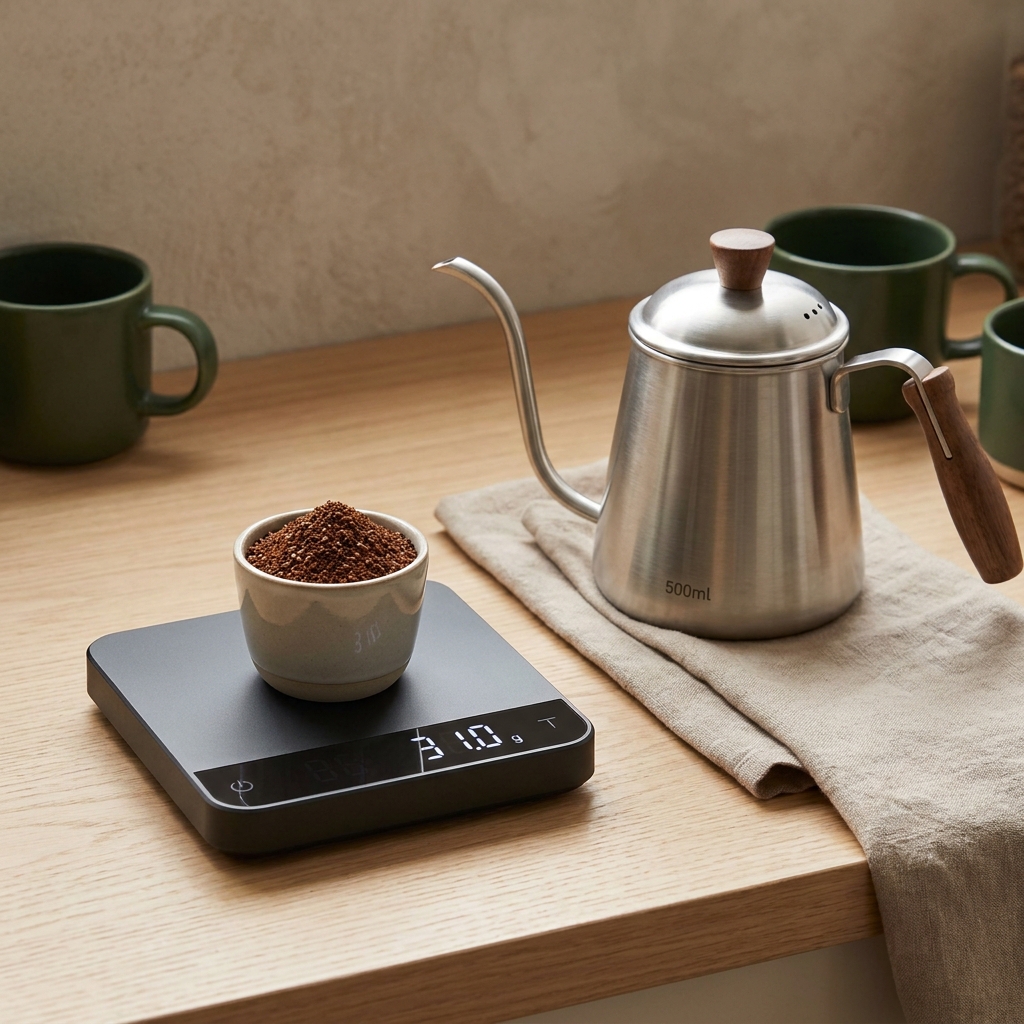
Weight-based dosing is more repeatable than spoon measures because grind size and bean density change the volume a spoon holds; scales remove that variability and make it easier to target extraction consistently.
When you switch to grams, you can reliably reproduce recipes and track progress as you tweak grind or water temperature.
When tablespoons are useful and their limits
Tablespoons help when you lack a scale, but they are approximate; NCA consumer guidance gives a general tablespoon rule that scales to about 3 to 6 tablespoons for 500 ml depending on how strong you like coffee.
When you must use spoons, treat any tablespoon number as an estimate and aim to move to grams as soon as practical for consistent results.
Question: adjusting strength and taste for your preference
How to move up or down the ratio ladder
Lower ratio numbers, for example moving from 1:17 to 1:16 or 1:15, increase the dose and yield a stronger, fuller cup with more perceived body.
Higher ratio numbers reduce concentration and often make acidity and delicate notes easier to perceive; use small steps to adjust so you can track changes.
How many grams of coffee should I use for 500 ml of water?
Use about 27.5 to 30 grams for 500 ml as a standards-based starting point, or choose 33 g, 31 g or 29 g for 1:15, 1:16 or 1:17 respectively.
Taste tests to try at home
Run a simple comparison: brew the same coffee at 1:15, 1:16 and 1:17 and note strength, acidity, and body. Use the same grind and pour schedule across the trials so the ratio is the main variable.
Record results and make single-variable adjustments like grind coarser or finer only after you are confident about the effect of ratio on the cup.
Three ready-to-use pour over recipes for 500 ml
Strong (1:15) - profile and steps
Dose: 33 g coffee, Water: 500 g, Approx tablespoons: 6 to 7 (estimate).
Suggested pours: bloom 40 g water for 30 to 45 seconds, then pour remaining water in 2 to 3 controlled pours to finish around 2:30 to 3:00 minutes. Expect a fuller body and higher perceived strength.
Balanced (1:16) - profile and steps
Dose: 31 g coffee, Water: 500 g, Approx tablespoons: 5 to 6 (estimate).
Suggested pours: bloom 40 g for 30 to 45 seconds, then two even pours to finish near 2:45 to 3:15 minutes. This is a good starting point for many beans and is close to standards-based guidance.
Light (1:17) - profile and steps
Dose: 29 g coffee, Water: 500 g, Approx tablespoons: 5 (estimate).
Suggested pours: bloom 40 g for 30 to 45 seconds, then pour more slowly in 3 pours to emphasize clarity and acidity; brew time may be slightly longer depending on grind and filter.
Common mistakes and how to troubleshoot your pour over ratio
Signs of under- and over-extraction
Under-extracted brews taste thin, sour or overly acidic and often indicate too little dose, too coarse a grind, or too fast a flow; check dose first when troubleshooting.
Over-extracted brews taste bitter, hollow or astringent and can come from too fine a grind, too long a brew time, or an excessive dose for the chosen grind and filter.
Fixes that work fast
Prioritize these checks: confirm your dose by weight, then adjust grind one step coarser or finer as needed, then look at pour speed and filter clogging; change only one variable at a time and log the result.
Keep a simple log of dose, grind setting, and brew time to converge on repeatable recipes for a given coffee and filter.
Equipment and emerging variables that affect the ideal ratio
Filter types and their effect
Filter paper thickness and porosity affect flow and extraction, so the same ratio can yield different results on different papers; recent reviews note that newer papers and filters are areas to watch as they may affect ideal settings.
Other equipment elements such as grinder quality, brewer geometry and scale accuracy also interact with ratio and can require small re-dials to achieve the same cup profile.
Flow-control kettles and new papers: open questions
Flow-control kettles and modified paper designs can change how water contacts grounds and how long fines remain suspended; reviewers highlight these as open research topics rather than settled best practice.
Treat the ratios in this guide as starting points; if you change filter type or kettle flow, re-check the cup and make small adjustments to dose or grind.
Quick reference: cheat sheet and next steps
Printable quick reference for 500 ml
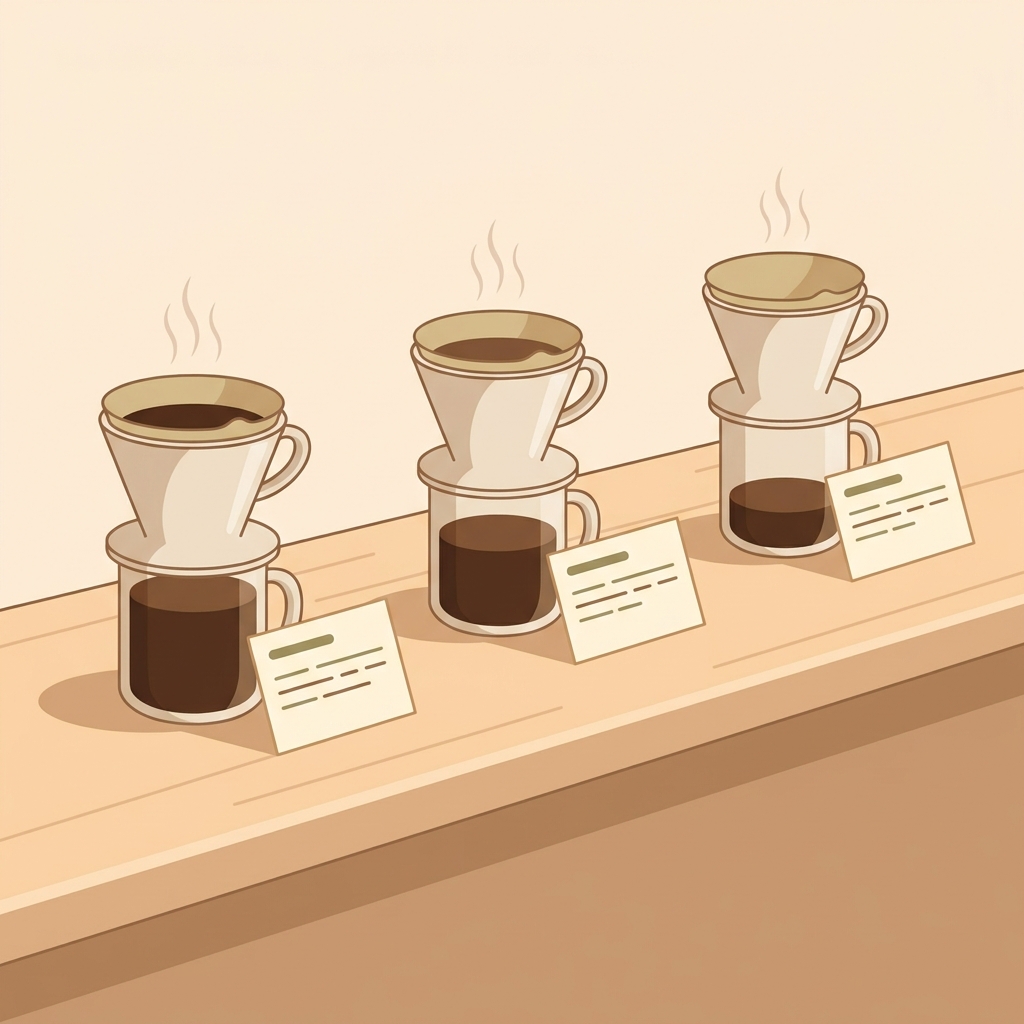
For consistency get a scale, use the 1:16 recipe to start, and log your changes so you can refine grind and pour speed over a few brews.
How to make gradual improvements
Try the three recipes and record how each cup tastes. Change one variable per session, prefer weight-based dosing, and give each change several brews before judging the effect.
Industry standards provide the baseline numbers used here, and they remain useful anchors as you fine-tune your equipment and technique.
Frequently asked questions
Can I use tablespoons instead of a scale for 500 ml?
Yes, but tablespoons are approximate because grind and bean density vary; use them only as a temporary measure and move to weight-based dosing for consistency.
Which ratio should I try first for 500 ml?
Start with the balanced 1:16 recipe and adjust toward 1:15 for a stronger cup or 1:17 for a lighter cup.
How often should I log brew variables?
Record dose, grind setting, and brew time each time you change a variable; a short run of three brews per change gives useful feedback.
Using grams and a simple routine will make your pour overs more predictable and easier to reproduce. Start with the balanced recipe, log your trials, and make one small change at a time until you find the cup you like. If you want repeatable results, prioritize a scale and consistent pour method; the ratios here give you a reliable starting point for most home and small-batch settings.