
The journal
Should I use medium or fine ground coffee for my AeroPress? Practical test guide
aeropress coffee grind size explained with a simple A/B test, decision rules and starter recipes to help you choose the best grind for your taste.
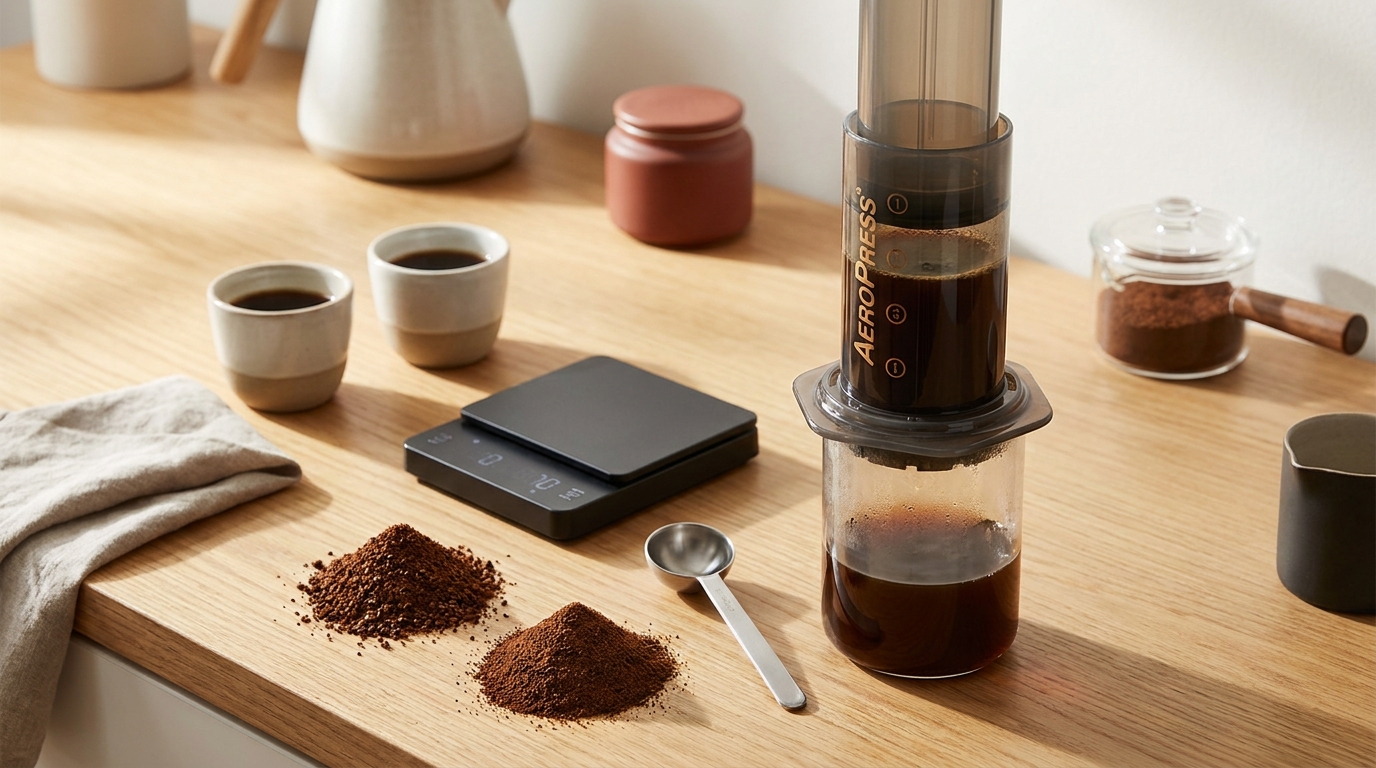
Short answer and how to decide for your taste
Both medium and fine grind settings can work well in an AeroPress, and the best choice depends on the recipe, your filter, and the cup qualities you prefer. If you want a clear, lighter cup that highlights acidity and clarity, start toward medium. If you want a fuller, denser cup with espresso like intensity, start toward fine.
To make progress quickly, run a tiny side by side test that keeps dose, temperature and total brew time the same and only changes grind. Note the main sensory differences and use those notes to pick which path to explore further.
Should I use medium or fine ground coffee for my AeroPress?
Use medium if you want a cleaner, clearer cup and less sediment; use fine if you want more body and intensity, and run a simple A/B test to confirm your preference.
When a quick answer helps
When you need results in a few brews, aim for a single, low-effort comparison rather than chasing a perfect recipe. A simple A/B will reveal whether you prefer a cleaner cup or more body from the same coffee without complicated adjustments.
What to test first for aeropress coffee grind size
Before you change anything else, pick a single coffee, keep the dose and water consistent, and brew one cup with a medium grind and one with a fine grind. Taste them back to back and listen for differences in brightness, bitterness and mouthfeel. That first comparison is the fastest way to learn what grind trend you prefer.
What medium and fine grind mean for brewing
How grind size affects extraction in general
Grind size changes how fast water can dissolve soluble compounds from coffee. Finer particles expose more surface area so water extracts more quickly, while coarser particles slow extraction. That difference is what makes grind size a primary control for perceived strength, sweetness, acidity and bitterness in a brewed cup.
Because extraction speed changes with particle size, grind must be balanced with how long the coffee and water are in contact. Short contact times usually pair better with a finer grind to reach the desired extraction, while longer immersion times can tolerate a medium grind without underextracting.
Practical feel and examples for medium versus fine
Use everyday comparisons rather than numbers: medium feels like table salt in texture, it pours easily, and it sits in the AeroPress bed without compacting tightly. Fine feels closer to granulated sugar or slightly coarser than espresso grind, it packs more densely, and it will resist water flow more when you plunge.
When you move from medium to fine in your AeroPress routine you should expect slower flow when plunging and a thicker, heavier mouthfeel. When you move from fine to medium you should notice brighter, cleaner flavors and easier plunging. Those sensory cues are reliable guides more than technical particle sizes.
How brewing method and recipe change the best grind choice
Standard versus inverted AeroPress approaches
Different AeroPress routines change the effective contact time and how much pressure you apply when plunging, so the same grind can behave differently across methods. The standard upright method tends to drain faster and often works well with slightly finer grinds to reach desired extraction in the shorter contact time. The inverted method increases immersion time and lets coarser grinds extract more fully without tasting thin.
If you prefer a quick, low-effort routine with a short steep, a finer grind is often the practical starting point. If you like a longer immersion where you stir or let the coffee sit, a medium grind can give you clarity while still extracting enough soluble material.
Filters and how they interact with grind
Paper filters trap more fines and micro oil, so when you use paper you will typically get a cleaner cup and less body at the same grind than with a metal filter. That means you can lean slightly finer with paper and still keep clarity. Metal filters pass more oils and fines, which increases perceived body, so medium grinds are often a sensible starting point when you use metal.
Another tradeoff is plunging resistance: finer grinds with metal filters can lead to a much heavier plunge and more sediment in the cup. If plunging effort or sediment are concerns, biasing toward medium with a metal filter reduces those issues while still producing a satisfying cup.
A simple testing protocol to find your preferred grind
What to keep constant during tests
To isolate grind size as the variable, keep dose, water temperature, total brew time and technique identical between brews. Use the same coffee, same scale readings, and the same pour or stir routine. Record those constants so you can reproduce the conditions after you make a change.
For tasting, pour each cup into identical small cups and taste them side by side with a short pause between sips. Focus on four qualities: acidity or brightness, bitterness, body or mouthfeel, and clarity. Use simple notes like higher, lower or same rather than trying to quantify numbers in the first runs.
keep measurements repeatable and reduce guesswork
Step by step A/B test plan
1. Prepare two identical AeroPress setups and label them A and B. Use the same coffee and dose for both. 2. Grind one dose at a medium setting and the other at a fine setting. 3. Start your timer when water first meets coffee and follow the same stirring and plunge timing for both. 4. Pour each finished brew into separate tasting cups and taste in alternating sips, noting how brightness, bitterness, body and clarity differ.
Run each A/B at least three times across a few days to check consistency. If results vary wildly between repetitions, recheck dose, grind distribution and water temperature before drawing conclusions. Adjust only the grind between runs until you see a stable difference you prefer.
Decision framework: choose based on goals and constraints
If you want clarity and a filter clean cup
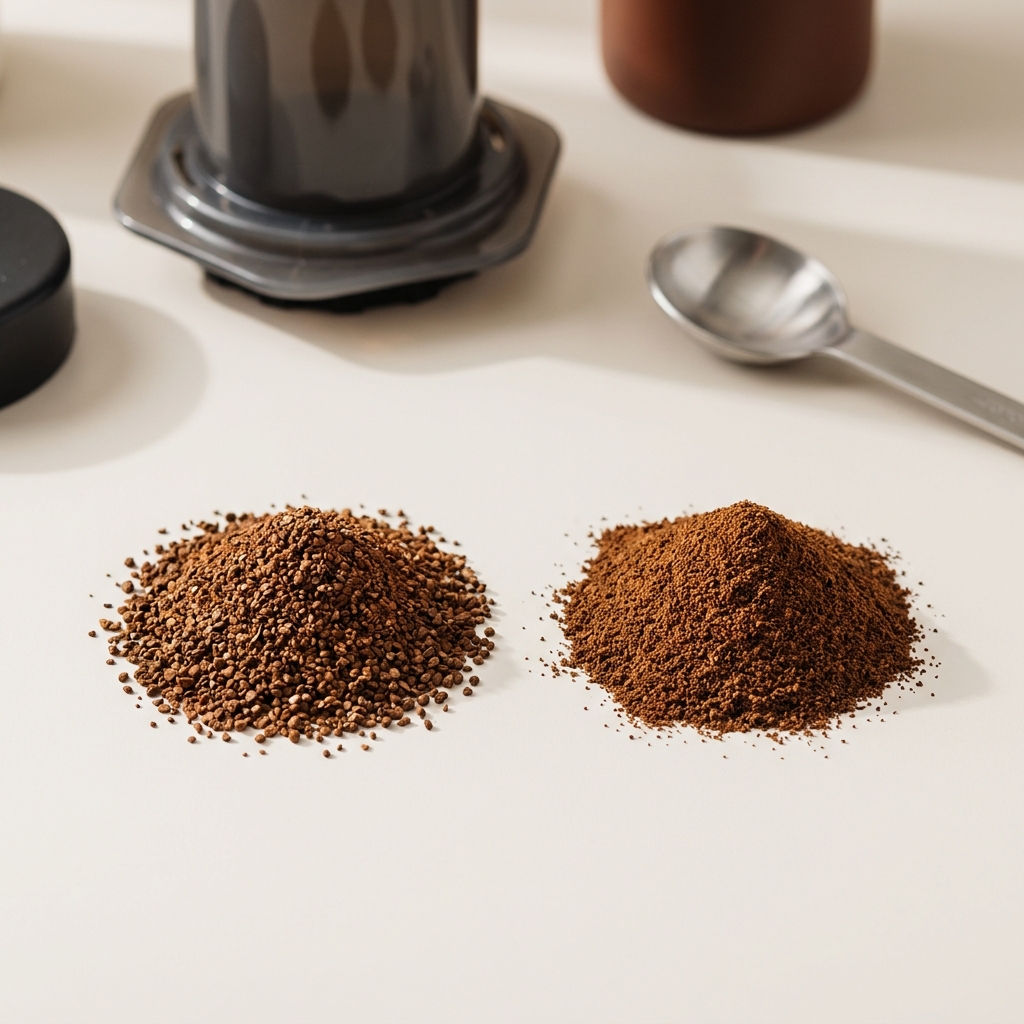
Start with a medium grind and a paper filter for a clearer, cleaner cup. Medium grind with paper tends to reduce sediment and highlight clarity because fewer fines pass through the filter. If clarity is your priority, this is the sensible starting point.
From there, tweak by making your grind slightly finer in small steps if the cup tastes underdeveloped, or coarser if it is overly astringent. Keep changes small and test in repeatable runs.
If you prefer fuller body or espresso like strength
Start with a finer grind and consider a metal filter or shorter water contact with more pressure when plunging. Finer grinds increase extraction speed and can produce a denser mouthfeel and stronger perceived strength. If you like a heavier body, try the fine route and adjust steep time to avoid excessive bitterness.
Keep in mind that finer grinds will increase plunger resistance and may leave more sediment if you push hard. Balance comfort of plunging with the cup profile you want.
Common mistakes and how to fix them
Problems that look like grind issues but are not
Blaming grind for every fault is common. If coffee tastes flat or dull, the problem may be stale beans, incorrect dose, or water temperature rather than grind. If a cup is overly bitter, check steep time and water temperature before making a large grind change.
Also watch for an uneven grind distribution from a low quality grinder. Symptoms of uneven grind include simultaneous sour and bitter notes in the same cup. If your grinder produces inconsistent particle sizes, smaller adjustments to grind setting will not solve the underlying issue.
Quick fixes you can try immediately
If the cup is underextracted and sour, try a slightly finer grind or increase contact time by a few seconds. If the cup is overextracted and harsh, coarsen the grind slightly or shorten steep time. Make one small change at a time and repeat your A/B tests to see its true effect.
If the cup is overextracted and harsh, coarsen the grind slightly or shorten steep time. Make one small change at a time and repeat your A/B tests to see its true effect.
Avoid extreme jumps in grind setting. Large adjustments often create different faults and make it hard to identify the real cause. When in doubt, return to the structured A/B protocol and run the test again with careful notes.
Sample approachable AeroPress recipes and next steps
Two starter recipes to test medium and fine
Starter A, medium grind: use the same dose for both recipes, a paper filter, medium grind, water just off the boil, 1 minute total contact with gentle stir, then plunge slowly. Starter B, fine grind: same dose, paper or metal filter if you prefer more body, 45 second total contact with a firmer plunge. Taste them side by side and compare acidity, bitterness, body and clarity.
These recipes are meant to be starting points. If one cup feels too bright, make the grind finer or increase contact time by 10 to 20 percent. If a cup feels too heavy or bitter, coarsen the grind or shorten the steep time slightly.
How to keep improving
Record each run in a simple notes journal: coffee, dose, grind note, water temp, contact time, filter type, and tasting impressions. Over a handful of sessions you will see patterns that point to consistent preferences. Make incremental changes from your chosen starting point to fine tune your favorite profile.
When you find a combination that works, repeat it across different coffees to learn whether you prefer a particular style across origins. Use the testing protocol periodically as your grinder burrs age or as you try different coffees to keep results consistent.

Frequently asked questions
Do I need a scale to test grind size?
A scale makes tests more repeatable and is strongly recommended, but you can run basic comparisons by using consistent scoop measures if you lack one.
Will a finer grind always make coffee stronger?
Finer grind often increases perceived strength because extraction happens faster, but strength also depends on dose and contact time.
How many tests should I run before deciding?
Run at least three repeatable comparisons on different days to confirm consistent results before locking in a preferred grind.
Choosing a grind for your AeroPress is less about hitting an exact number and more about making clear, repeatable comparisons. With a simple A/B plan and modest note taking you can find the balance of clarity, body and strength that matches your taste. Try the starter recipes, keep changes small, and use your tasting notes to iterate. In a few sessions you will have a working recipe you enjoy and can reproduce reliably.
Product options for this topic
As an Amazon Associate I earn from qualifying purchases. These are researched options, not hands-on test results. Check the exact size or model, current price and availability on Amazon.
| Product option | Fit and limits to check | Retailer |
|---|---|---|
| AeroPress Original | A manual press for a compact brewing routine. It makes concentrated coffee rather than pump-pressure espresso; check mug stability and filter needs. | View on Amazon |
| Baratza Encore ESP, Black | A grinder candidate for espresso and filter routines. Confirm the regional electrical version and allow room for the hopper and grounds bin. | View on Amazon |