
The journal
What is RDT in coffee grinding? A practical guide
Understand the Ross Droplet Technique (RDT), when it helps, safe steps, limits, and a quick way to test it at home.
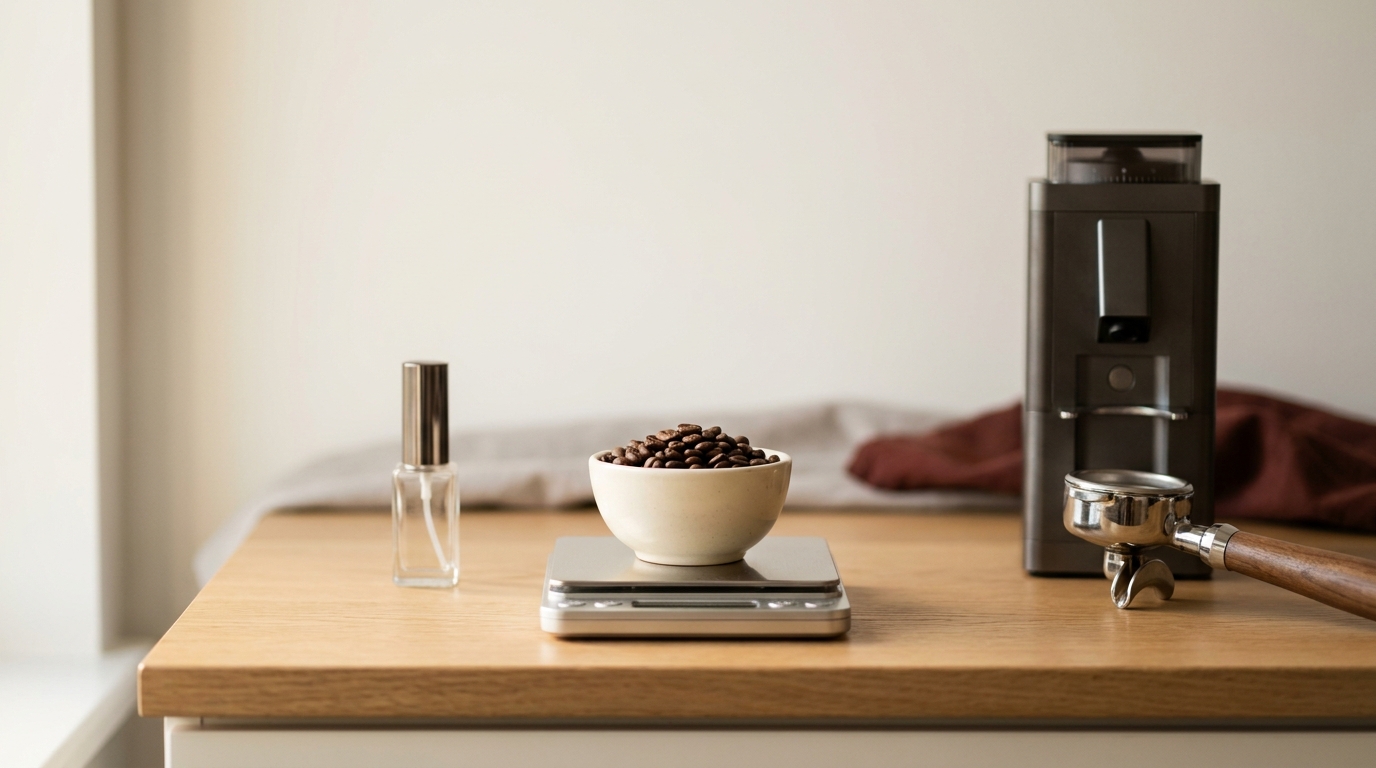
RDT (the Ross Droplet Technique) is the practice of adding a very small amount of water to a single dose of whole coffee beans just before grinding to reduce static so grounds exit and collect more cleanly. Use only tiny amounts and grind promptly, and only if your grinder’s guidance allows moisture exposure https://espressooutlet.com/blogs/blog-articles/the-benefits-of-wetting-coffee-beans-before-grinding-anti-static-and-beyond?srsltid=AYCX9vLMZ1JAqsZrhHhGzt8t2L-kEyuXU3RiD9wmtWPAry1azgqDjOfk.
Why people use RDT
Grinding can create static charge that makes grounds cling to chutes, cups and the grinder body, leading to mess and clumps. Lightly moistening a single dose before grinding lowers this charging and typically reduces cling and clumping under the conditions tested https://espressooutlet.com/blogs/blog-articles/the-benefits-of-wetting-coffee-beans-before-grinding-anti-static-and-beyond?srsltid=AYCX9vLMZ1JAqsZrhHhGzt8t2L-kEyuXU3RiD9wmtWPAry1azgqDjOfk. Guides also note that static and clumping can make even extraction harder, and that RDT can help reduce those handling issues, though extraction gains are not consistently proven https://kaffeemacher.ch/en/blogs/kaffeewissen/water-spray-rdt.
How much water is enough?
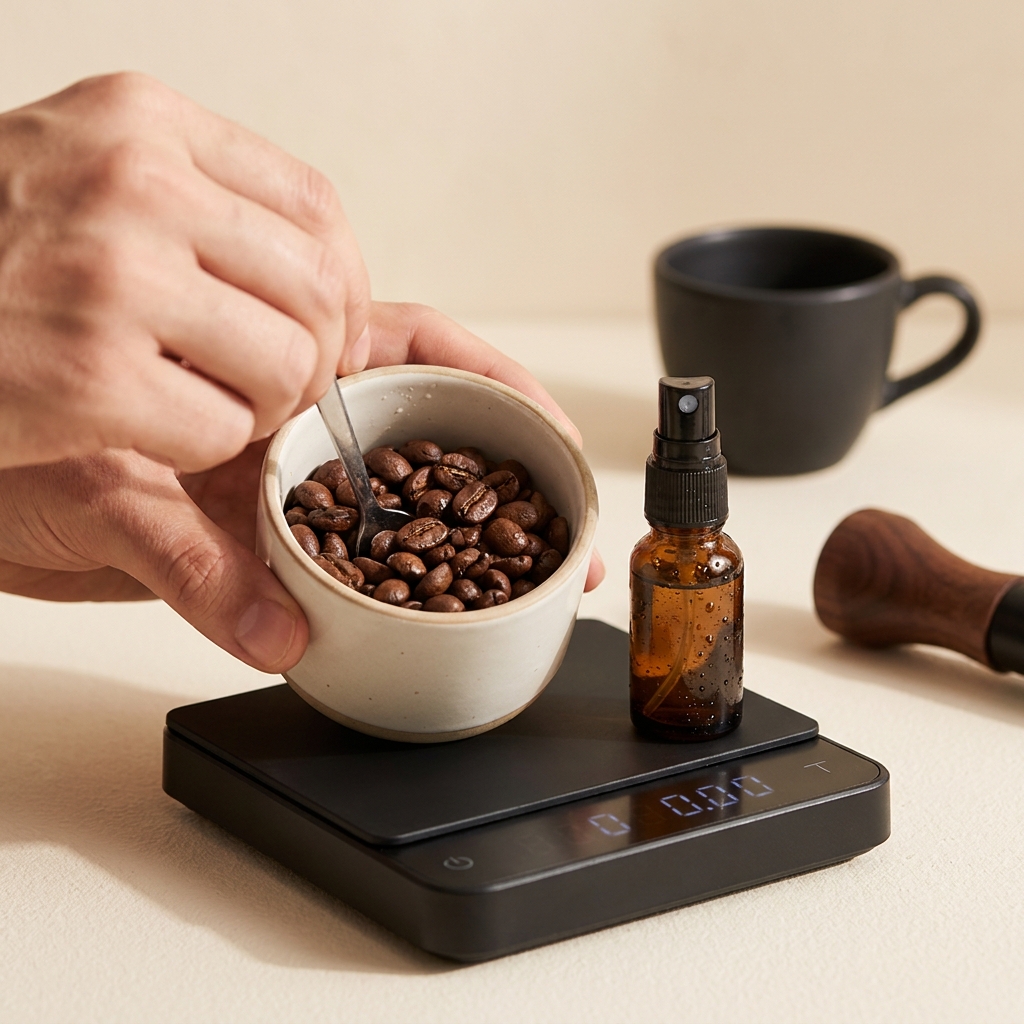
You need very little. Practical guidance based on testing suggests about 0.1 to 0.2 g of water per 18 g of coffee is sufficient to significantly reduce static, applied as fine droplets and spread across the beans https://kaffeemacher.ch/en/blogs/kaffeewissen/water-spray-rdt. Avoid soaking; the beans should look barely damp, not wet.
Safe, step-by-step RDT
Before you begin, check your grinder’s manual. Do not use RDT if the manufacturer prohibits moisture. Keep water away from the grinder body, electronics and controls, and never spray into the grinder. If your grinder has an ionizer, follow its maintenance instructions https://espressooutlet.com/blogs/blog-articles/the-benefits-of-wetting-coffee-beans-before-grinding-anti-static-and-beyond?srsltid=AYCX9vLMZ1JAqsZrhHhGzt8t2L-kEyuXU3RiD9wmtWPAry1azgqDjOfk.
- Weigh your single dose into a clean cup or small jar.
- Apply a very light fine-mist spray or a tiny droplet (aiming for roughly 0.1-0.2 g water per 18 g beans). A “single spray” is not standardized; atomizers vary https://espressooutlet.com/blogs/blog-articles/the-benefits-of-wetting-coffee-beans-before-grinding-anti-static-and-beyond?srsltid=AYCX9vLMZ1JAqsZrhHhGzt8t2L-kEyuXU3RiD9wmtWPAry1azgqDjOfk.
- Gently shake or stir to distribute moisture thinly and evenly.
- Grind immediately to avoid unnecessary moisture contact time.
When to use RDT (and when to skip it)
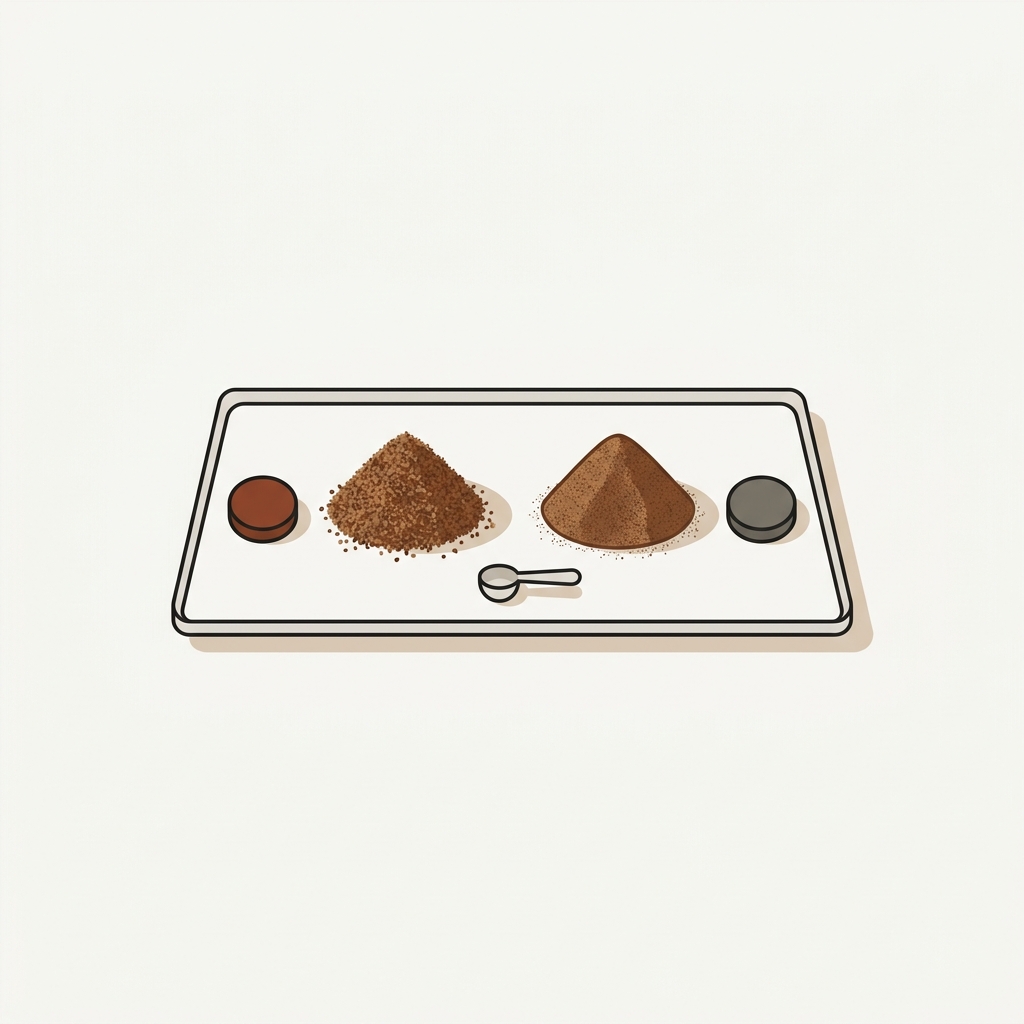
Use RDT for single-dosing when you regularly see static cling, messy transfer or clumping. Skip it if your grinder is already tidy, if the manual forbids moisture, if damp grounds begin to cake in the chute, or if you keep beans in a hopper. Do not wet beans you plan to store in a hopper; RDT is for single doses ground right away https://espressooutlet.com/blogs/blog-articles/the-benefits-of-wetting-coffee-beans-before-grinding-anti-static-and-beyond?srsltid=AYCX9vLMZ1JAqsZrhHhGzt8t2L-kEyuXU3RiD9wmtWPAry1azgqDjOfk.
Quick A/B test to judge impact
Use the same beans, dose and grind setting. Grind one dose dry and one with permitted RDT. Compare how much clings to the cup, how cleanly grounds transfer, and the output weight. If brew flow changes, re-dial before judging flavor. Keep your brewing recipe stable while assessing any change https://espressooutlet.com/blogs/blog-articles/the-benefits-of-wetting-coffee-beans-before-grinding-anti-static-and-beyond?srsltid=AYCX9vLMZ1JAqsZrhHhGzt8t2L-kEyuXU3RiD9wmtWPAry1azgqDjOfk.
Try RDT on a single dose: quick checklist
Limits and realistic expectations
RDT is mainly a workflow aid for cleanliness and consistency of handling. Research and practitioner reports show reduced static and clumping, but extraction improvements are inconsistent and not guaranteed. Treat any flavor change as case-specific and decide based on your own side-by-side tests https://kaffeemacher.ch/en/blogs/kaffeewissen/water-spray-rdt.
Related reading on Ground & Gauge
- Why are burr coffee grinders better? A clear, evidence-based guide
- How long should coffee beans degas? A practical resting guide
FAQ
Will RDT damage my grinder?
Use only tiny amounts of water on a single dose and keep moisture away from the grinder body and electronics. Do not use RDT if your manual forbids it, and never spray into the grinder. If damp grounds begin sticking in the chute, stop and clean https://espressooutlet.com/blogs/blog-articles/the-benefits-of-wetting-coffee-beans-before-grinding-anti-static-and-beyond?srsltid=AYCX9vLMZ1JAqsZrhHhGzt8t2L-kEyuXU3RiD9wmtWPAry1azgqDjOfk.
Does RDT always improve extraction?
No. It often makes dosing and cleanup easier, but the evidence for consistent extraction improvement is inconclusive. Judge by taste and flow in your own setup https://kaffeemacher.ch/en/blogs/kaffeewissen/water-spray-rdt.
Ground & Gauge champions practical, testable routines. If you try RDT, start small, compare against your normal workflow, and keep only the steps that clearly help you.

Related guides
Product options for this topic
As an Amazon Associate I earn from qualifying purchases. These are researched options, not hands-on test results. Check the exact size or model, current price and availability on Amazon.
| Product option | Fit and limits to check | Retailer |
|---|---|---|
| Baratza Encore ESP, Black | A grinder candidate for espresso and filter routines. Confirm the regional electrical version and allow room for the hopper and grounds bin. | View on Amazon |