Use the right quantities
With espresso, a 1:2 ratio describes dry coffee to beverage yield. An 18 g dose gives a 36 g target yield in the simple example. It does not tell you to put 36 g of water in the machine. Water in a reservoir serves a different role from water measured for a pour-over.
Measure the beverage
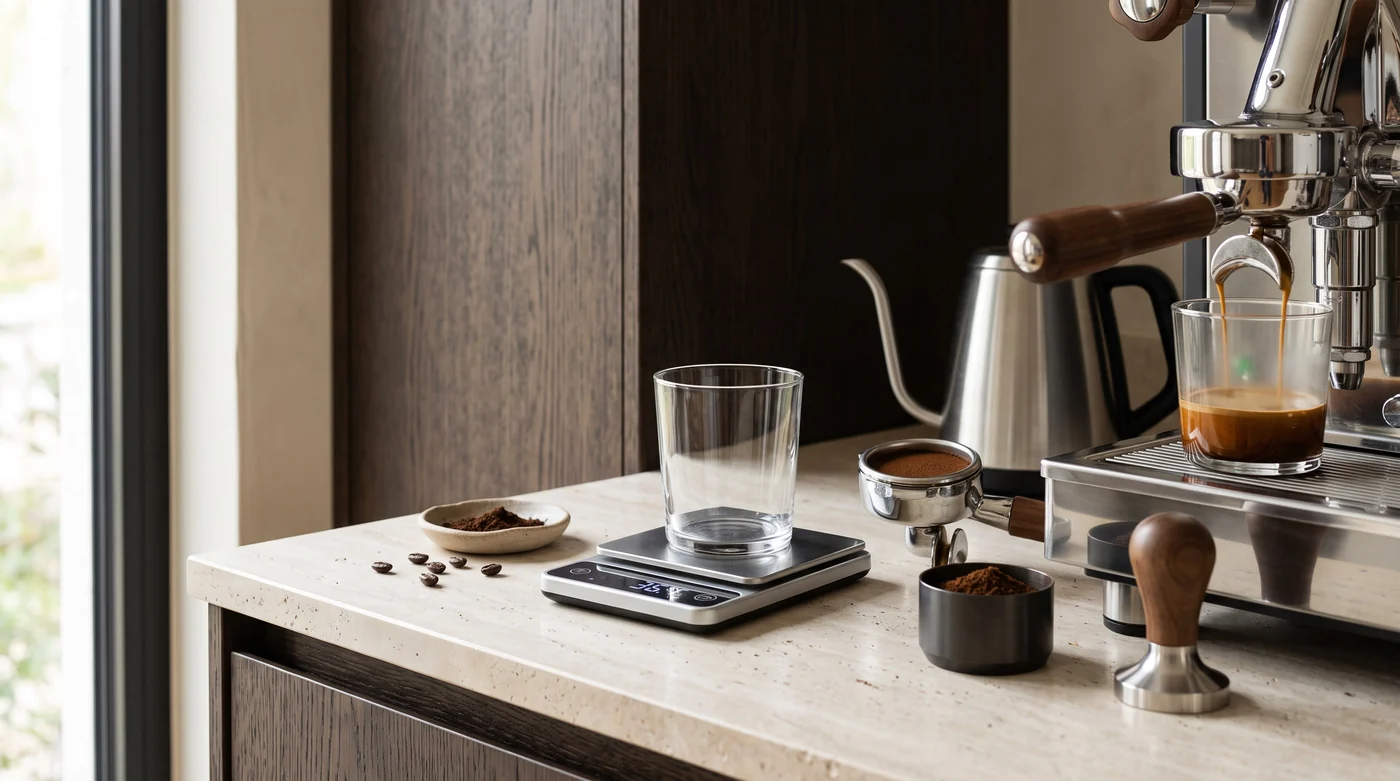
Put a suitable scale under the cup if your machine clearance allows it. Tare the cup before brewing and keep the scale within its water-resistance and heat limitations. Beverage mass avoids relying on crema volume, which can make a shot appear larger without representing a proportional amount of liquid.
Keep dose steady first
Use a dose appropriate for your basket. With that held steady, compare the result of a controlled grind or yield change. Record time as context rather than treating a particular number of seconds as proof of a good shot. Do not change dose, yield and grind together if your aim is to understand the effect of one adjustment.
Make milk drinks from a known base
When comparing a cortado and a latte, keep the espresso recipe steady and change the milk serving. Otherwise a change in the base espresso can be mistaken for the effect of milk. The Atlas separates these drink choices so you can compare what you actually meant to change.