
The journal
Is a WDT tool better than a coffee distributor?
Direct answer with a practical comparison of needle-distribution (WDT) and leveler/spinning distributors, when each helps, limits, and how to test your workflow.
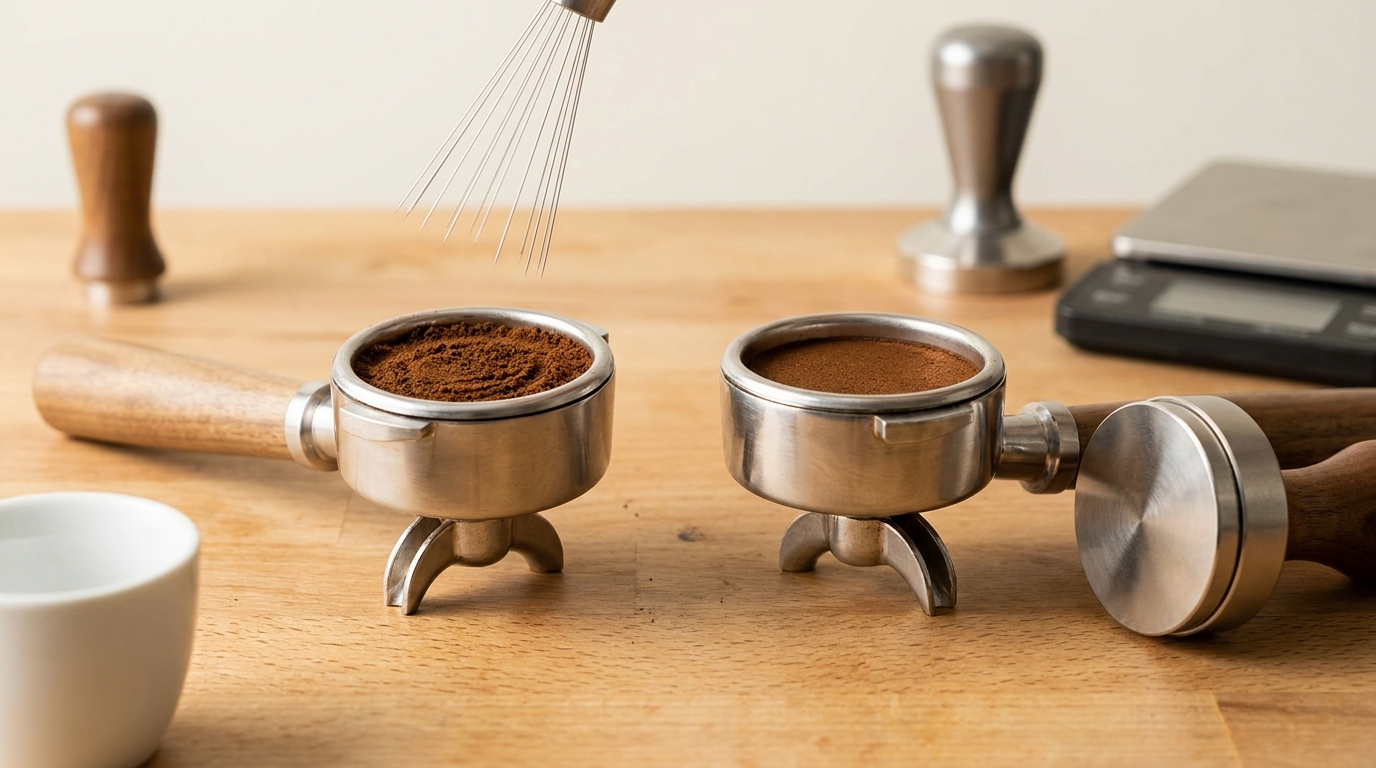
Short answer: neither is universally better. A WDT tool uses thin needles to break clumps and even out grounds through the full puck, while a leveler or spinning distributor mostly flattens the surface before tamping. Because they solve different problems, many people use WDT, then tamp, with an optional light leveler pass to tidy the top if desired (Brewed Barista comparison).
What each tool actually does
Needle-distribution (WDT)
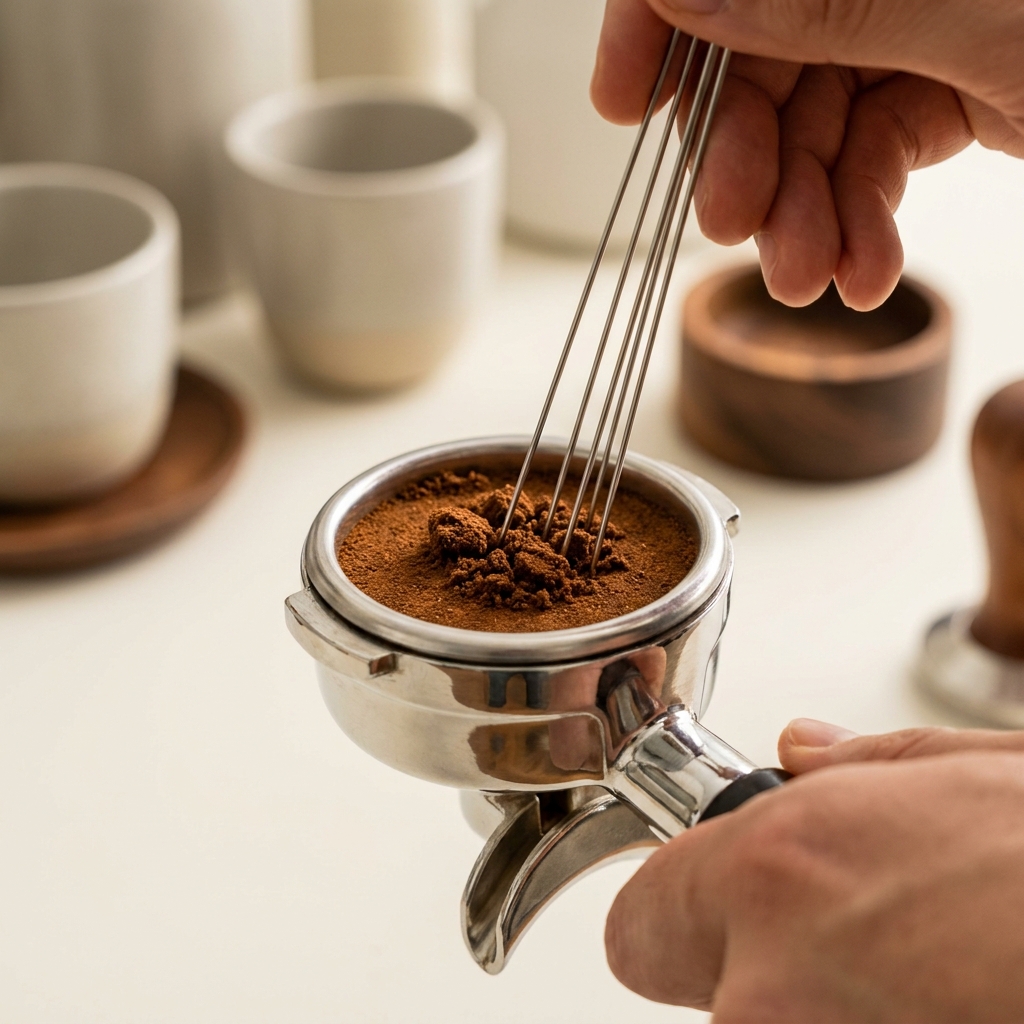
WDT stands for Weiss Distribution Technique. A WDT tool stirs the coffee bed with fine needles to declump and redistribute grounds through the entire depth of the basket. This targets internal density differences that can lead to channeling, especially with clumpy or static-prone grinding and single dosing (Brewed Barista comparison; Introvert WDT basics).
Leveler or spinning distributor
A leveler (often spun across the basket) creates a flat, repeatable surface for tamping. This is useful for speed and consistency on top of the puck, but it does not reach or fix deeper clumps or uneven density within the bed (Brewed Barista comparison; IKAPE guide).
When each tends to make more sense
- If your grinder or workflow produces clumps (common with static or single dosing), WDT often helps by evening the bed throughout, not just on top (Brewed Barista comparison; IKAPE guide).
- If your grinder doses very evenly and you value speed and repeatable puck tops, a leveler can streamline service as a fast finishing step (IKAPE guide).
Tip: If static is causing visible clumps, consider a light RDT (a small mist of water on beans before grinding) to reduce static before puck prep. See our practical overview in What is RDT in coffee grinding?
A practical A/B test to choose for your setup
Keep variables stable
Use the same dose, grind, basket, tamp, and machine settings across trials. We suggest weighing in and out to keep dose and yield consistent; if you need a refresher, read Do I need a coffee scale for espresso?.
Test arms
- WDT only: dose, WDT through the full depth, then tamp and pull.
- Distributor only: dose, leveler/rotating distributor pass, tamp, then pull.
- Combined: WDT, light leveler pass if you want a flat top, then tamp.
Watch the early flow and the spent puck: obvious spurting, uneven initial flow, or holes in the puck suggest uneven distribution. A tidy surface alone does not prove that the bed is even at depth (Brewed Barista comparison).
Limits and common mistakes
With WDT
- Over-agitating can encourage fines to migrate and create uneven density. Keep motions gentle and consistent, sweeping from bottom to top rather than grinding the needles in place (IKAPE guide).
- Very dense needle clusters can move grounds as a block instead of declumping. Sparse, thin needles help break clumps more cleanly (Introvert WDT basics).
With distributors
- They mainly act on the surface and can compress the top layer; deep clumps remain, so a flat puck top can still channel (Brewed Barista comparison).
- Pressing too hard or spinning excessively can over-compact the upper layer, hurting flow uniformity (IKAPE guide).
Default sequence we recommend
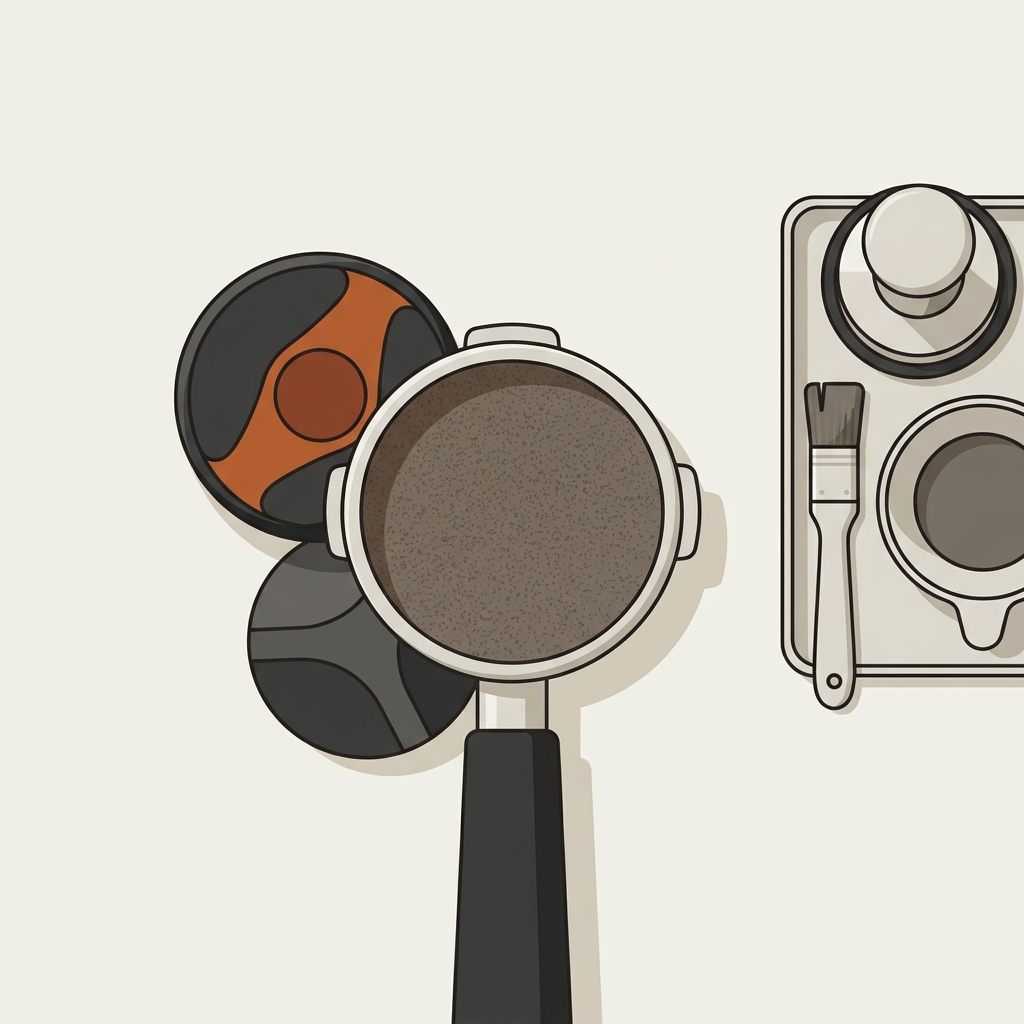
Start with WDT to address internal clumps, then tamp. If you like an ultra-neat top before tamping, add a brief, light leveler pass as an optional cosmetic step. This sequence balances internal evenness with a flat, repeatable puck top (Brewed Barista comparison).
New to WDT? Here is a straightforward technique overview covering gentle, full-depth stirring with thin needles: Introvert WDT basics.
Quick pre-tamp puck routine

FAQ
Should I use both tools?
Often yes: WDT first to even the bed internally, then tamp. A brief leveler pass before tamping is optional if you prefer a perfectly flat surface (Brewed Barista comparison).
Will WDT slow me down too much?
WDT adds a few gentle motions to your routine. In high-throughput bars a quick leveler may better match the pace; at home, WDT’s added control often outweighs the small time cost (IKAPE guide).