
The journal
How to tell if your coffee grinder burrs are worn
Practical ways to spot dull burrs: what to listen for, what to taste, simple logs and timing tests, and what to rule out before you replace.
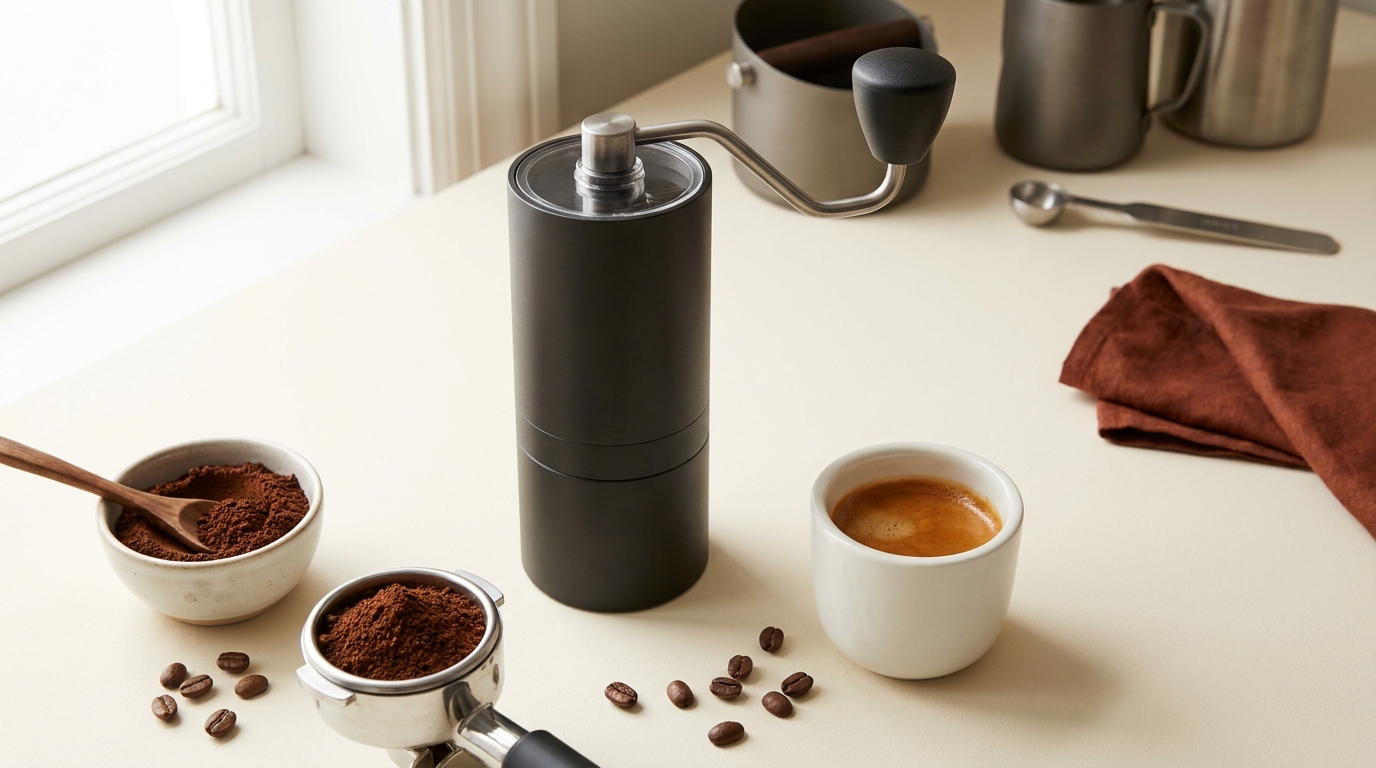
Short answer: your burrs are likely worn if you must dial the grinder progressively finer to hit the same brew time, grinding slows and clumps more, grounds run warmer, your cup loses clarity, and you can see rounded or chipped cutting edges. These are established signs of dull burrs and reduced cutting efficiency, after you have cleaned and reassembled correctly (Blackout Coffee; Mahlkönig; Limini Coffee).
Clear signs your burrs are wearing
- Grind settings drift finer over weeks to maintain the same shot time or brew flow (Blackout Coffee).
- Grinding takes longer, clumps more, or the ejection becomes less clean and centered; the grinder may sound more strained and the grounds can feel warmer due to extra load (Mahlkönig; Limini Coffee).
- Inconsistent grind with more fines and larger fragments, leading to muddier flavor and reduced clarity in the cup (Limini Coffee).
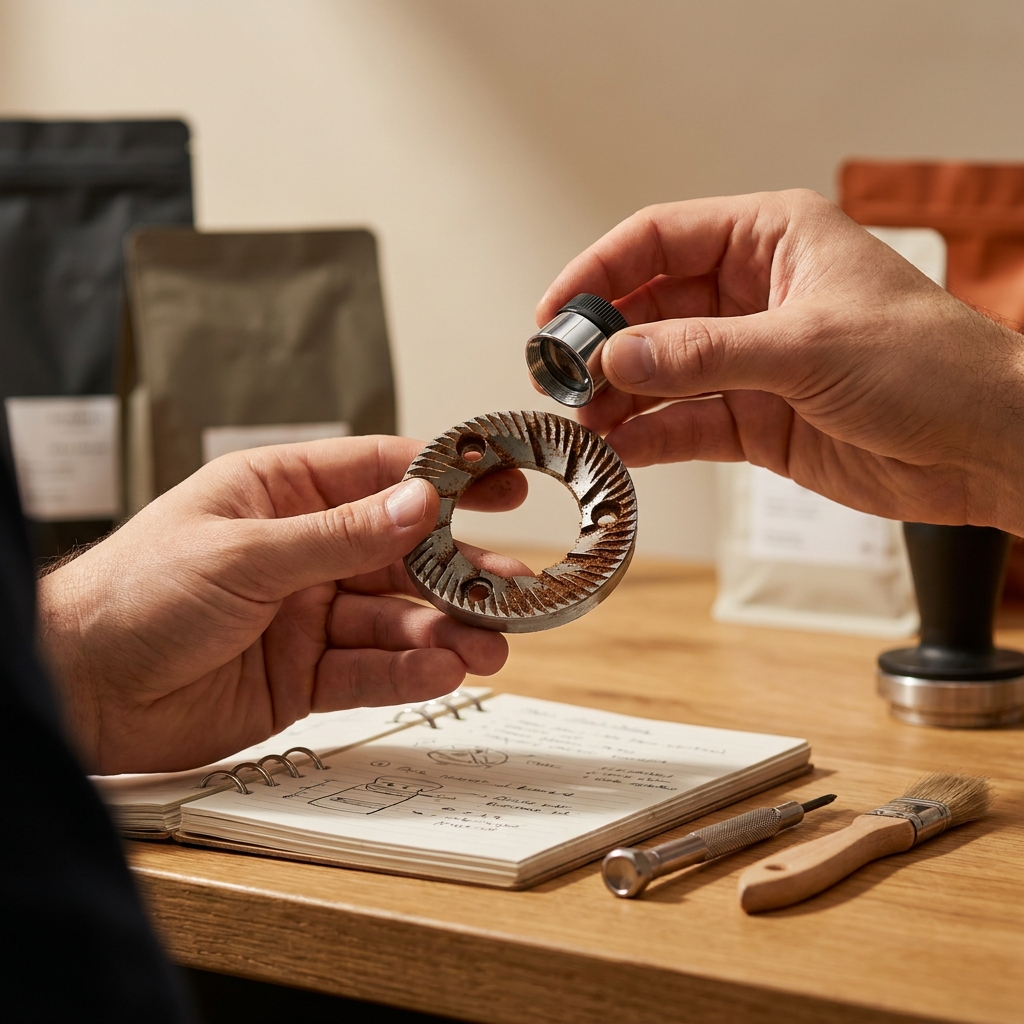
- Visible rounding, shiny wear facets, chips, or uneven edges on the burrs under good light (Limini Coffee).
Rule out the easy stuff first
Before you blame the burrs, clean and reassemble properly. Unplug the grinder, empty the hopper, brush out the chamber and threads, and avoid water on steel edges. Refit parts carefully so the adjustment collar isn’t cross-threaded (Espresso Parts; Voltage Coffee Supply).
If you want a deeper primer on safe burr-chamber cleaning media, see Ground & Gauge’s guide: What can I run through a burr grinder to clean it?
Simple tests you can do at home
1) Track drift
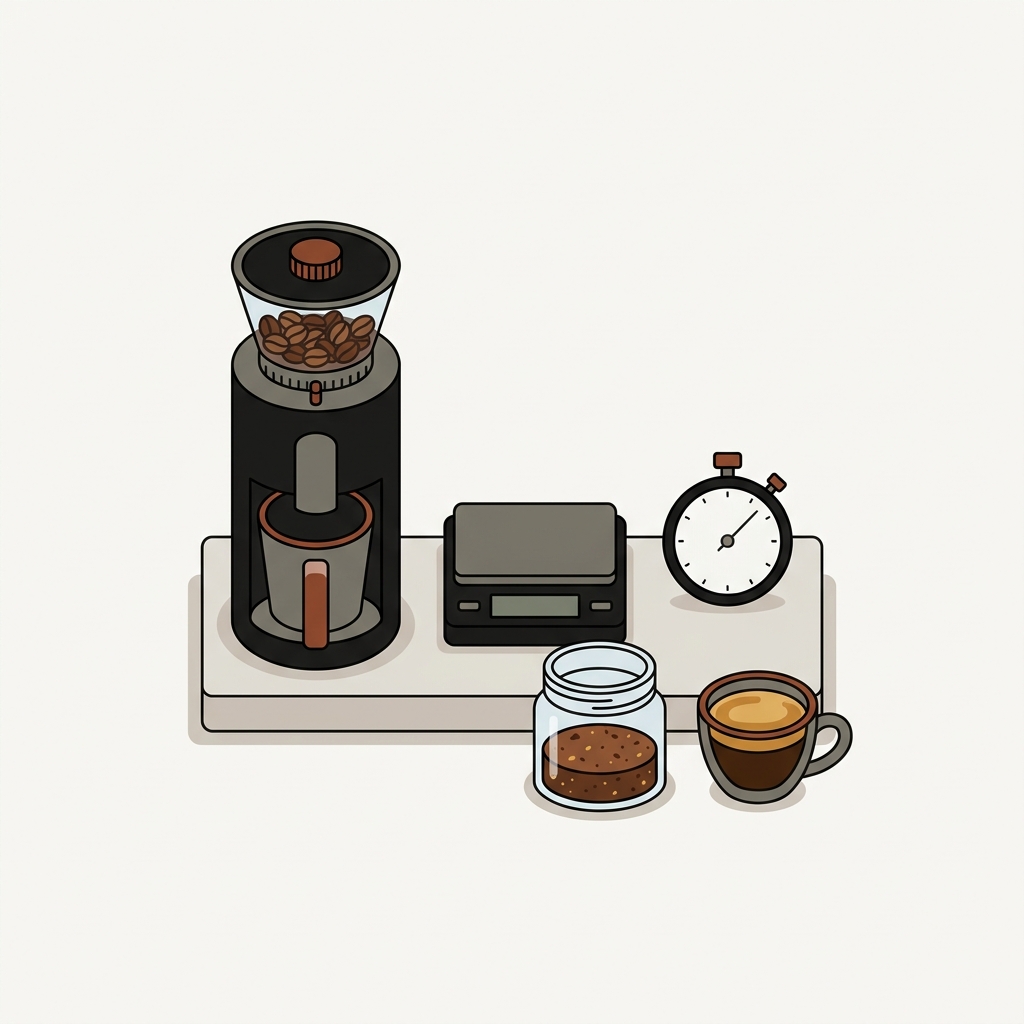
Across several sessions with the same beans and dose, log your grinder setting and the resulting shot time or brew flow. A steady creep finer to maintain the same target is a classic wear indicator (Blackout Coffee).
2) Time a fixed dose
Weigh a standard dose (for example, 18 g) and time the grind. Repeat after cleaning and at the same setting. A persistently longer grind time, especially with more clumping or warmth in the grounds, supports the dull-burr diagnosis (Limini Coffee; Mahlkönig).
3) Check grind consistency and taste
Spread grounds on white paper and look for increased dust plus larger fragments compared with your grinder’s normal output. In the cup, expect reduced flavor clarity or muddiness when fines increase (Limini Coffee).
Practical checks to confirm burr wear
When replacement is the right call
If drift, slower output, heat/clumping, and a muddier cup persist after thorough cleaning and correct reassembly, the burrs are likely past their best. Manufacturers describe these same symptoms as the practical triggers to replace a set (Mahlkönig; Espresso Parts).
There’s no universal calendar. Burr life depends mainly on how much coffee you grind, how fine you grind, and bean hardness or roast level (Mahlkönig). Many manufacturers rate burrs in the hundreds of kilograms of coffee; for low-volume home use, that often translates to many years, so track usage and symptoms rather than age (Blackout Coffee).
Tip: replace both burrs as a set, and follow your model’s guidance; some espresso grinders also recommend replacing related parts like flappers at the same time (Mahlkönig). If you’re not comfortable with disassembly or alignment, seek professional service rather than forcing parts back together (Espresso Parts).
Keep things stable going forward
- Adopt a light routine: brush weekly; deep clean every few months to remove packed residue and oils that can mimic wear (Blackout Coffee).
- Avoid moisture on burrs; use a brush, vacuum, or grinder-cleaning tablets as directed (Voltage Coffee Supply).
- To reduce static and clumping that can confuse diagnostics, see our primer: What is RDT in coffee grinding?
FAQ
Do burrs wear differently by bean and grind? Yes. Finer espresso grinding and denser, lighter roasts stress cutting edges more than coarser filter grinding or softer dark roasts (Mahlkönig).
Can burrs be sharpened instead of replaced? For most modern sets, replacement is the recommended route rather than sharpening (Moqa).
Want to tighten your overall brew consistency while you test? Our piece on scale accuracy can help: How do I recalibrate my scale?

Related guides
Product options for this topic
As an Amazon Associate I earn from qualifying purchases. These are researched options, not hands-on test results. Check the exact size or model, current price and availability on Amazon.
| Product option | Fit and limits to check | Retailer |
|---|---|---|
| Baratza Encore ESP, Black | A grinder candidate for espresso and filter routines. Confirm the regional electrical version and allow room for the hopper and grounds bin. | View on Amazon |
Sources and further reading
- Mahlkönig: Changing burrs – when and why
- Espresso Parts: Grinder burr maintenance (safety and alignment)
- Limini Coffee: When to change your coffee burrs
- Blackout Coffee: Grinder burrs – seasoning and care
- Voltage Coffee Supply: Grinder cleaning guide
- Moqa: How to calibrate a grinder and know when to replace burrs