
The journal
Is an espresso puck screen worth it? Practical advice on fit and cleanup
A clear answer on whether a puck screen is worth it, focusing on compatibility, clearance, cleanup and manageable tradeoffs.
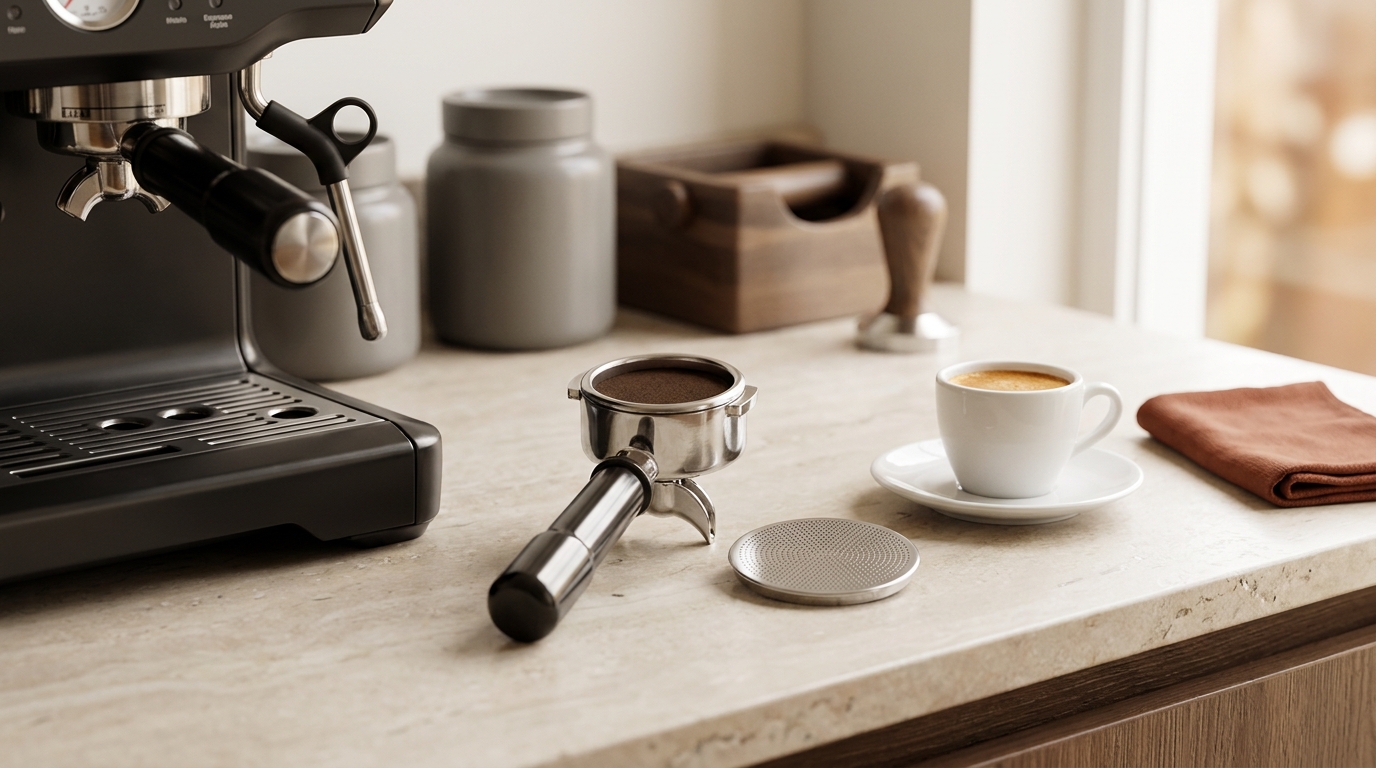
What a puck screen is, and what it’s for
A puck screen is a thin metal disc (often mesh or perforated steel) that sits on top of the tamped coffee. It acts as a secondary diffuser between the group’s shower screen and the coffee bed, with the practical upsides typically centered on cleaner hardware and more buffered water delivery across the puck Coffee Chronicler: puck screen explained, Hypergrind Coffee: what’s a puck screen.
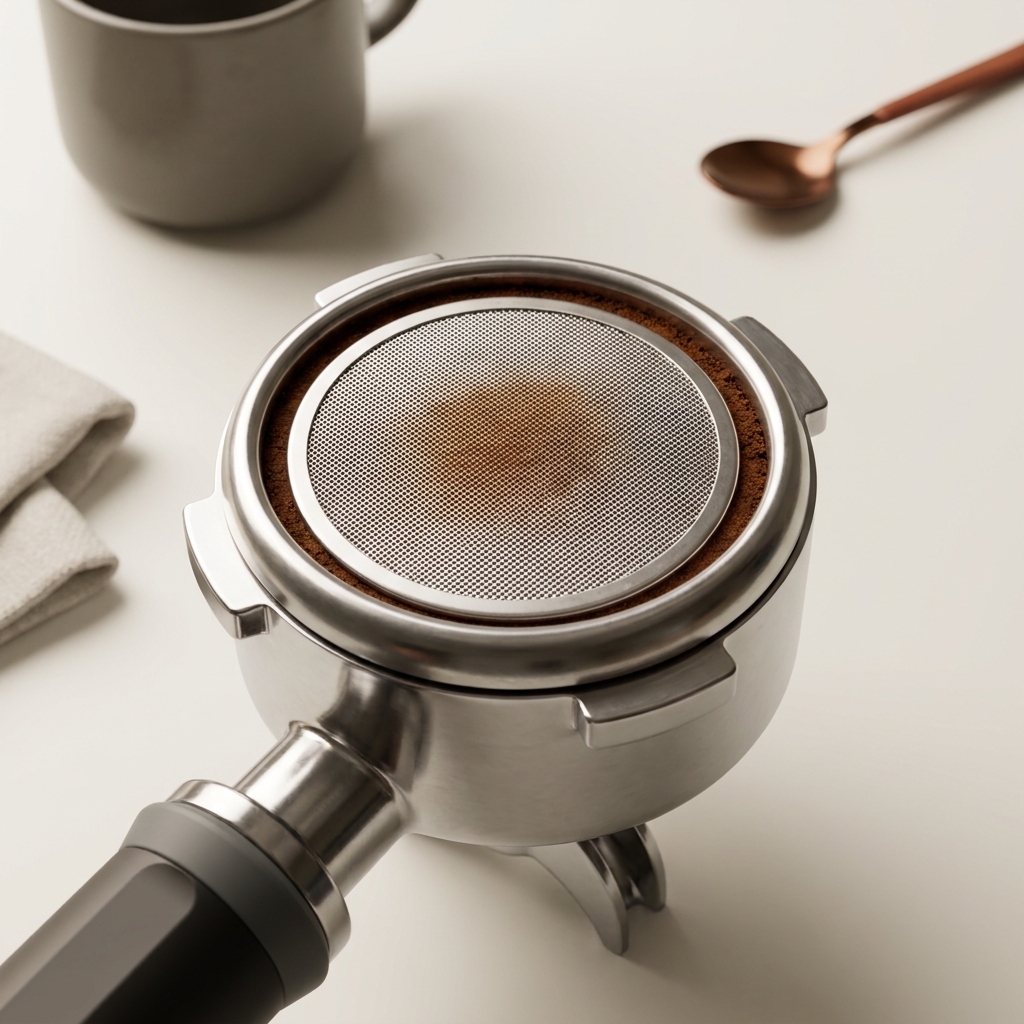
Compatibility: size and fit come first
Buy the diameter that matches your portafilter/basket (common sizes include 49, 51, 53.5 and 58.5 mm) and ensure it sits flat on the tamped puck Stark Insider: puck screen worth it, Coffee Chronicler: puck screen explained.
- Headspace and clearance: the screen occupies vertical space and can reduce effective basket capacity. Some users choose a slightly smaller dose to maintain clearance, and it’s wise to lock in gently the first time to confirm nothing scrapes the shower screen or a protruding screw Stark Insider: puck screen worth it.
- Flow behavior: adding a screen can slow the shot slightly on some setups; consider re-checking your usual shot time after you introduce it Stark Insider: puck screen worth it.
Cleanup and routine: what changes
Using a screen often helps keep the shower screen and group area cleaner by catching splashed grounds. Many users also see neater, drier pucks that knock out more easily, which supports faster cleanup Coffee Chronicler: puck screen explained, Latte Art Guide: are they worth it?, Stark Insider: puck screen worth it.
Basic use is simple: prep and tamp as usual, place the clean screen on the puck, lock in, and pull the shot. Afterward, rinse the screen and let it dry. Mesh styles can trap oils and fines and may need periodic soaking in a coffee cleaner; disc-style screens are typically easier to rinse clean Coffee Chronicler: puck screen explained.
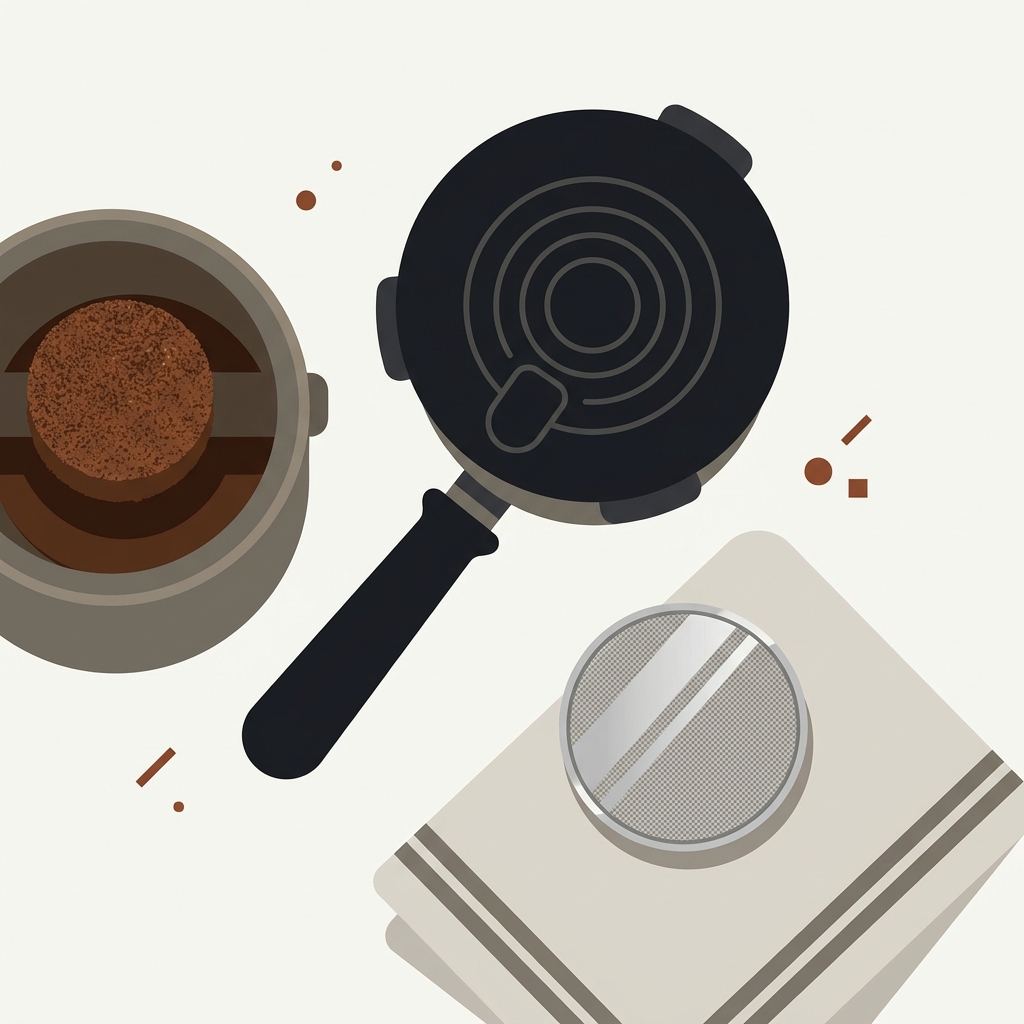
Tradeoffs to weigh
- Added handling: you’ll insert, rinse and store the screen after each shot Coffee Chronicler: puck screen explained.
- Clearance and capacity: the screen takes vertical space; some machines with a protruding shower-screen screw may mark the screen if you force the lock-in. Start gently and adjust dose if needed Stark Insider: puck screen worth it.
- Flow timing: your typical shot time can shift; re-check your recipe and targets after adding the screen Stark Insider: puck screen worth it.
- Not a fix for poor prep: a screen can buffer water delivery, but distribution and tamp quality still drive extraction consistency Coffee Chronicler: puck screen explained, Latte Art Guide: are they worth it?.
How to decide for your setup
Try it for a small run of shots and focus on objective checks: does it lock in without resistance, is cleanup quicker, and are your shot times predictable again after a brief adjustment? Using a scale helps you keep dose and yield steady while you compare routines; if you need a refresher on scales for espresso, start here: Do I need a coffee scale for espresso?. If you also track strength or consistency over time, this primer can help: What is TDS in coffee extraction?.
Quick puck screen fit-and-flow checklist
FAQ
Will a puck screen fit my machine?
Choose a screen that matches your portafilter size and make sure it sits flat; common sizes include 49, 51, 53.5 and 58.5 mm Stark Insider: puck screen worth it, Coffee Chronicler: puck screen explained.
Will it fix channeling?
It can buffer the initial water impact, but it won’t replace good distribution and tamping. Treat it as an optional aid, not a cure-all Coffee Chronicler: puck screen explained, Latte Art Guide: are they worth it?.
Are pucks easier to knock out with a screen?
Many users report tidier, drier pucks and a cleaner shower screen, which can make cleanup faster Coffee Chronicler: puck screen explained, Stark Insider: puck screen worth it.