
The journal
What is TDS in coffee extraction? A practical guide to brew strength
A clear, useful explanation of coffee TDS, how to measure it with a refractometer, how it relates to extraction yield, and how to use both numbers to dial in better brews.
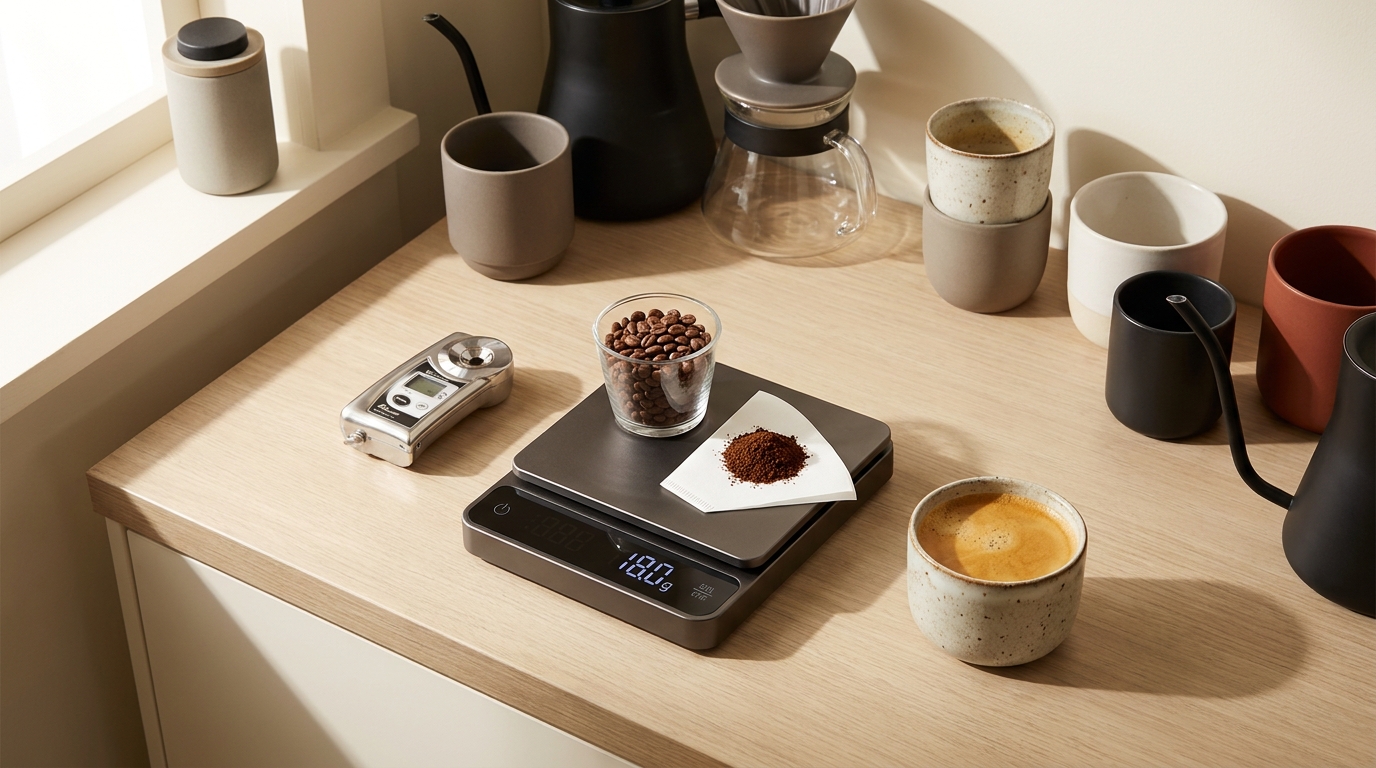
Short answer
TDS in coffee extraction means total dissolved solids: the percentage of dissolved coffee compounds in your brewed beverage. It is an objective measure of brew strength, describing how light or heavy the cup is Counter Culture Coffee. Do not confuse coffee TDS with water TDS. Coffee TDS is typically measured with a refractometer; water TDS meters estimate dissolved ions by conductivity and answer a different question Hauck Barista Tools.
How to measure TDS reliably
What you need
A coffee refractometer, distilled or deionized water for calibration, a precise scale, a small pipette or syringe, and clean sample cups. For consistent results, keep your procedure the same each time Hauck Barista Tools.
Step-by-step
- Calibrate the refractometer with distilled water according to its instructions. Instruments are calibrated for a temperature range, so avoid measuring very hot samples that can skew readings Paul's Weblog.
- Brew as normal, then stir or swirl the beverage to make it uniform. Take a small representative sample.
- Let the sample cool toward room temperature or the device’s rated range before measuring Paul's Weblog.
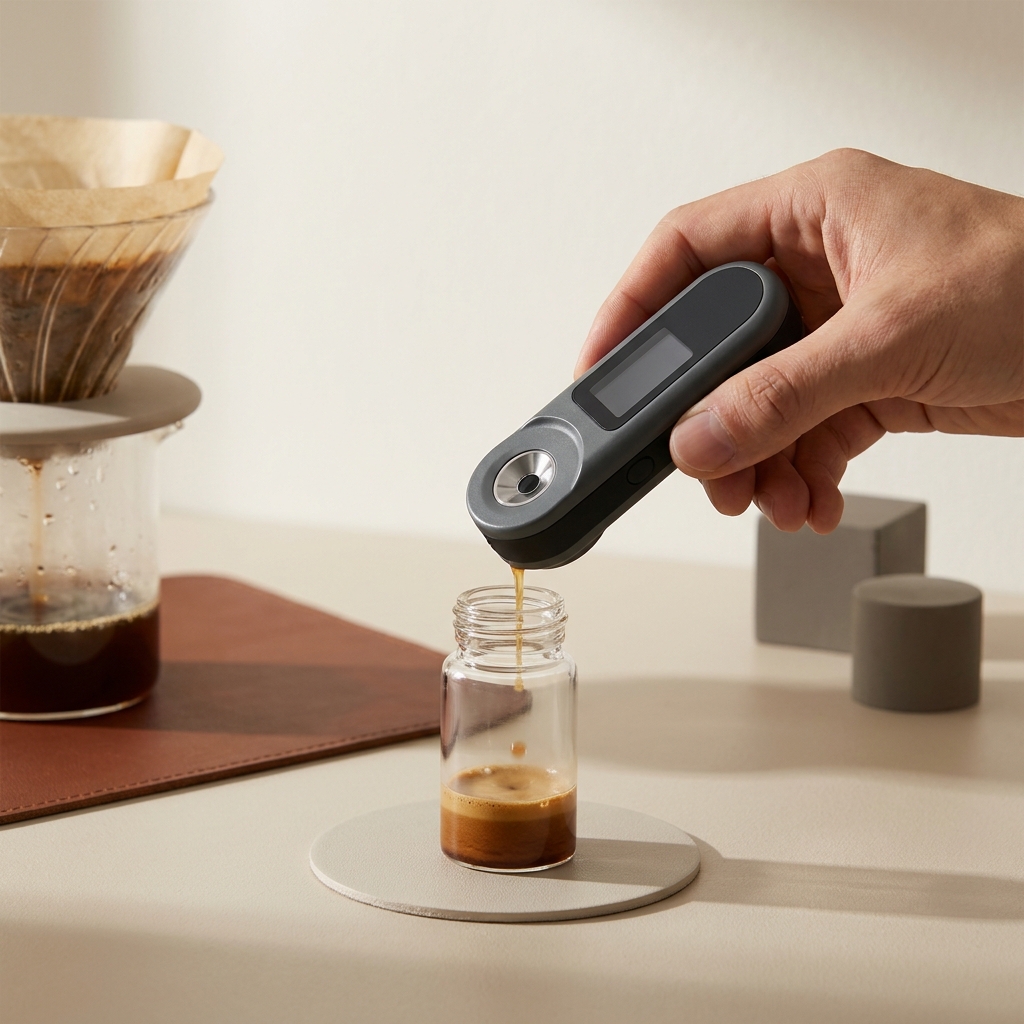
- Use a clean pipette. If your brew contains visible fines or oils, pass the sample through a fine paper to improve consistency. Place a few drops on the prism and record the TDS reading. Keep the prism and tools clean between measurements for repeatability Hauck Barista Tools.
TDS and extraction yield: how they work together
TDS tells you the beverage’s concentration. Extraction yield (EY) estimates how much of the dry coffee mass dissolved into the beverage. They are related but not the same. Two cups can share the same TDS yet have different EY, and vice versa Hauck Barista Tools.
A common approximation is: EY ≈ (TDS% × beverage mass) ÷ dry dose. Some methods adjust dose for moisture content in roasted coffee; for example, one worked example subtracts about 3.5 percent moisture from dose in the denominator Paul's Weblog.
Reference points can help frame results. Under defined test conditions for automatic filter brewers, the Specialty Coffee Association uses a concentration range of about 1.15 to 1.45 percent TDS and 18 to 22 percent EY as a technical reference. These are not universal taste targets for every coffee or method, but they are useful anchors when comparing brews Hauck Barista Tools.
Using the numbers to dial in
Decisions by scenario:
- Low TDS and low EY: the cup is weak and under-extracted. Increase contact time, use a finer grind, or slightly raise brew temperature to extract more. Optionally reduce beverage mass to raise strength. Variables like grind, time, and temperature directly influence extraction De Fer Coffee & Tea.
- Low TDS but good EY: extraction is adequate but the beverage is dilute. Increase dose or reduce beverage mass to raise strength without changing extraction mechanics.
- High TDS and low EY: strong but under-extracted. Extend contact or grind slightly finer to raise EY, then adjust ratio if needed for preferred strength De Fer Coffee & Tea.
Water composition can change how coffee extracts and tastes even at the same TDS. If your results remain puzzling, review your brew water’s hardness and alkalinity. See our guide to ideal water hardness for coffee.
Run a quick TDS-and-EY check
Common pitfalls and simple fixes
- Hot samples: readings drift when the sample is far from the device’s temperature range. Let samples cool toward room temperature before measuring Paul's Weblog.
- Dirty or inconsistent samples: oils and fine particles on the prism or in the drop reduce repeatability. Keep tools clean and use a consistent sampling routine Hauck Barista Tools.
- Wrong tool: a water TDS meter is for water, not brewed coffee. Use a coffee refractometer for beverage TDS Hauck Barista Tools.

FAQ
What TDS values are typical?
For brewed filter coffee under standardized test conditions, a common reference range is about 1.15 to 1.45 percent. Espresso is much more concentrated and often measures an order of magnitude higher; around 10 percent is a typical ballpark example. These are reference points, not strict targets for every coffee or recipe Hauck Barista Tools, Paul's Weblog.
Is a higher TDS always better?
No. Higher TDS means a stronger beverage, not a guarantee of better taste. TDS should be interpreted alongside extraction yield and, most importantly, your sensory preferences Hauck Barista Tools, Counter Culture Coffee.
Want a starting point for ratios while you practice measuring? Try our guide on how much coffee for a 500 ml pour-over and adjust from there as your TDS and EY results guide you.