
The journal
Why use two AeroPress filters?
What stacking two AeroPress paper filters changes, when it helps versus one paper or a metal filter, and how to test it without wrecking your recipe.
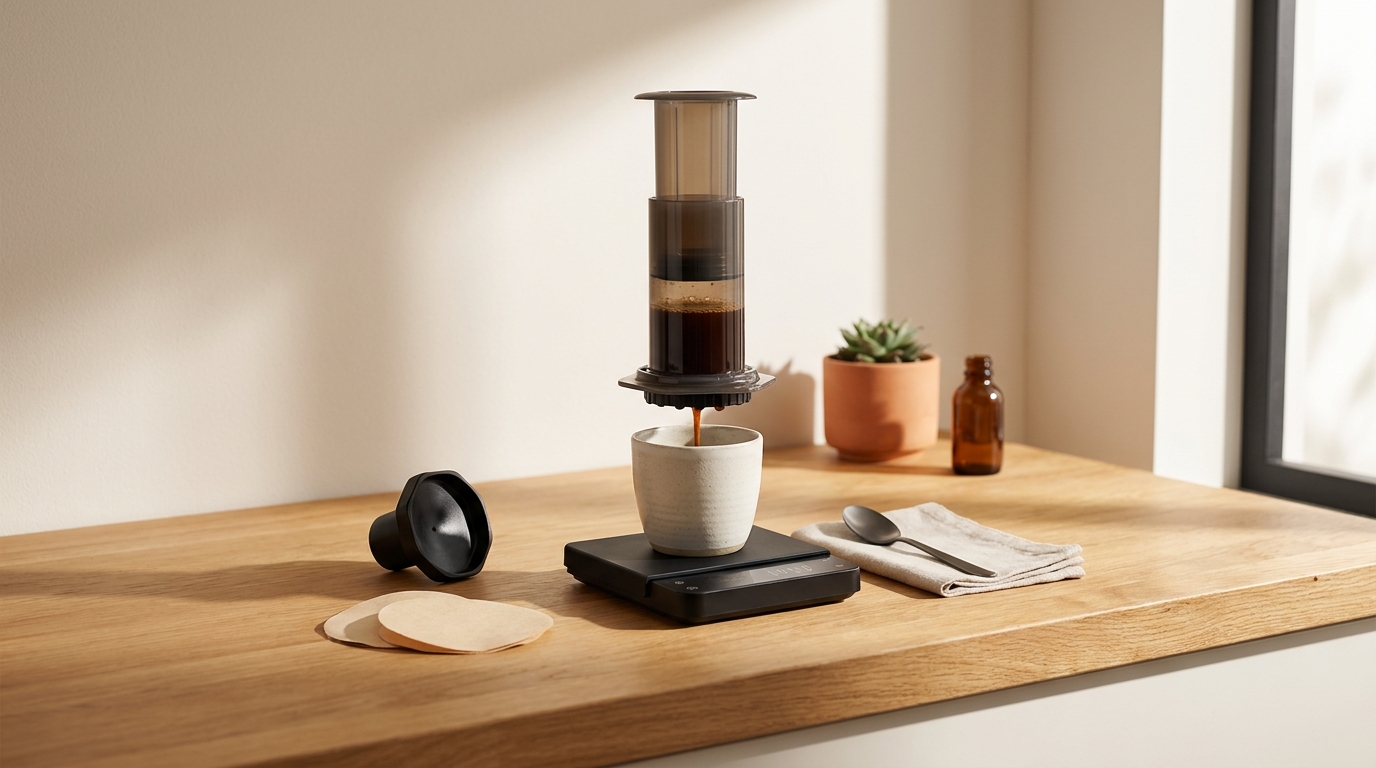
Using two AeroPress paper filters can produce a cleaner, lower-sediment cup. Paper absorbs oils and holds back micro-fines; a thicker or stacked paper bed increases this effect, so clarity goes up and the press feels slower. AeroPress notes that thicker paper and even adding more filters gives a crystal-clear flavor, while metal filters allow more oils and fines for a fuller body (AeroPress filter guide). Expect a bit more resistance when plunging, and some users find double paper also reduces small drips at the cap during non-inverted brews (Homegrounds: Paper vs metal).
What changes when you stack two papers
- Higher clarity: Paper filters absorb coffee oils and trap fine particles; using thicker or multiple papers increases this, yielding a brighter, cleaner cup (AeroPress filter guide).
- Less sediment: More fines are held back, so grit in the cup often drops (AeroPress filter guide).
- Slower press feel: Two papers increase resistance, so you’ll press more slowly and evenly. This can also help limit minor leakage if you brew upright (Homegrounds: Paper vs metal).
When to use one paper, two papers, or metal
- Use two papers when clarity matters most, you dislike silt, or you notice small drips at the cap while pressing upright. Stacking increases filtration and resistance (Homegrounds: Paper vs metal; AeroPress filter guide).
- Use one paper for the classic clean AeroPress profile with a bit faster plunge (AeroPress FAQ).
- Use a metal filter if you want more body and texture; metal lets oils and some fines pass, giving a fuller mouthfeel (AeroPress FAQ).
Advanced option: paper + metal together
Some competitors and trainers “stack” filters for extra control, including using a metal disc with one or more paper filters to increase resistance and structure. This is an optional technique to fine-tune body and clarity, not a requirement (Perfect Daily Grind: Paper vs metal AeroPress filters).
How to stack and press (without breaking your recipe)
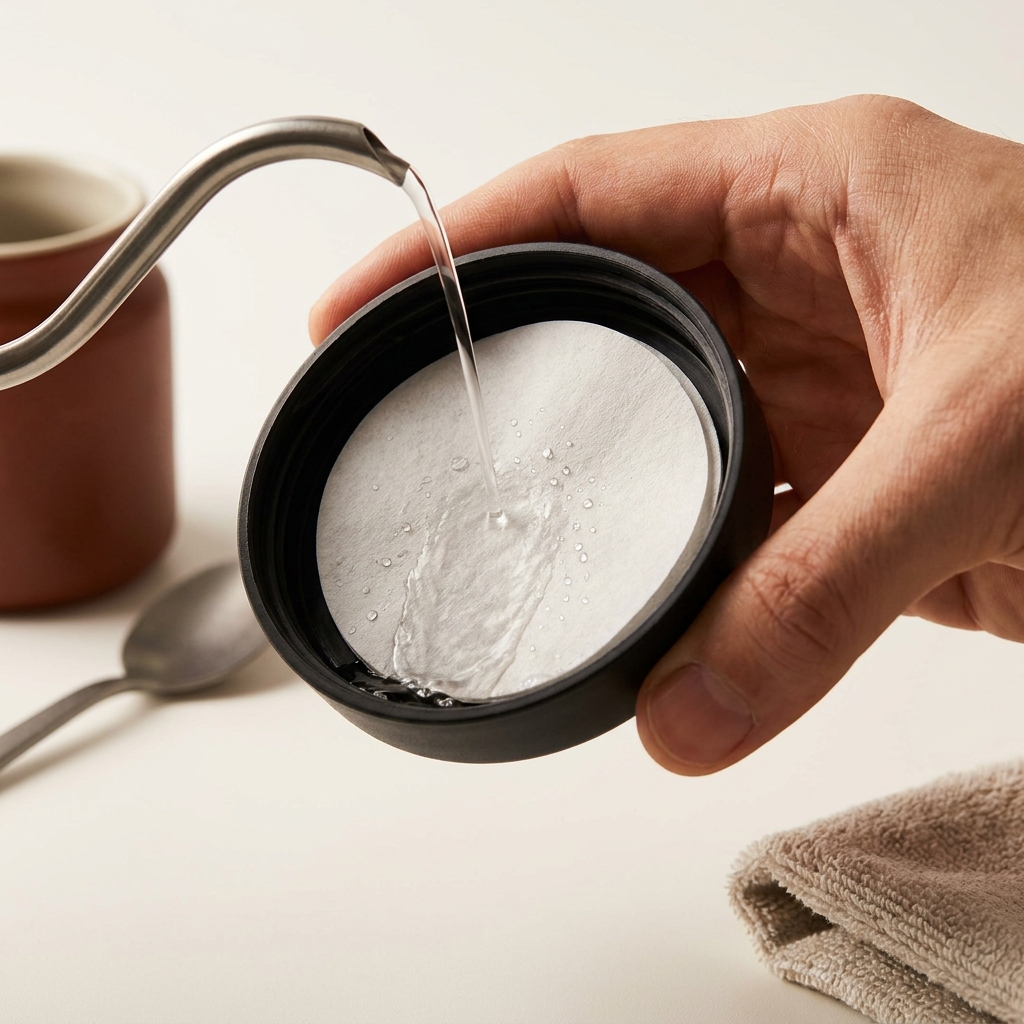
- Seat two papers flat in the cap. Rinse with hot water to remove any papery notes and help them sit flush (Ue Coffee Roasters: AeroPress filter paper). If you want a deeper dive on rinsing, see our guide: Should you rinse coffee filters?
- Attach the cap, brew as usual, and press more slowly. If pressing feels too hard, AeroPress advises gentle pressure and, if needed, a slightly coarser grind to avoid compaction; slow, gentle pressing typically takes about 20 to 40 seconds (AeroPress FAQ).
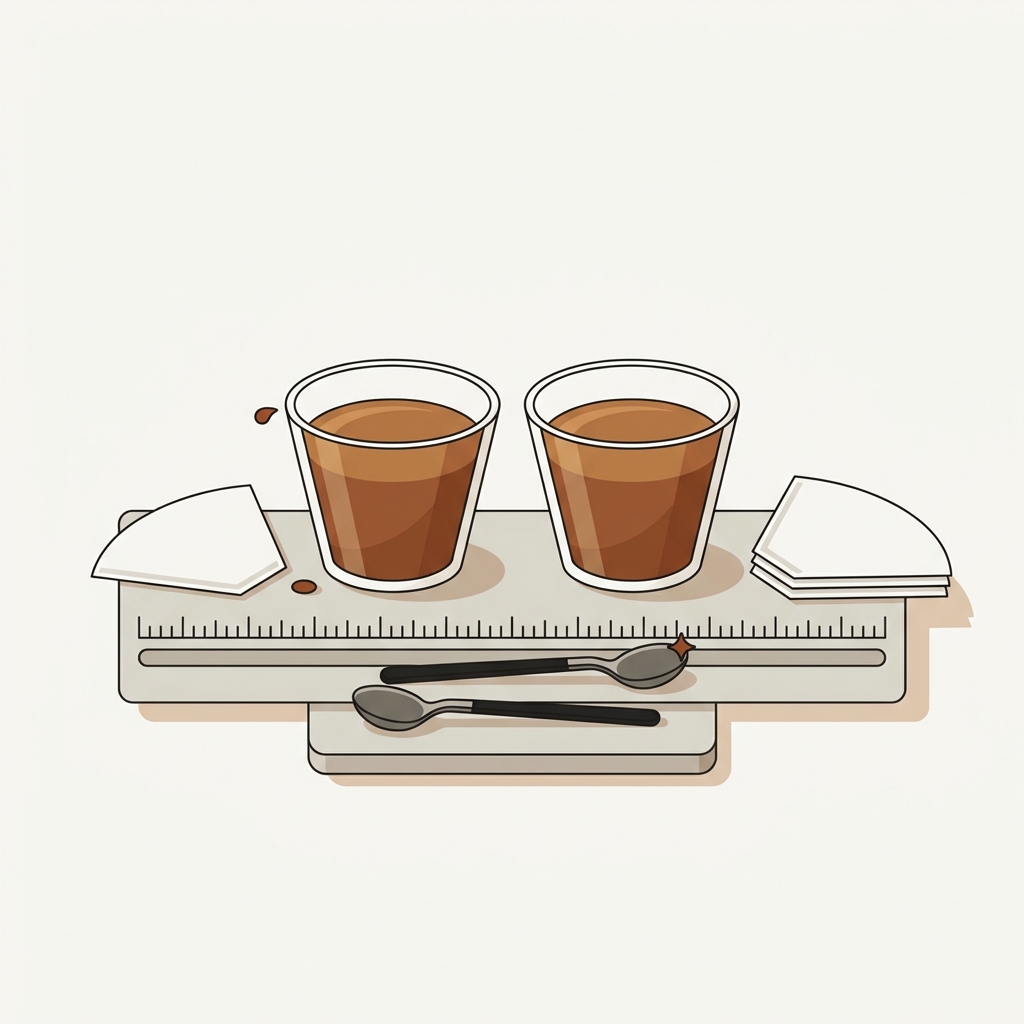
- Compare back-to-back. Brew one cup with one paper and one with two, keeping dose, grind, water, and time the same. Taste for clarity vs body.
Quick A/B checklist for testing two filters
Common mistakes to avoid
- Skipping the rinse: unbleached papers can add a papery taste without a quick hot-water rinse (Ue Coffee Roasters: AeroPress filter paper). For more on paper types, see Bleached or unbleached coffee filters.
- Forcing the plunger: extra resistance from two papers invites a slower, gentler plunge. If it’s still hard, AeroPress suggests checking your grinder and using a slightly coarser grind (AeroPress FAQ).
- Expecting zero sediment: you’ll reduce fines, not eliminate all particles. Clarity improves most with consistent grind and careful pressing (AeroPress filter guide).
FAQ
Will two filters slow extraction? They increase flow resistance, so your plunge will be slower. Keep your recipe the same at first and evaluate taste; adjust press speed before changing grind (Homegrounds: Paper vs metal).
Do I need a different recipe for metal filters? Not necessarily. Just expect more body and oils with metal compared to paper; adjust grind or time to taste (AeroPress FAQ).

Related guides
Product options for this topic
As an Amazon Associate I earn from qualifying purchases. These are researched options, not hands-on test results. Check the exact size or model, current price and availability on Amazon.
| Product option | Fit and limits to check | Retailer |
|---|---|---|
| Product imageAeroPress Original | A manual press for a compact brewing routine. It makes concentrated coffee rather than pump-pressure espresso; check mug stability and filter needs. | View on Amazon |