
The journal
Bleached or unbleached coffee filters: which should you use?
Quick verdict, a simple rinse routine, and a practical checklist to choose bleached or unbleached coffee filters for your daily brew.
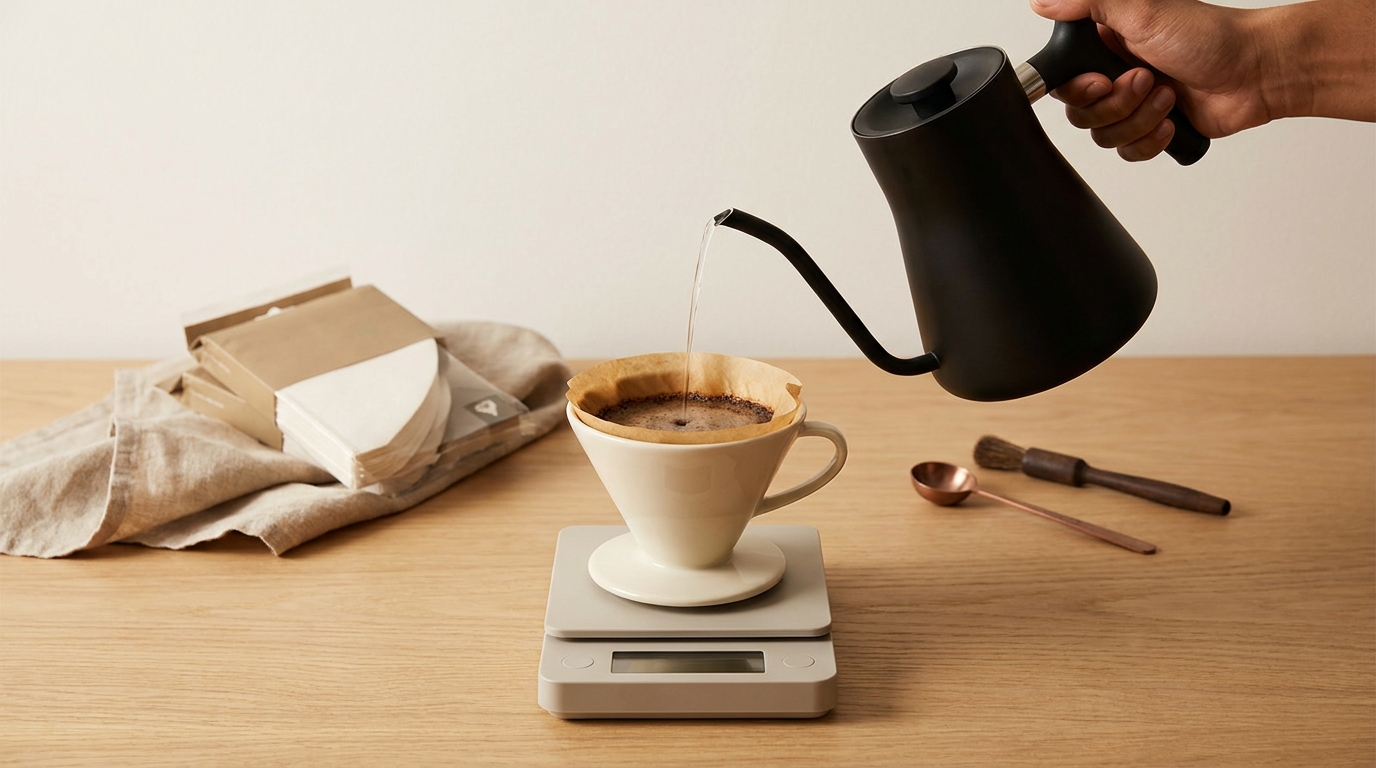
Short answer: use either. If you pre-wet your paper, taste differences are minimal. If you brew without rinsing and are sensitive to papery notes, bleached filters are more likely to taste neutral out of the box. Unbleached filters are less processed and work just as well once rinsed. Both are safe to brew with when made by reputable brands (https://driftaway.coffee/all-about-pour-over-filters/, https://www.greenplantation.com/a/bleached-vs-unbleached-coffee-filters?srsltid=AYCX9vJ0BjReZahnbOgoH2czlA02hpKdf8voyY3kQM_Eh5PXingaveVa).
What these filters are and how they differ
Color comes from a whitening step, not different pulp
Paper is naturally brown; bleached filters are whitened during manufacturing, while unbleached filters keep the tan color (https://driftaway.coffee/all-about-pour-over-filters/). Many modern filters in the US and EU are whitened with oxygen or hydrogen peroxide processes, and the old dioxin concern linked to past chlorine methods does not apply (https://www.greenplantation.com/a/bleached-vs-unbleached-coffee-filters?srsltid=AYCX9vJ0BjReZahnbOgoH2czlA02hpKdf8voyY3kQM_Eh5PXingaveVa). If environmental impact matters to you, look for oxygen-bleached on the packaging; it’s commonly regarded as the more environmentally friendly approach among bleached options (https://driftaway.coffee/all-about-pour-over-filters/).
Taste and the simple pre-wet routine
Why you might taste paper, and how to avoid it
Unrinsed unbleached papers can add a faint papery/cardboard note to the first sips. A quick rinse removes loose fibers and reduces that flavor carryover. It also preheats the dripper, which helps stabilize brewing temperature (https://driftaway.coffee/all-about-pour-over-filters/, https://www.greenplantation.com/a/bleached-vs-unbleached-coffee-filters?srsltid=AYCX9vJ0BjReZahnbOgoH2czlA02hpKdf8voyY3kQM_Eh5PXingaveVa).
Rinse-and-brew in three steps
- Set water to your normal brew temperature.
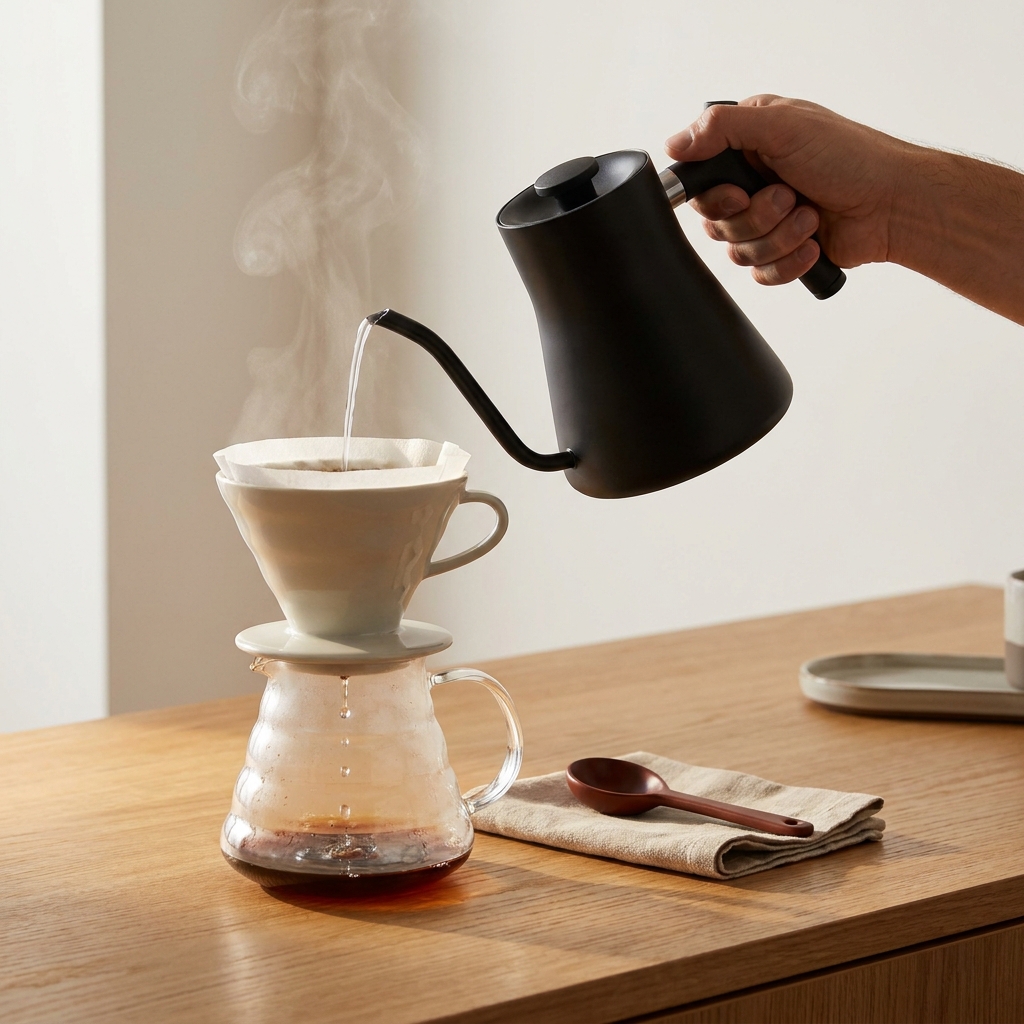
- Place the paper in the cone or basket. Thoroughly wet the filter with hot water; discard the rinse water.
- Add coffee and brew as usual. The rinse minimizes papery notes and warms the brewer (https://driftaway.coffee/all-about-pour-over-filters/).
How to choose for your routine
If you always rinse
Pick either. After a proper rinse, most people won’t notice meaningful taste differences between bleached and unbleached papers; instead, prioritize good fit and quality paper that isn’t too thin, since thin papers can alter flow rate (https://driftaway.coffee/all-about-pour-over-filters/).
If you rarely rinse and notice paper aroma
Go bleached for a neutral cup without extra steps (https://driftaway.coffee/all-about-pour-over-filters/). Some brewers do perceive a slight papery taint in unbleached filters when used dry (https://www.blindmancoffee.co.uk/pages/bleached-vs-unbleached-filter-papers).
If you prefer fewer processing steps
Choose unbleached. They skip the whitening step and are a reasonable pick on processing grounds. If you’re concerned about bleaching methods, oxygen-bleached filters are a common, lower-impact option among white papers (https://driftaway.coffee/all-about-pour-over-filters/, https://www.greenplantation.com/a/bleached-vs-unbleached-coffee-filters?srsltid=AYCX9vJ0BjReZahnbOgoH2czlA02hpKdf8voyY3kQM_Eh5PXingaveVa). If you compost, check local guidance on accepting coffee filters rather than assuming a universal rule.
Don’t forget fit, thickness and your recipe
Correct size and decent thickness matter more for extraction than color alone. Too-thin papers can speed up flow, affecting your brew time and strength; choose quality filters that fit your brewer well (https://driftaway.coffee/all-about-pour-over-filters/). For dialing your recipe, see our practical guide to a standard pour-over batch: How much coffee do you need for a 500 ml pour-over?
Water can influence flavor and equipment lifespan, too. If you’re troubleshooting scale or off-flavors, start here: Can hard water ruin a coffee maker?
Common mistakes and quick fixes
- Brewing with a dry unbleached filter: rinse first to prevent papery notes (https://driftaway.coffee/all-about-pour-over-filters/).
- Forgetting to discard the rinse water: always pour it out before adding coffee (https://driftaway.coffee/all-about-pour-over-filters/).
- Switching brands without adjusting your grind: thinner or thicker papers change flow slightly; keep an eye on brew time and adjust grind or pour rate to stay on target (https://driftaway.coffee/all-about-pour-over-filters/).
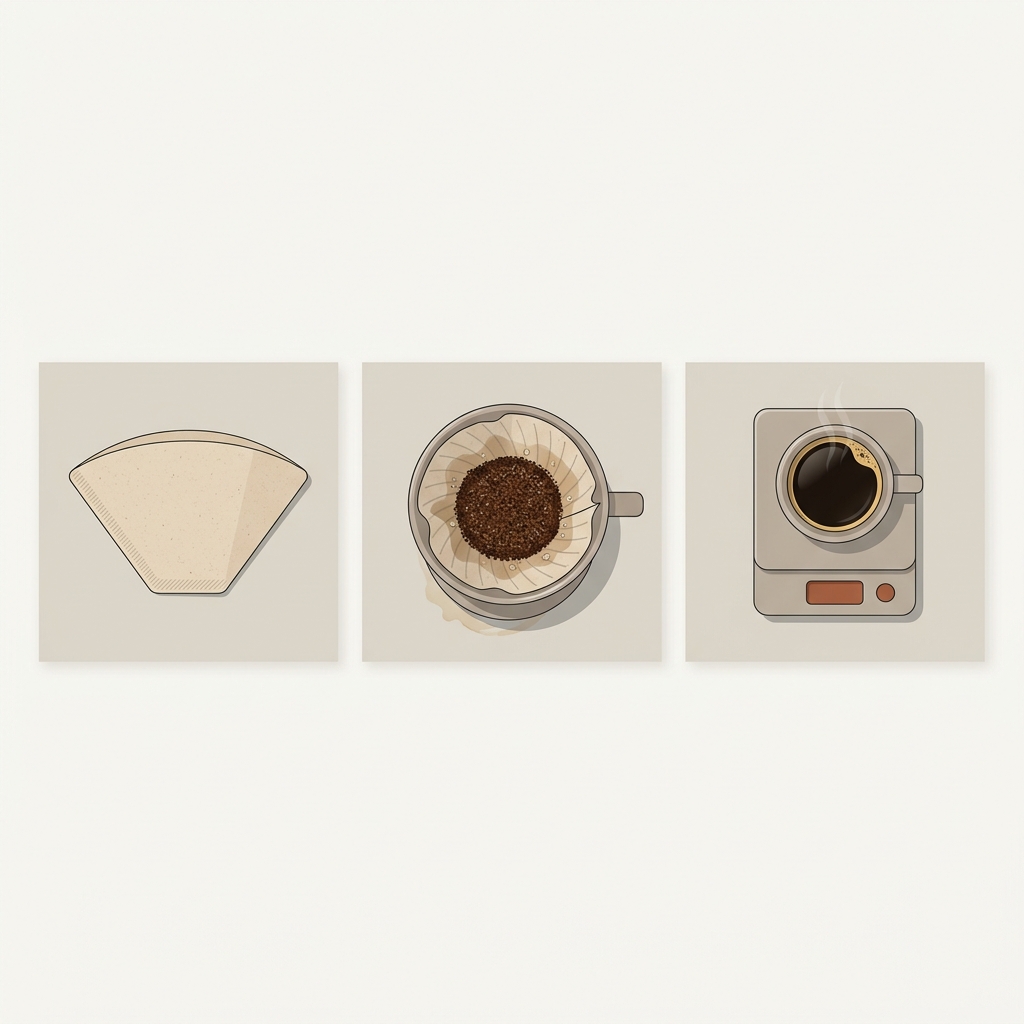
Pick the right paper for your routine
FAQ
Are bleached filters safe?
Yes. Reputable bleached papers are safe for brewing. Many modern filters are whitened with oxygen or hydrogen peroxide, and the historic dioxin concern from older processes doesn’t apply to these (https://www.greenplantation.com/a/bleached-vs-unbleached-coffee-filters?srsltid=AYCX9vJ0BjReZahnbOgoH2czlA02hpKdf8voyY3kQM_Eh5PXingaveVa). Driftaway also notes that bleached filters don’t affect taste (https://driftaway.coffee/all-about-pour-over-filters/).
Do I need to rinse bleached filters?
Rinsing is still a good idea to preheat the dripper and remove any residual paper aroma, but it’s less critical than with unbleached papers (https://driftaway.coffee/all-about-pour-over-filters/, https://www.greenplantation.com/a/bleached-vs-unbleached-coffee-filters?srsltid=AYCX9vJ0BjReZahnbOgoH2czlA02hpKdf8voyY3kQM_Eh5PXingaveVa).
Does color affect extraction?
Not directly. Paper weight and fit influence flow more than color; choose a quality, correctly sized filter to maintain consistent brew times (https://driftaway.coffee/all-about-pour-over-filters/).