
The journal
Why use a gooseneck kettle for coffee? Control, technique and buying tips
A clear answer on when a gooseneck kettle helps, how it changes your pour, simple technique, and what to look for when buying.
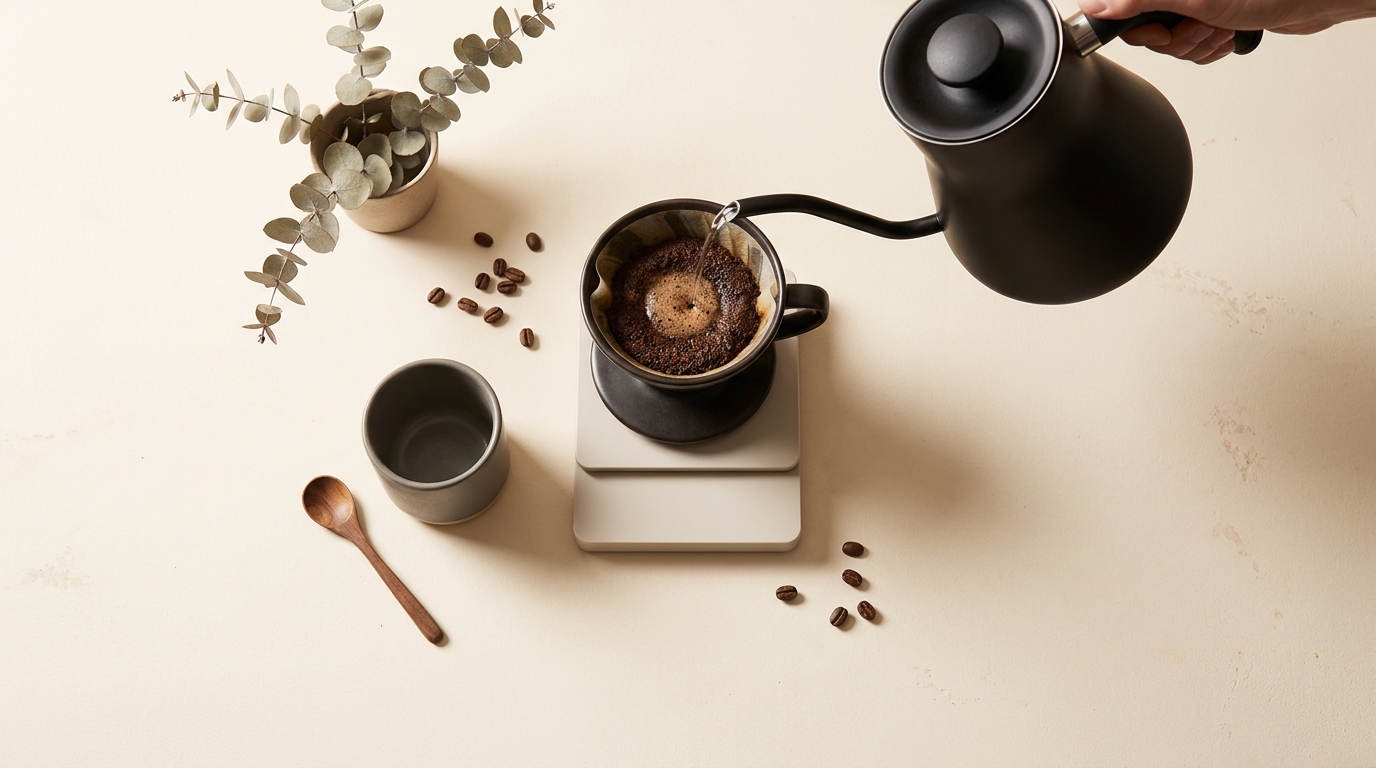
You use a gooseneck kettle for coffee to control how fast water flows and exactly where it lands on the grounds. That precision makes pour-over brews more even and repeatable; electric models add precise temperature and a hold function that keep results consistent across cups (https://www.driproast.com/best-gooseneck-kettle/, https://www.thewaytocoffee.com/best-gooseneck-kettles/).
What a gooseneck kettle is and who benefits
A gooseneck is a kettle with a long, narrow, curved spout that restricts and steadies the stream. Compared with a wide spout, it lets you pour slowly and aim the water where you want it (https://smilingcoffeesnob.com/gear/gooseneck-kettles-everything-you-need-to-know/, https://www.driproast.com/best-gooseneck-kettle/).
Who gains most: people brewing pour-over with cone or flat-bottom drippers, where water distribution strongly affects extraction. If you mainly brew immersion styles (French press, many AeroPress recipes) a gooseneck is helpful but not essential (https://www.thewaytocoffee.com/best-gooseneck-kettles/, https://www.driproast.com/best-gooseneck-kettle/).
How a gooseneck improves your pour
Flow rate and placement
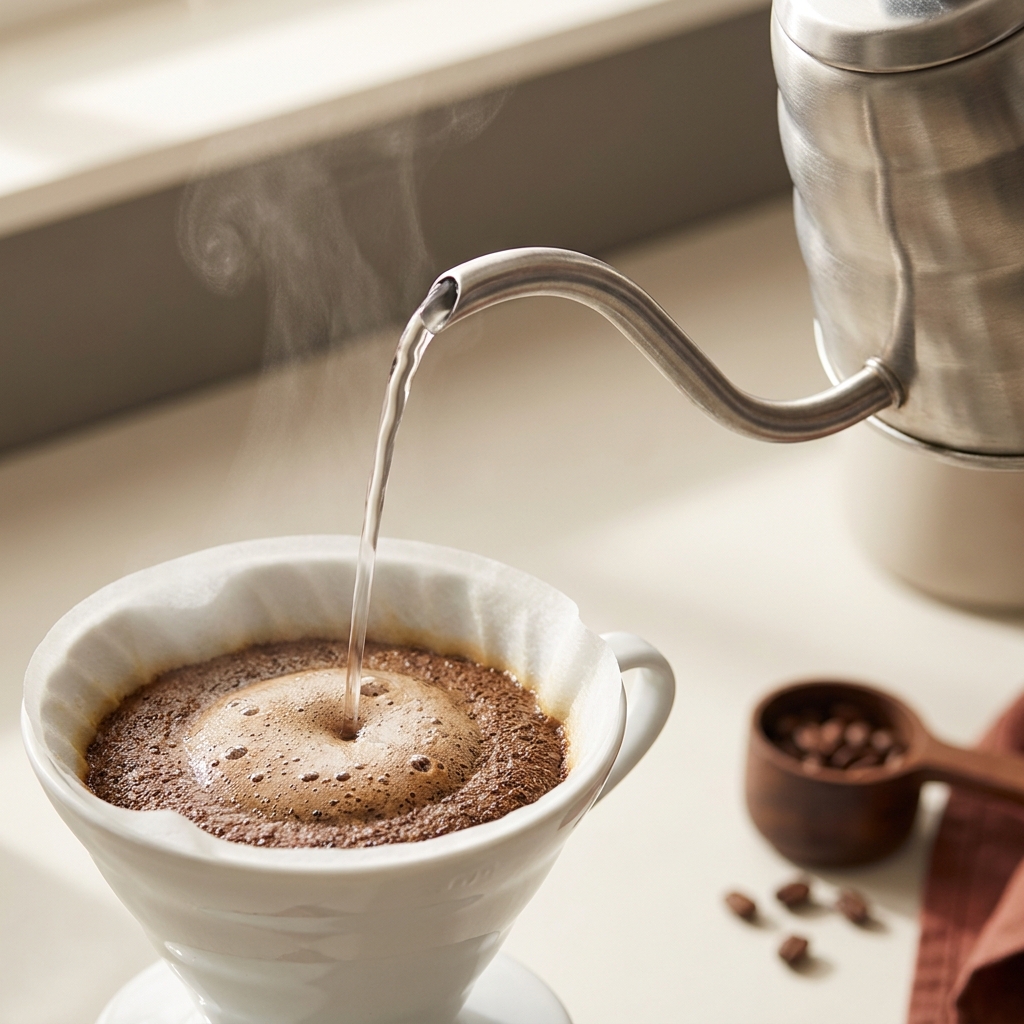
The spout’s restriction makes it easier to keep a steady, gentle flow and to target dry spots or edges without flooding the bed. As a practical benchmark, many pour-over brewers aim for roughly a 2 to 3 g/s stream to promote even extraction and avoid surges that cause channeling (https://www.driproast.com/best-gooseneck-kettle/).
Bloom and pulse control
A controlled, low-volume stream helps you wet the grounds evenly for the bloom, then add water in measured pulses with minimal agitation. That’s harder to maintain with a wide-spout kettle that tends to gush (https://www.thewaytocoffee.com/best-gooseneck-kettles/, https://www.driproast.com/best-gooseneck-kettle/).
Step-by-step: your first controlled pour
- Heat water to within the standard 195 to 205 F range so it’s at the right temperature when it meets the grounds (https://www.driproast.com/best-gooseneck-kettle/).
- Rinse the filter and preheat the brewer and cup. Add ground coffee and tare your scale. Pick a simple brew ratio to start; if you’re making about 500 ml, see our guide on dose and water amounts for that size: How much coffee for a 500 ml pour-over.
- Bloom: pour just enough water to wet all grounds evenly. Keep the kettle close to the bed for gentle flow and rotate slowly to catch any dry pockets.
- Main pour: add water in steady pulses, circling between center and edges as needed. Keep the stream thin and consistent so the slurry stays active without splashing or digging channels.
- Finish: stop before the bed runs completely dry between pulses. Let it drain; aim for a flat, even coffee bed at the end.
Quick check for steadier pour-overs
Buying tips: what to look for
Spout geometry and ergonomics
Prioritize a narrow, tapered spout that pours a smooth, surge-free stream, and a handle that feels balanced during a 2-4 minute hold. These two factors influence control more than specs on a box (https://www.driproast.com/best-gooseneck-kettle/, https://smilingcoffeesnob.com/gear/gooseneck-kettles-everything-you-need-to-know/).
Electric vs stovetop
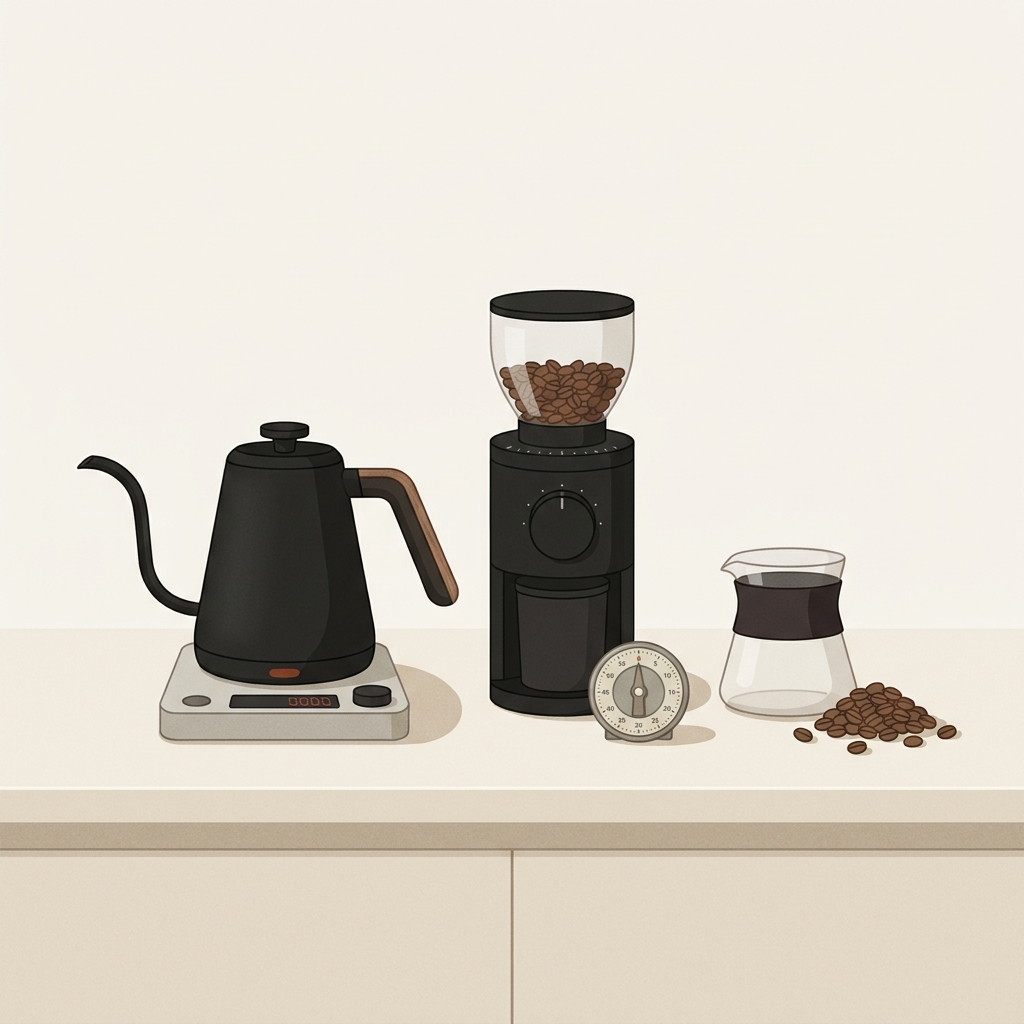
Electric gooseneck kettles heat faster and let you set and hold a precise temperature for 30-60 minutes, which improves repeatability. Stovetop versions are simpler, lighter, and more portable but require an external thermometer and more practice (https://www.thewaytocoffee.com/best-gooseneck-kettles/, https://www.driproast.com/best-gooseneck-kettle/).
Capacity and materials
Match capacity to your typical batch size; practical fill can be less than the listed maximum. Stainless steel bodies are common and durable; some stovetop handles can get hot, so check design and insulation (https://www.driproast.com/best-gooseneck-kettle/, https://smilingcoffeesnob.com/gear/gooseneck-kettles-everything-you-need-to-know/).
Common mistakes and simple upkeep
Pouring pitfalls
Rushing the pour or flicking your wrist causes uneven saturation and channeling. Keep the kettle close to the bed, use a thin stream, and pulse rather than dumping water to maintain even contact time (https://www.driproast.com/best-gooseneck-kettle/).
Care and descaling
Mineral scale shortens a kettle’s life and can affect temperature readings. Descale on a schedule that matches your water hardness using vinegar or a citric-acid descaler, and avoid submerging the kettle or base. Empty and dry after use (https://www.driproast.com/best-gooseneck-kettle/). If your water is hard, these tips help: ideal water hardness for coffee.

FAQs
Do I need a gooseneck kettle to make good coffee?
No. It’s most valuable for pour-over, where it improves water placement and consistency. For immersion brews like French press, it’s helpful but not required (https://www.thewaytocoffee.com/best-gooseneck-kettles/).
Should I choose electric or stovetop?
Electric for precision and convenience (set-and-hold temperature); stovetop for simplicity, cost, and portability. Both pour the same once your water is at the right temperature (https://www.thewaytocoffee.com/best-gooseneck-kettles/, https://www.driproast.com/best-gooseneck-kettle/).
Can I use a gooseneck kettle for tea?
Yes. Variable temperature is useful because different teas steep best below boiling; presets and hold modes make it easy to switch between tea and coffee temperatures (https://www.driproast.com/best-gooseneck-kettle/).