
The journal
Is a French press better than a percolator? A practical comparison
Clear answer and practical guidance on French press vs percolator, including metal vs glass French press considerations, taste, use cases, and simple steps.
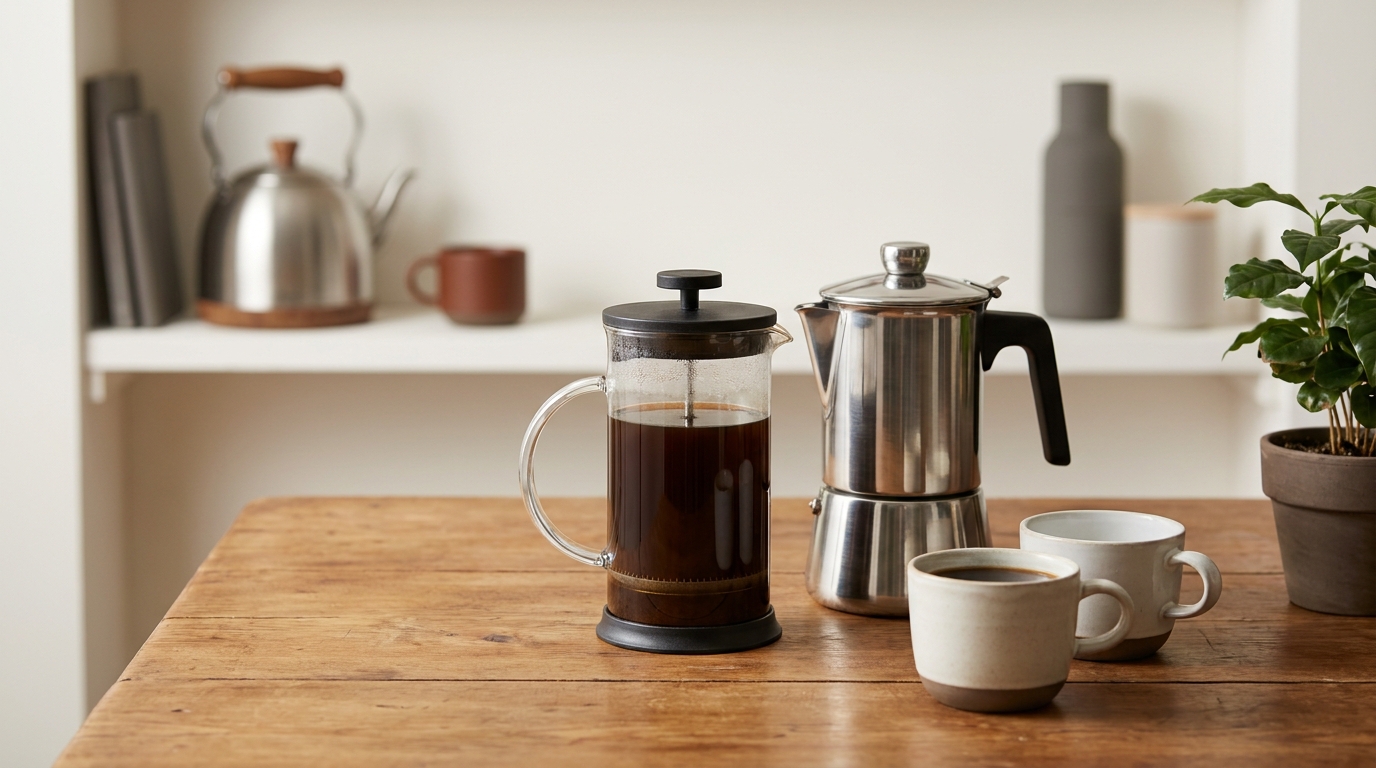
Short answer: neither brewer is universally better. Choose a French press for a fuller-bodied, oil-rich cup with straightforward timing control; choose a percolator when you want a one-pot setup that brews very hot coffee for groups or over a campfire, but be ready to manage heat to avoid bitterness (Larry's Coffee guide, COLETTI percolator vs French press).
How they brew differently
French press: immersion with a metal mesh filter
A French press steeps coarse grounds in hot water, then uses a metal mesh plunger to separate most grounds. This immersion method typically yields a rich, full-bodied cup and allows you to control steep time; common practice is around 4 minutes with water just off the boil (Larry's Coffee guide). Because there is no paper filter, more of the coffee’s oils make it into the cup.
Percolator: recirculation over heat in a single pot
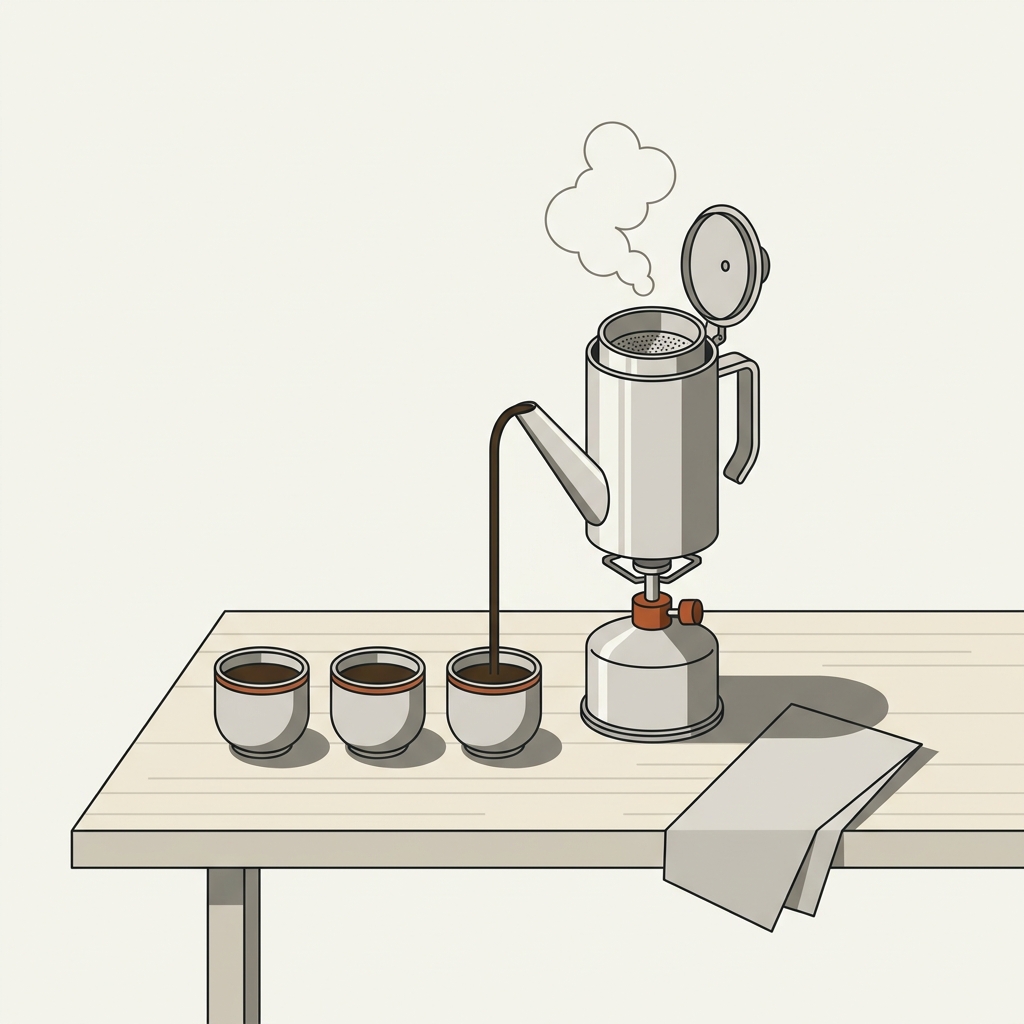
A percolator pushes heated water up a central tube so it drips over a basket of grounds, and that brewed coffee cycles back to the pot repeatedly while heat continues. It is practical for campfires and stoves and scales easily to larger batches, but requires gentle, steady perking rather than a hard boil to avoid over-extraction and bitterness (COLETTI percolator vs French press).
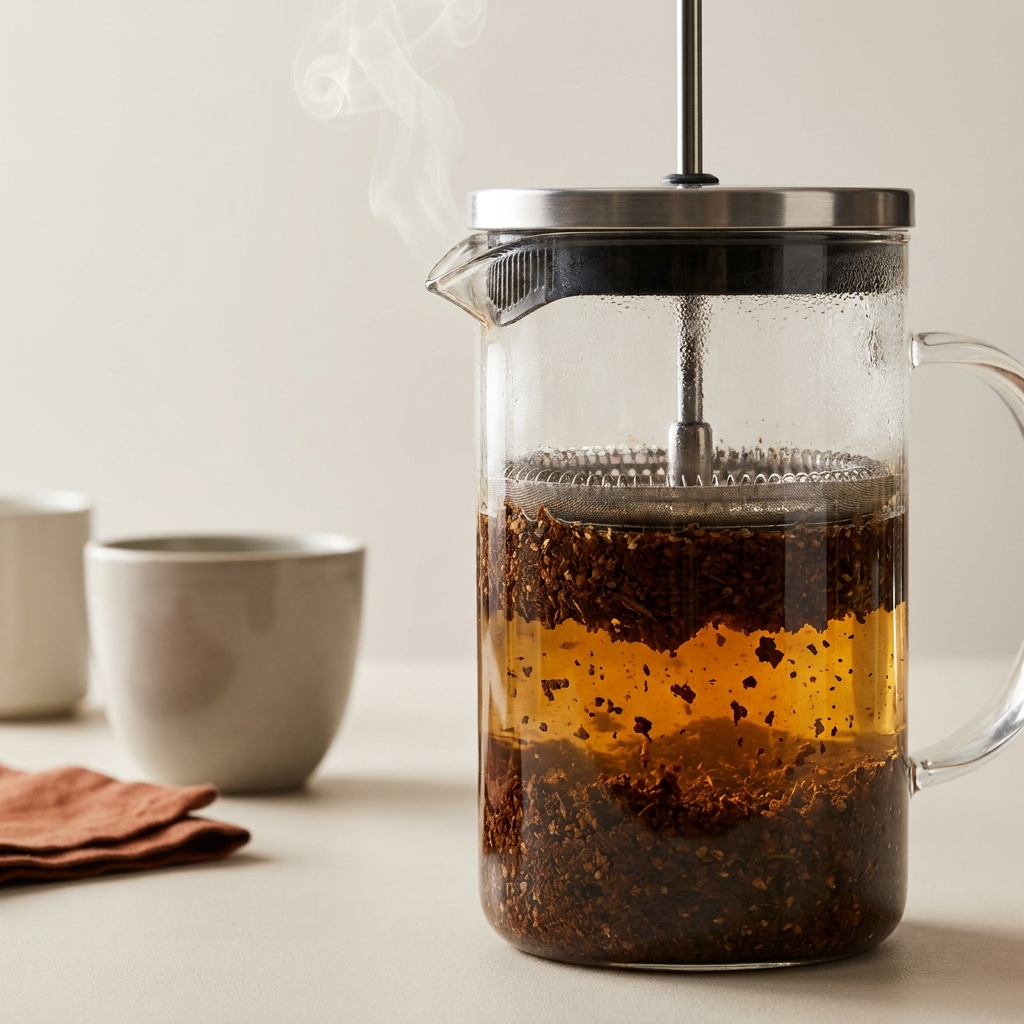
Check the actual brewer before choosing a heat source
Choose a press or percolator by its capacity, filter, care instructions and intended use. A stovetop or outdoor-rated percolator is different from an electric model: use only the heat sources permitted by its manufacturer. A general recommendation for camping does not mean that every percolator can go on a stove or campfire. For French presses, compare actual weight and capacity rather than assuming the body material determines them.
Taste, grind and timing
- Flavor profile: French press cups are typically full-bodied with natural oils and can include some fine sediment. Percolator coffee trends bold and very hot; if allowed to boil hard or run too long, it can taste bitter (Larry's Coffee guide, COLETTI percolator vs French press).
- Grind and control: Both methods favor a coarse, even grind. For the press, time the steep (about 4 minutes) and decant promptly. For the percolator, reduce heat as soon as a steady, gentle perk starts and stop when desired strength is reached (Larry's Coffee guide, COLETTI percolator vs French press).
Concerned about grit in French press? See our focused tips to reduce sediment: How to avoid sediment in French press?
When each is the better pick
Pick a French press if
- You want a richer body and oil-forward cup with simple timing control.
- You already heat water separately and prefer consistent, repeatable results at home (Larry's Coffee guide).
- You value durability and warmth-in-cup: consider a stainless, double-wall press for better heat retention (WIRED French press roundup).
Pick a percolator if
- You need a single pot that heats and brews on a campfire or stove.
- You often serve several people at once and want very hot coffee.
- You're comfortable managing heat to keep the perk gentle (COLETTI percolator vs French press).
Quick how-tos for a better cup
French press (glass or metal)
- Use a coarse grind. Heat water to just off boiling; aim for hot but not rolling boil. If you want a deeper dive on water temperature, see The ideal water temperature for brewing coffee.
- Start a 4-minute timer as you pour. Stir to wet all grounds, then place the lid on top (Larry's Coffee guide).
- Press slowly and decant promptly to avoid continued extraction.
Percolator
- Use coarse grounds and cold water. Assemble basket and stem.
- Heat until you see a steady, gentle perk, then lower the heat; avoid a hard boil.
- Stop when strength tastes right and remove from heat to prevent bitterness (COLETTI percolator vs French press).
Choose your brewer with confidence
FAQ
Will a French press leave grounds in my cup?
Some fine sediment is common because a metal mesh does not catch the smallest particles. A coarser, even grind and careful pouring can minimize it (Larry's Coffee guide). See our tips: How to avoid sediment in French press?
Can a percolator make bitter coffee?
Yes, if you let it boil hard or run too long. Aim for a steady, gentle perk and pull it from heat once strength is reached (COLETTI percolator vs French press).