
The journal
How to avoid sediment in French press? Practical steps for a cleaner cup
french press coffee sediment explained: simple grind, plunge and filtration steps to cut fines and get a cleaner cup without losing desired body.
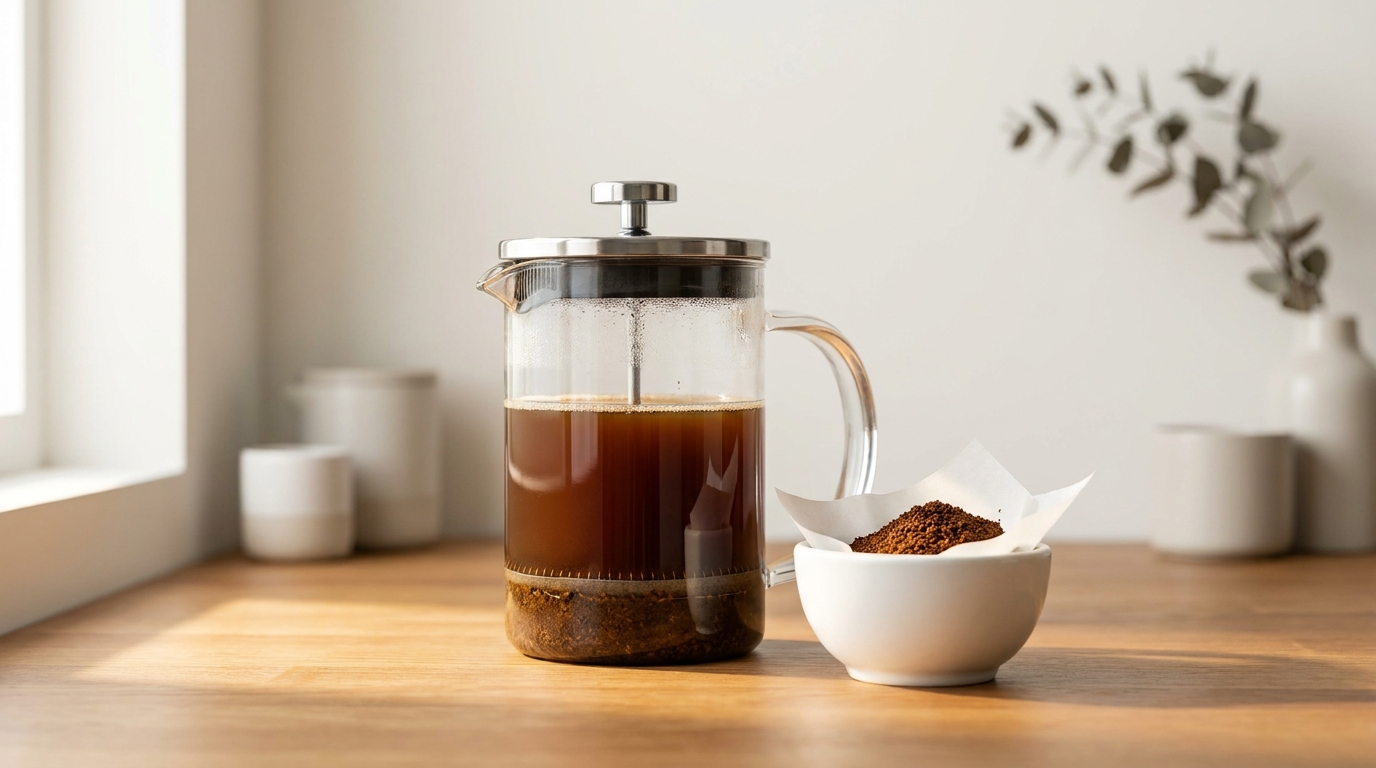
Why French press coffee has sediment: causes and what to expect
The single clearest source of french press coffee sediment is fine particles, often called fines, that arise when coffee is ground and that a metal mesh cannot fully hold back. Studies and expert guides show that finer particles and a wide spread of particle sizes increase the amount of grit in the cup, so controlling how you grind is the best starting point for fewer grounds in your cup Perfect Daily Grind on grind-size distribution.
Not all sediment is the same. Some drinkers notice a layer of concentrated sludge at the bottom from ultra-fine dust, while others consider a small amount of fine grit part of the French press texture. The metal mesh filter that comes with most presses is intentionally open enough to let oils and body through, which also means it cannot catch the smallest particles National Coffee Association guidance on French press.
Quick grind-check to spot excess fines
Expect some tradeoff: a press brew that is very clear usually has had some of its oils or heavier body reduced, while a full-bodied press naturally carries a little more sediment. That balance is part of immersion brewing and a choice each brewer must make based on personal taste Serious Eats guide to French press.
Grind size distribution: the core way to reduce sediment
When the goal is to reduce french press coffee sediment, the most effective lever is grind-size distribution rather than simply turning the grinder to "coarse." A coarser, more uniform burr grind produces far fewer fines that can slip through the mesh and cloud the cup, an observation reinforced in recent practitioner reports Perfect Daily Grind on distribution and clarity.

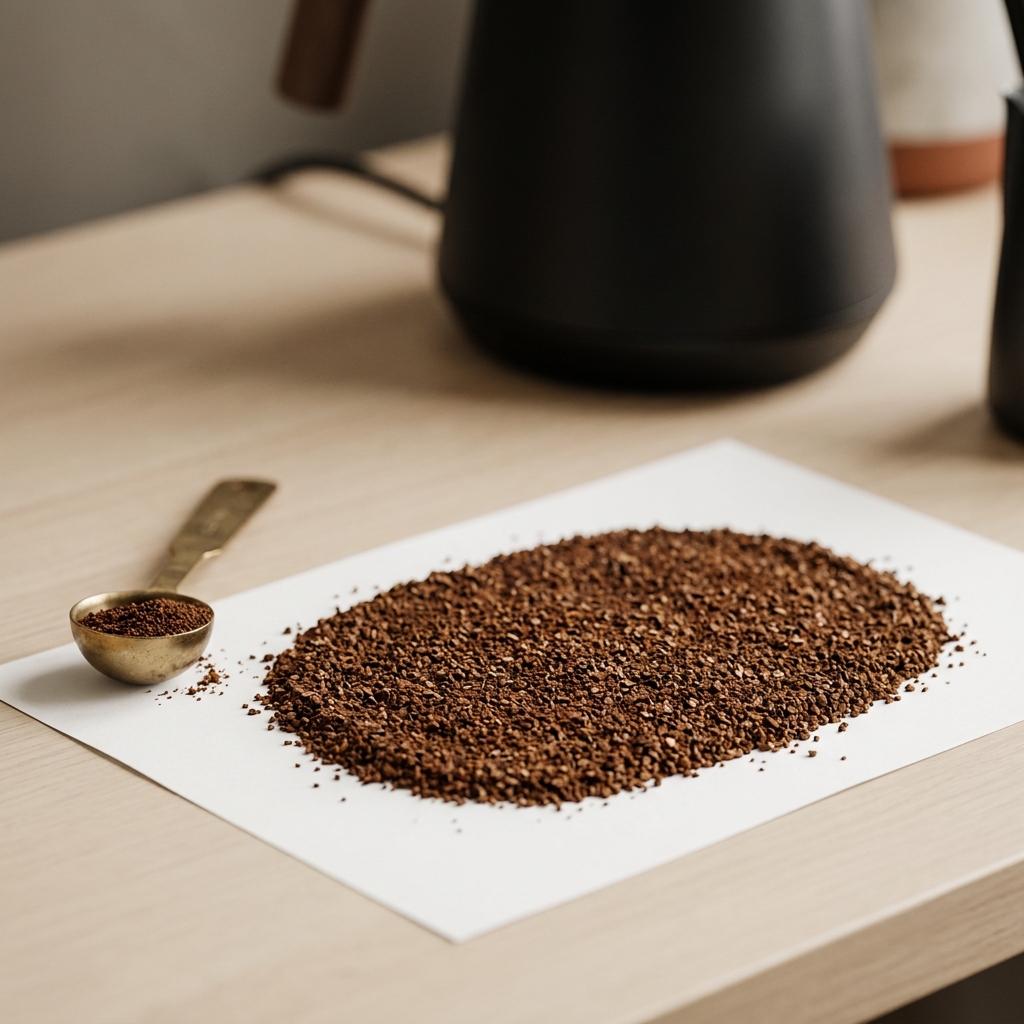
Look at your ground coffee on a piece of white paper or in a clear jar. Evenness matters: you want visibly similar particle sizes and no floury dust. If you see a noticeable amount of powder or a wide range from tiny dust to very chunky fragments, that shows poor grind uniformity and a higher chance of sediment.
Practical checks and small experiments help. Try three nearby settings toward the coarser side, brew identical batches, and note clarity and mouthfeel. Make only one adjustment at a time and write the setting down so you can compare results without guessing.
Blade grinders and older or worn burrs tend to produce more fines and uneven particle distributions. If visual checks repeatedly show a lot of dust, consider cleaning or servicing burrs and paying attention to dose consistency; often a small maintenance or calibration step reduces fines more than changing the steep routine SCA discussion on why fines matter. For more on choosing equipment see our guide to grinders or an external how-to Espresso Outlet on reducing sediment.
When you tune the grinder, do so incrementally. Large jumps can flip extraction and flavor unpredictably. Aim for steady, repeatable changes and keep notes on what each adjustment does to both clarity and body.
Brewing process: steep time, agitation and other technique choices
As a reliable baseline, many guides recommend a 4-minute immersion for French press-style brews, with minimal stirring and careful handling to avoid suspending fines in the water. That 4-minute baseline remains a practical starting point for home brewers testing clarity and extraction NCA guidance on steeping and handling. See a complementary take at Stone Creek Coffee's guide.
Avoid vigorous stirring during the steep. Each time grounds are agitated they release and suspend more fines, increasing the likelihood that particles will pass through the mesh when you plunge. Gentle folding or a single light stir to ensure wetting is usually enough.
What causes sediment in French press coffee and how can I reduce it?
Most sediment is fine particles created by grinding and uneven particle distribution; reducing fines with a uniform coarse burr grind, using gentle plunge and prompt decanting, and optionally applying secondary filtration are the main ways to reduce sediment.
Some brewers experiment between 4 and 6 minutes, especially if they have a very even coarse grind or want more extraction. If you try a longer steep, change only one variable at a time so you can tell whether grind or time is affecting sediment and taste Specialty Coffee Association notes on brewing standards.
Temperature, dose and coffee freshness interact with time and grind, so keep the other variables steady while testing. Record what you change and taste side by side to judge whether clarity, body, or extraction has improved. Use our brew ratio tool to keep dose consistent while you test.
Plunging and decanting: technique that keeps settled particles settled
How you plunge matters for sediment. A slow, steady push and stopping just above the grounds bed reduces the pressure that would otherwise push fines through the mesh and into the liquid you will serve. Gentle plunging is recommended by brewing guides as a practical technique to keep settled particles in place Serious Eats on plunge technique.
After plunging, decanting promptly into a separate carafe or cups prevents the settled grounds from sitting in the brewed liquid and gradually mixing back in. Pouring immediately reduces later sediment transfer compared with leaving coffee in the press with spent grounds.
A simple serving routine is: plunge slowly and steadily, stop before contacting the compacted grounds, pour the brewed coffee into a carafe, then serve. This short micro-routine is easy to memorize and avoids the common error of leaving brewed coffee against the grounds for several minutes.
Secondary filtration and tradeoffs: options to clarify the cup
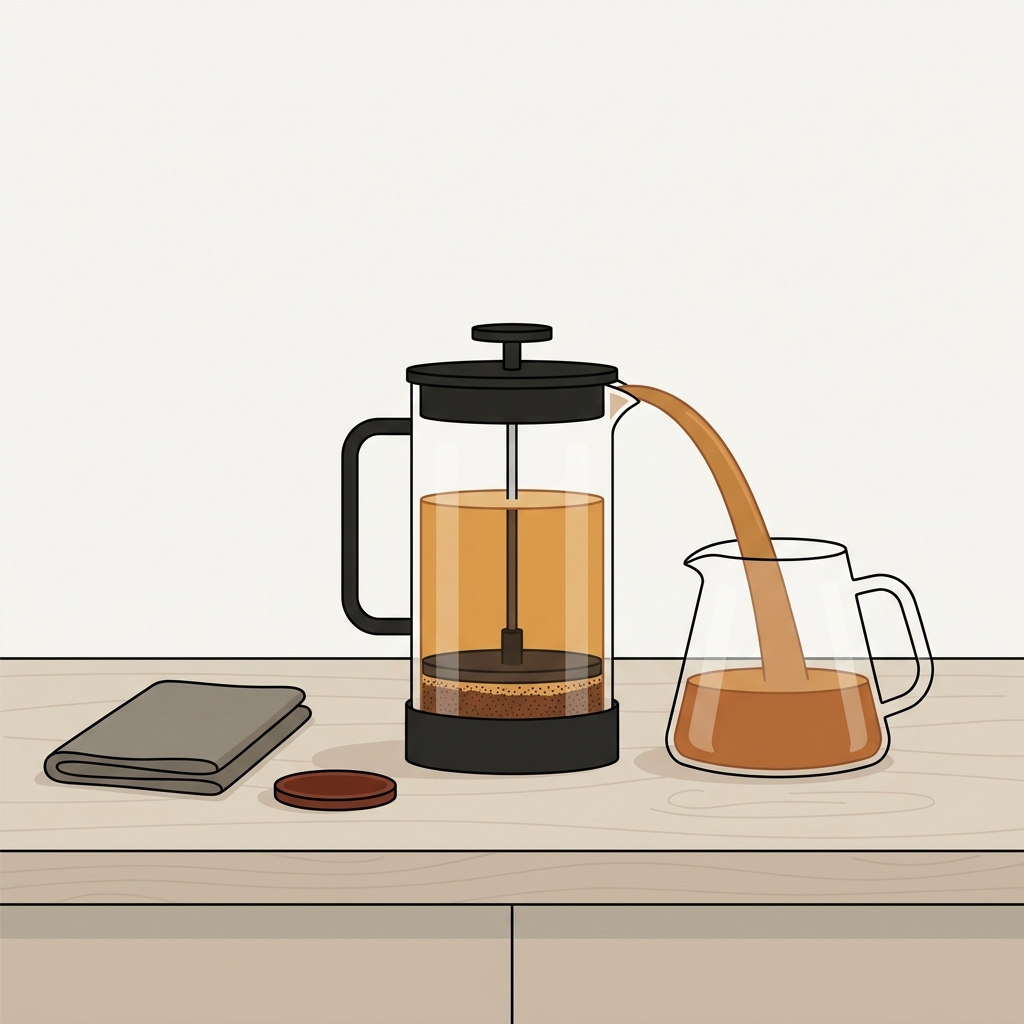
If you want a much clearer cup, secondary filtration is the most direct option. Decanting a pressed brew through a paper cone or a finer mesh dramatically reduces visible sediment, though it also removes some of the heavier oils and body that many people like in a French press Perfect Daily Grind on paper filters and tradeoffs.
Options include a paper cone or single-use filter placed over a carafe, a fine mesh filter used as a secondary strain, or a cloth coffee sock for repeated use. Each method filters more of the smallest particles than the press mesh, but each also changes the cup texture to some degree.
Choose secondary filtration when clarity matters most, for example when serving guests who prefer a grit-free cup or when brewing very light roasts where clarity highlights delicate flavors. If mouthfeel and oils are priorities, rely instead on grind tuning and careful plunging to balance clarity and body.
Testing small batches with and without a paper filter helps you judge whether the clarity gain is worth the body you lose. Many home brewers find a compromise by using a quick paper decant only for certain coffees or occasions.
Common mistakes, troubleshooting and quick routines for cleaner cups
Typical mistakes that increase sediment include grinding too fine, using a blade grinder, over-agitating during the steep, plunging hard, and leaving brewed coffee in the press with the spent grounds. Checking each of these areas in turn will usually find the root cause of an overly gritty cup Perfect Daily Grind on cases and fixes. For equipment options see our grinder shortlist.
Use this short troubleshooting checklist to diagnose a gritty brew: inspect the grind for floury dust, try a slightly coarser setting, clean or service burrs, reduce stirring during steep, plunge gently and decant immediately, and finally test a paper filter to confirm whether fines are the main issue.
Example routine for clarity: tune to a uniform coarse grind, use a 4-minute baseline steep with minimal agitation, plunge slowly and stop above the grounds bed, then decant through a paper filter when serving. Example routine for fuller body with less sediment: aim for very even coarse grind distribution, avoid secondary filters, plunge gently and pour quickly to separate liquid from grounds.
If a single change does not help, revert to the checklist and try the next item. Often small, repeatable adjustments yield the best balance of clarity and texture without major equipment changes Serious Eats troubleshooting guidance.
Frequently asked questions
Is some sediment normal in French press coffee?
Yes. A metal mesh allows oils and small particles through, so a small amount of sediment is common unless you add secondary filtration.
Will a paper filter remove the texture I like?
Yes. Paper filters clarify the cup but also capture some oils and heavier mouthfeel, so use them selectively based on taste preferences.
Does switching to a blade grinder help reduce sediment?
No. Blade grinders create inconsistent particle sizes and more fines, which usually increases sediment rather than reducing it.
Reducing sediment in a French press is mainly a matter of controlling fines, handling the brew gently and choosing whether to use a secondary filter. Small, repeatable experiments with grind and technique usually produce the clearest improvements. Try one change at a time, keep notes, and you can find a routine that preserves the press character you enjoy while cutting the grit you do not.
References
- https://perfectdailygrind.com/2024/08/grind-size-distribution-immersion-brewing-clarity/
- https://www.ncausa.org/About-Coffee/How-to-Brew-Coffee/French-Press
- https://www.seriouseats.com/how-to-make-french-press-coffee-5188386
- https://perfectdailygrind.com/2025/02/paper-filter-french-press-pros-cons/
- https://sca.coffee/research/coffee-standards
- https://espressooutlet.com/blogs/news/french-press-coffee-brewing-how-to-reduce-sediment?srsltid=AU7gw4WKY46AG23y5zUrqF1CtNKdajucu9siZRoEs8fUzTGYKrTzG5Rg
- https://www.stonecreekcoffee.com/blogs/news/how-to-make-a-perfect-french-press?srsltid=AU7gw4UtlpOcqvjsReGrzodCMWoUIfXczwP5-68XCCPZK8xqDmP0BWiU
- https://biodynamic.coffee/blogs/lifestyle/how-to-use-a-french-press?srsltid=AU7gw4ViOaEHyVgFqm4mjYBJoG81gsYmV4tMPajjQX5BI5yAimr2FAqK
- https://groundandgauge.com/guides/grinders/
- https://groundandgauge.com/tools/brew-ratio/
- https://groundandgauge.com/journal/grinder-shortlist/