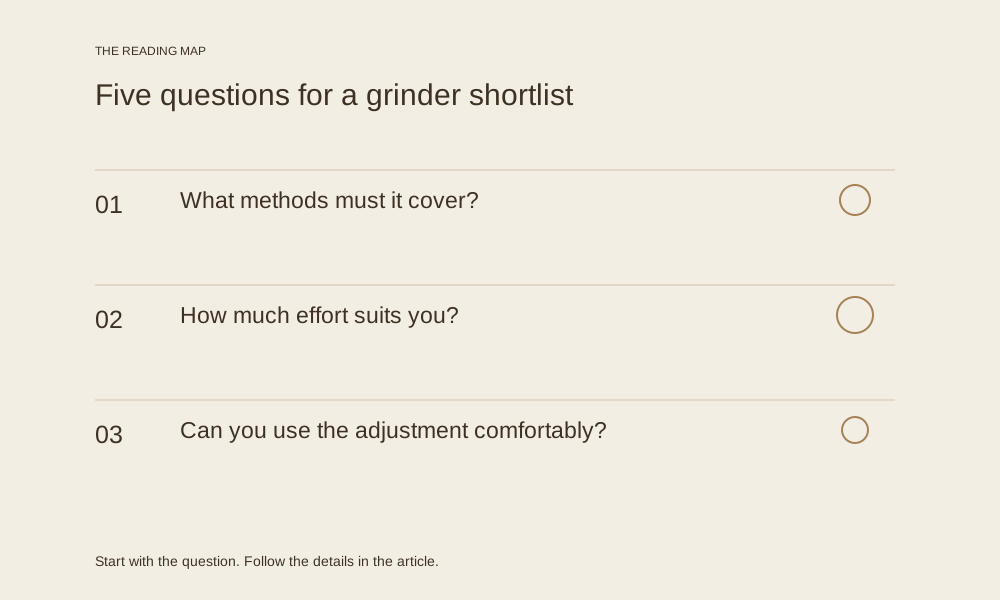
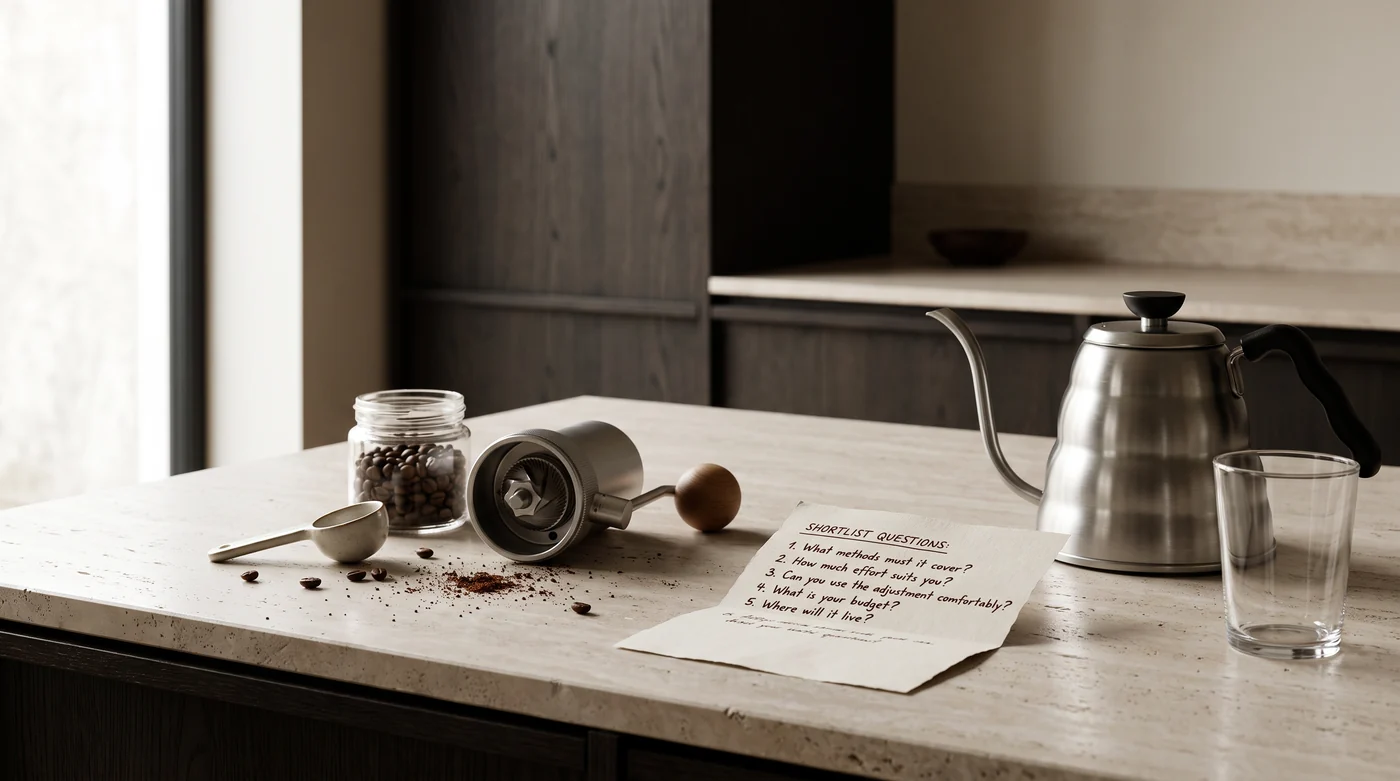
What methods must it cover?
List what you brew now and what you realistically plan to brew. Espresso capability should be checked against the exact grinder and your machine. A broad marketing claim is not a substitute for understanding adjustment range and the workflow for moving between methods.
How much effort suits you?
A manual grinder needs hand effort for every serving. An electric grinder adds a motor, a power requirement and its own noise and cleaning routine. The right tradeoff depends on serving size, grip comfort and the number of people waiting for coffee.
Can you use the adjustment comfortably?
Read how settings are changed and whether the maker gives starting guidance for your method. Look at the visibility of the dial and how you will return to an earlier setting. A large number of advertised settings alone does not establish performance.
What happens after purchase?
Check regional support, spare parts, cleaning instructions and warranty terms on the manufacturer’s site. Record the exact model and revision. Reviews of an older model should not silently become evidence for its replacement.
What evidence is missing?
Keep specification checks separate from observations such as noise, static and ease of cleaning. Those need real use under described conditions. We have not completed a comparative grinder test, so this is a selection framework rather than a ranked list of winners.