
The journal
What to adjust if your espresso puck is wet
A wet espresso puck alone does not establish poor extraction. Check taste and consistency first, then the exact basket, dose, headspace and manufacturer’s instructions.
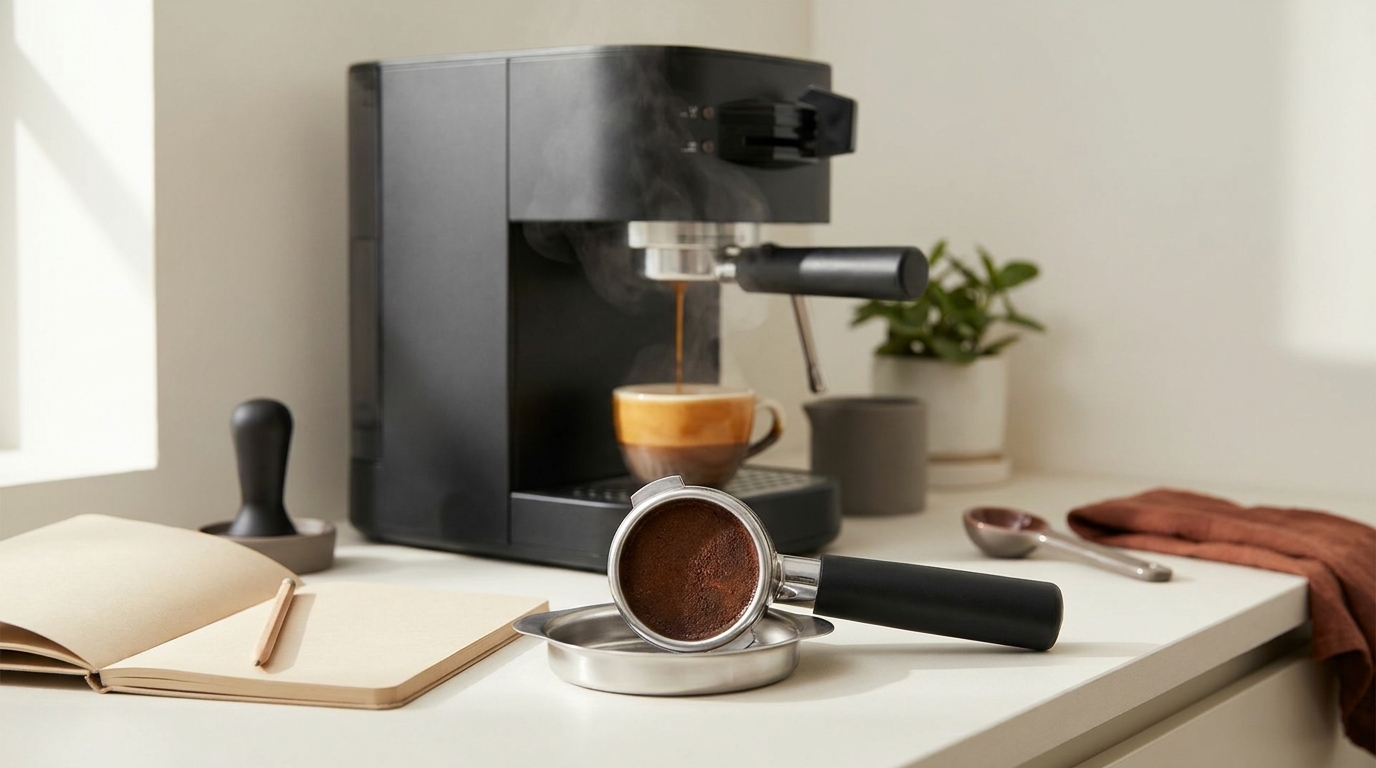
Taste the espresso before changing the recipe. A wet puck does not automatically mean the drink is badly extracted. If the coffee tastes good and the equipment is working normally, a tidier knock-out may not require an adjustment. If taste or flow has changed, check the machine’s instructions and your normal recipe one step at a time.
Tom’s Guide’s discussion of wet pucks explains that machine design and the amount of space above the coffee can affect the result. Use that as troubleshooting context, not proof of the cause of your particular shot. A photograph of the spent grounds cannot identify every extraction problem.
Confirm the basket and dose first
Check the basket’s intended dose range and the machine’s preparation instructions. Weigh the dry coffee if your recipe uses a mass. Record the dose rather than adding coffee simply to absorb the remaining water. Do not overfill a basket to chase a dry puck.
If you use a puck screen, confirm that the screen, basket and machine are compatible. The screen takes up space, so follow the maker’s headspace guidance. Do not automatically reduce or increase the dose on every setup. Remove and handle hot components only through their normal safe procedure.
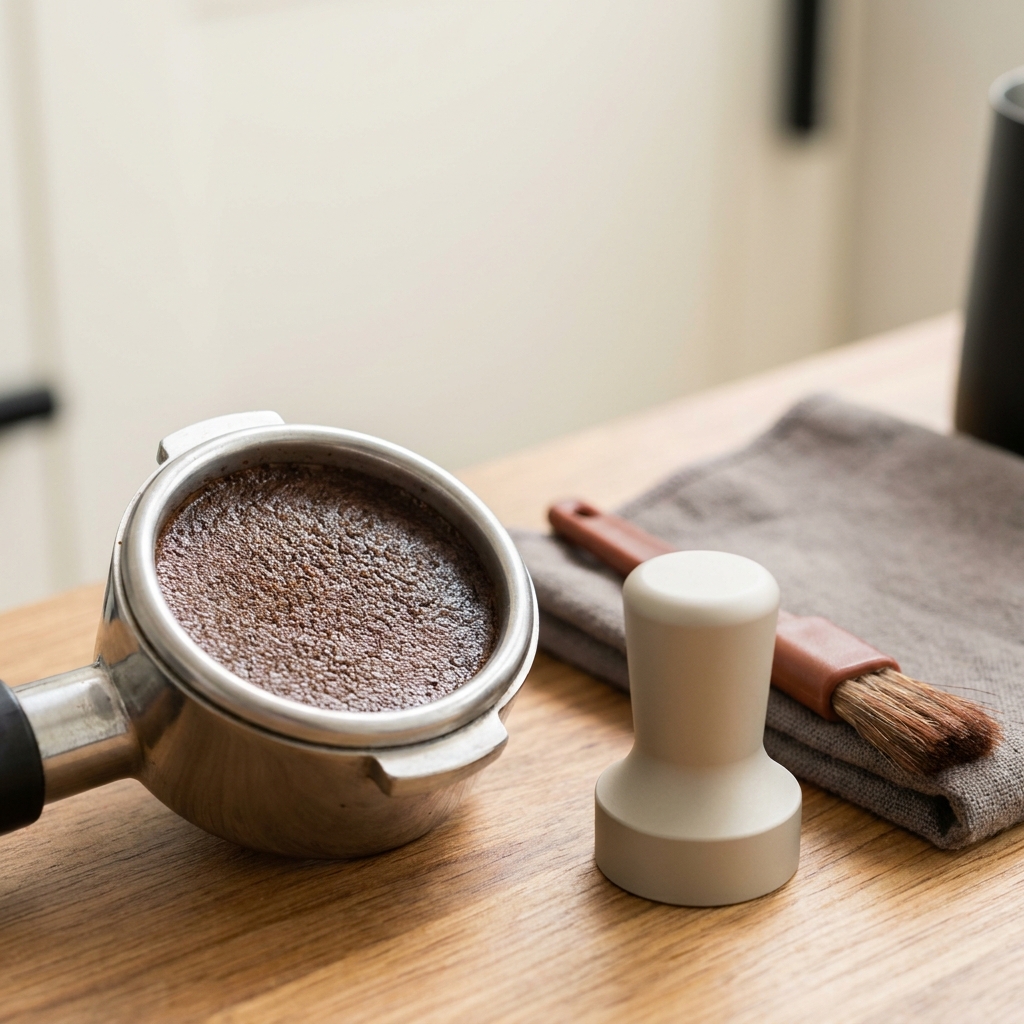
Make recipe changes for the cup
If the espresso tastes wrong, compare the shot with the recipe you normally use. Note the dry dose, beverage yield and observed flow. A slow shot or a fast shot is useful information alongside taste, but water visible on top of the puck alone does not tell you which direction to move the grind.
Change one variable and keep a short record. Follow the grinder’s instructions for making adjustments, especially when its burrs need to be running or empty for a particular change. Keep distribution and tamping level and repeatable. This guide does not prescribe a universal pressure number or a fixed three-shot sequence that diagnoses every machine.
Check routine cleaning
Use the maker’s care instructions for the basket and portafilter. Breville’s Bambino basket-care guide is an example for that equipment; it does not establish a cleaning method for every third-party puck screen. Do not assume that a screen and basket tolerate the same chemicals or soaking routine.
Look for a change from the machine’s usual behaviour. If it will not depressurize normally, leaks, or shows another fault, stop and follow the manufacturer’s troubleshooting process. Do not remove a pressurized portafilter to inspect a puck.
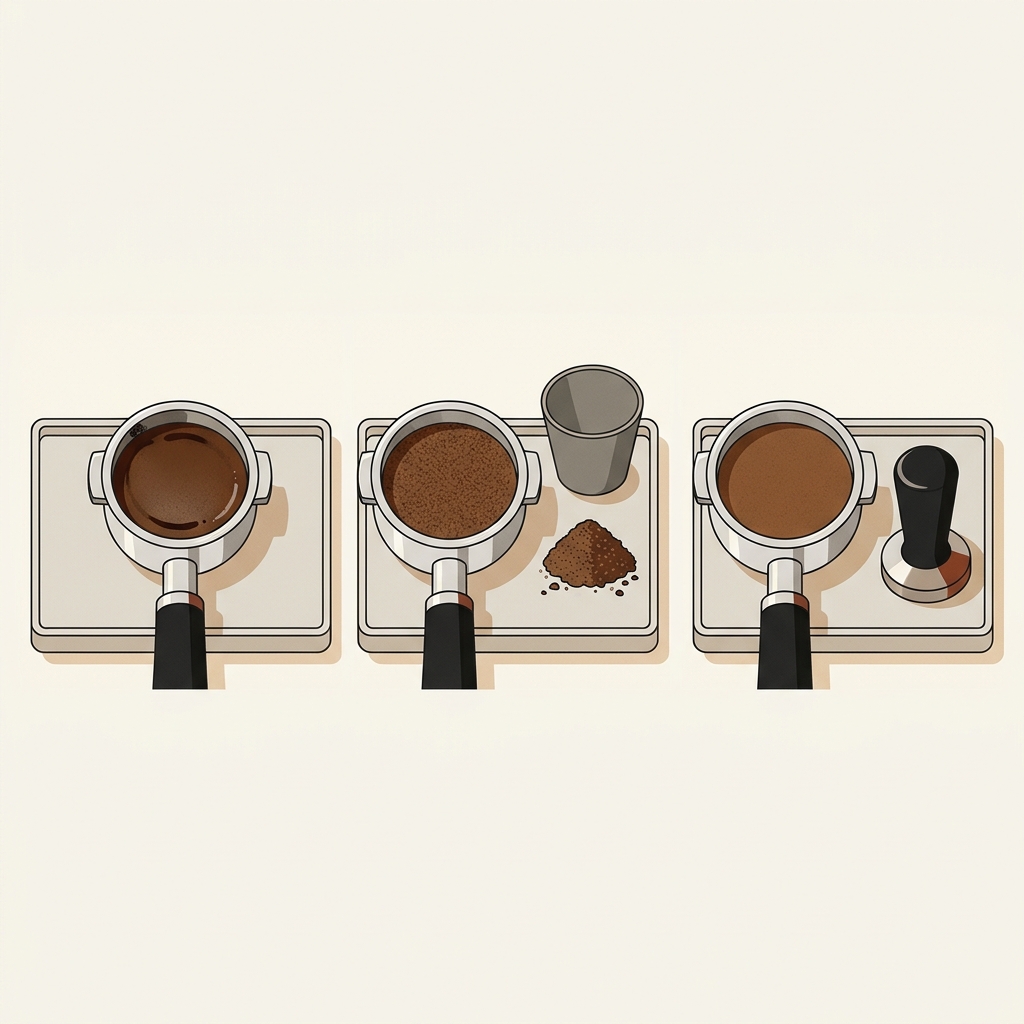
Put this into practice
Log basket, dose, yield and the end of the shot before interpreting the puck. Change one allowed variable at a time; the appearance of the used puck is not a complete test of extraction quality.
A taste-first wet-puck check
What should I tell support or my coffee supplier?
Describe the machine and basket, the coffee, your dry dose and beverage yield, and what changed. Mention whether the puck is wetter than usual or has always looked this way. If the drink tastes good, say that too. These observations are more useful than treating dryness as the sole target.
For preparation technique, see what a WDT tool does. Use the tool only as intended; adding more preparation steps is not automatically an improvement.

Optional equipment for this guide
A scale can help log dose and yield consistently if it fits the machine’s tray and your workflow. It does not diagnose puck wetness or fix unsuitable basket headspace.
As an Amazon Associate I earn from qualifying purchases. These are researched options, not hands-on test results. Check the exact size or model, current price and availability on Amazon.
| Product option | Fit and limits to check | Retailer |
|---|---|---|
| Product imageTimemore Black Mirror Basic 2.0 scale | A scale-and-timer option for repeatable brewing. Check that its platform fits your espresso machine drip tray or brewing vessel. | View on Amazon |