The journal
Should I get 4 ounce or 6 ounce espresso cups?
Choose by the finished drink and the cup’s usable capacity, not the weight of coffee grounds. Compare both sizes, rim space, machine clearance and your milk routine.
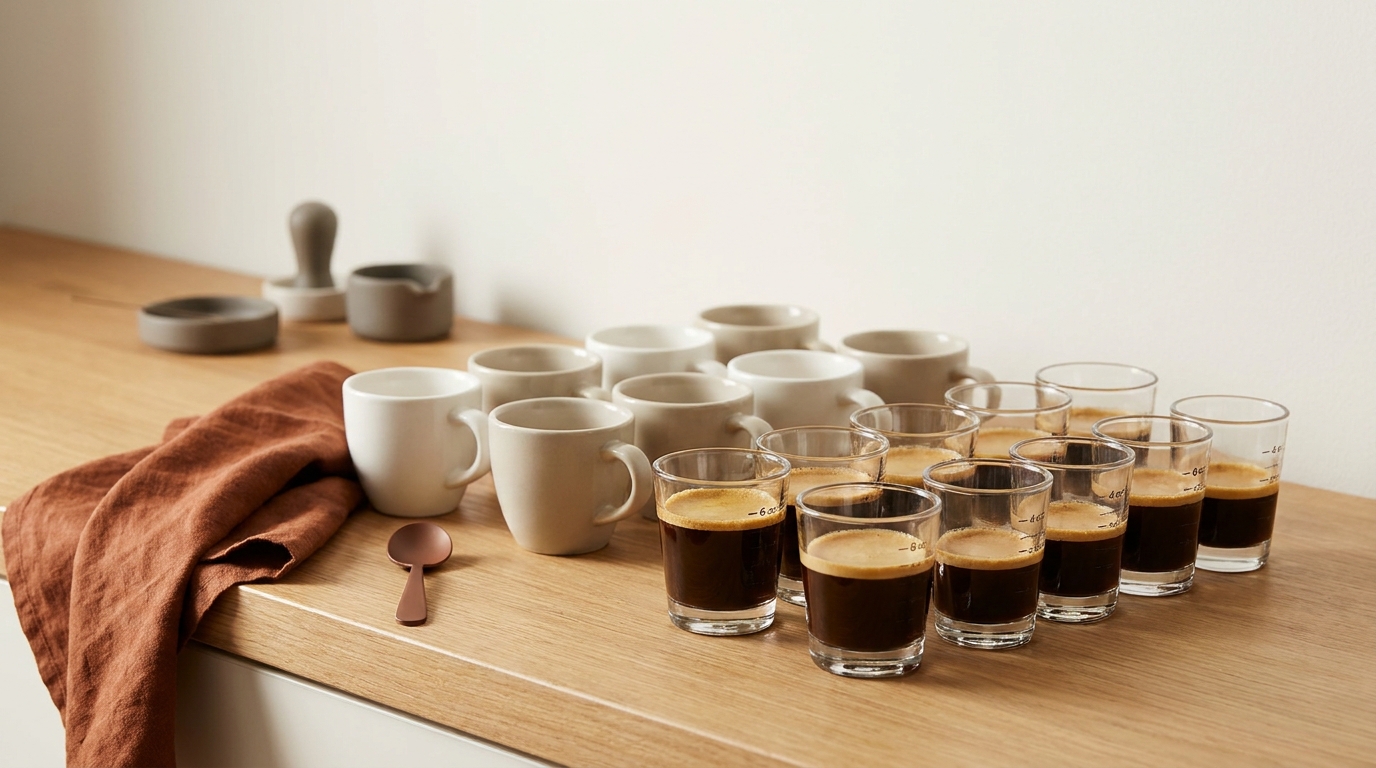
Choose the cup that comfortably holds the drink you actually make. A 4 fluid ounce cup may be enough for a straight espresso, including a double; a 6 fluid ounce cup gives more room for a larger finished drink or milk. The weight of dry coffee in your basket does not tell you the volume of the beverage, so do not choose between these cups from an 18 g or 22 g dose alone.
Compare capacity, not the word “espresso”
Check whether the seller’s ounces mean US fluid ounces and whether capacity is measured to the brim. For a rounded kitchen comparison, 4 US fluid ounces is about 120 mL and 6 is about 180 mL. These use the NIST cooking measurement equivalencies, which are approximate kitchen conversions, not a measurement of any particular cup.
You will want some space above the finished drink for carrying and stirring. A nominal capacity is therefore not a target fill level. Confirm the manufacturer’s actual dimensions and capacity rather than assuming every cup with the same label has the same shape.
Measure your normal finished drink
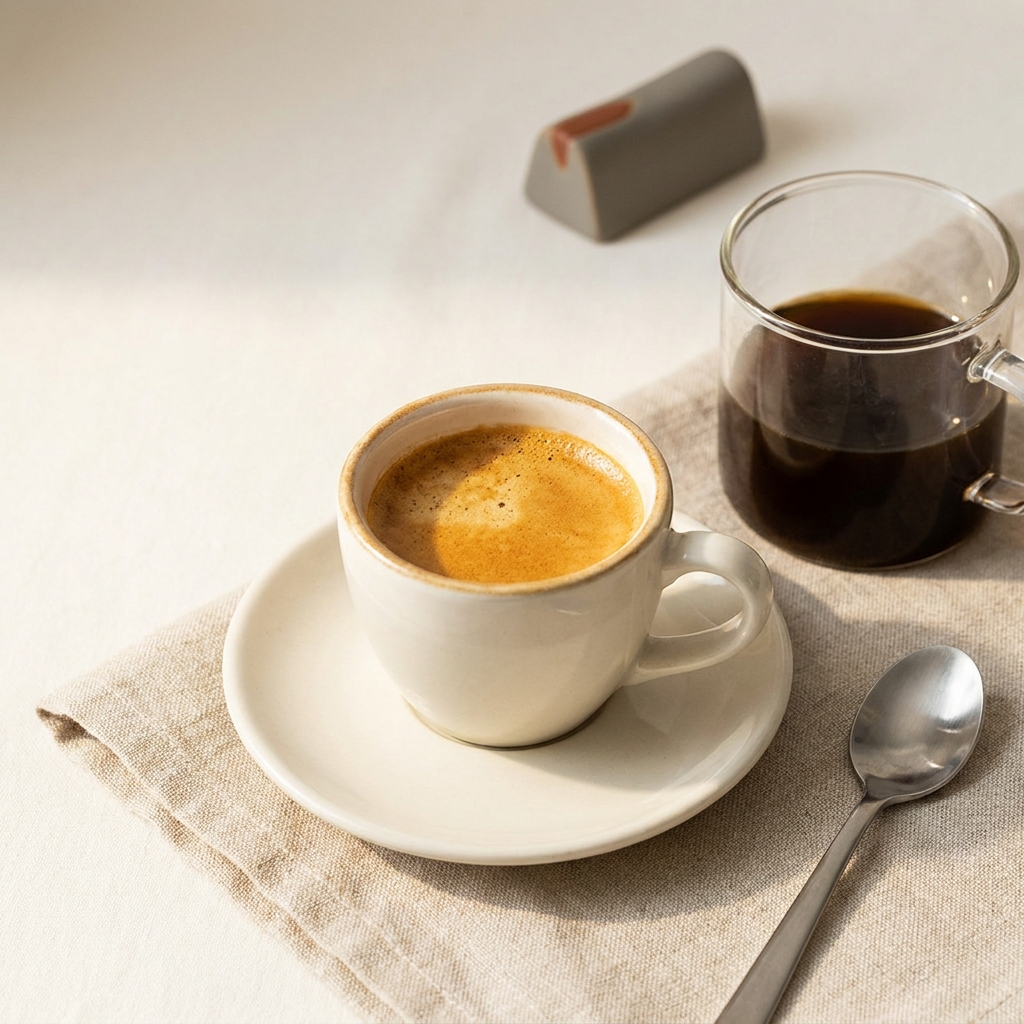
Prepare your usual espresso, including whatever milk or water you actually add, and check its volume in a suitable measuring vessel. A scale is useful for a coffee recipe, but grams and millilitres are different measurements; do not silently treat the dry dose, shot mass and cup volume as the same thing.
For an illustrative example, a finished 90 mL drink leaves some nominal space in an approximately 120 mL cup. Whether it feels comfortable still depends on the shape, crema and how you carry it. This is an arithmetic example, not a standard espresso recipe or a promise that every 4 oz cup will suit you.
When to choose each size
- Try 4 oz when your measured drink fits with comfortable rim space and you prefer a compact cup.
- Try 6 oz when your actual drink needs extra room or you want more space for your usual addition.
- Choose another size if neither works. There is no requirement to fit your preferred drink into these two options.
Check the cup against your equipment
Measure the available height beneath the machine’s spouts, including your scale if you use one. Check handle clearance, saucer fit and whether the cup is comfortable to hold. Material, wall thickness and shape are separate choices; a smaller labelled capacity does not automatically mean a lighter cup.
Put this into practice
Measure your usual drink and allow room for the way you serve it before selecting a cup. Compare the usable fill and machine clearance, not just the capacity printed on the box.
Choose a usable cup size
For recipe measurements, see our guide to espresso scales. Choose the cup around the drink you enjoy, rather than changing a working recipe just to fill a larger vessel.