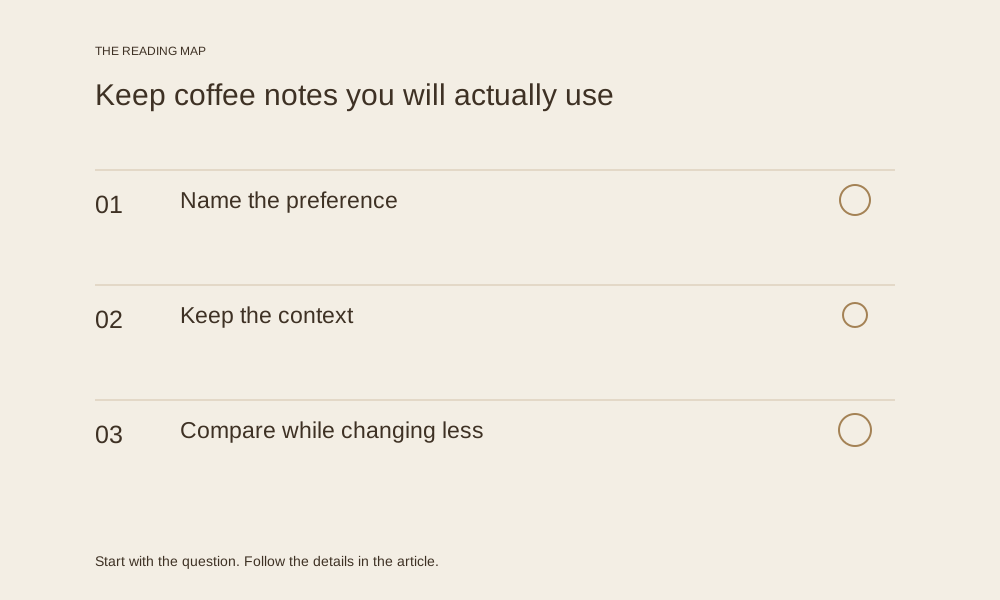
Name the preference
Write what you liked: gentle, rich, fruity, chocolate-like, light or full-bodied. You do not need to identify a rare fruit to record that you enjoyed a cup. Use the coffee finder as a starting conversation with a roaster, not as a prediction engine.
Keep the context
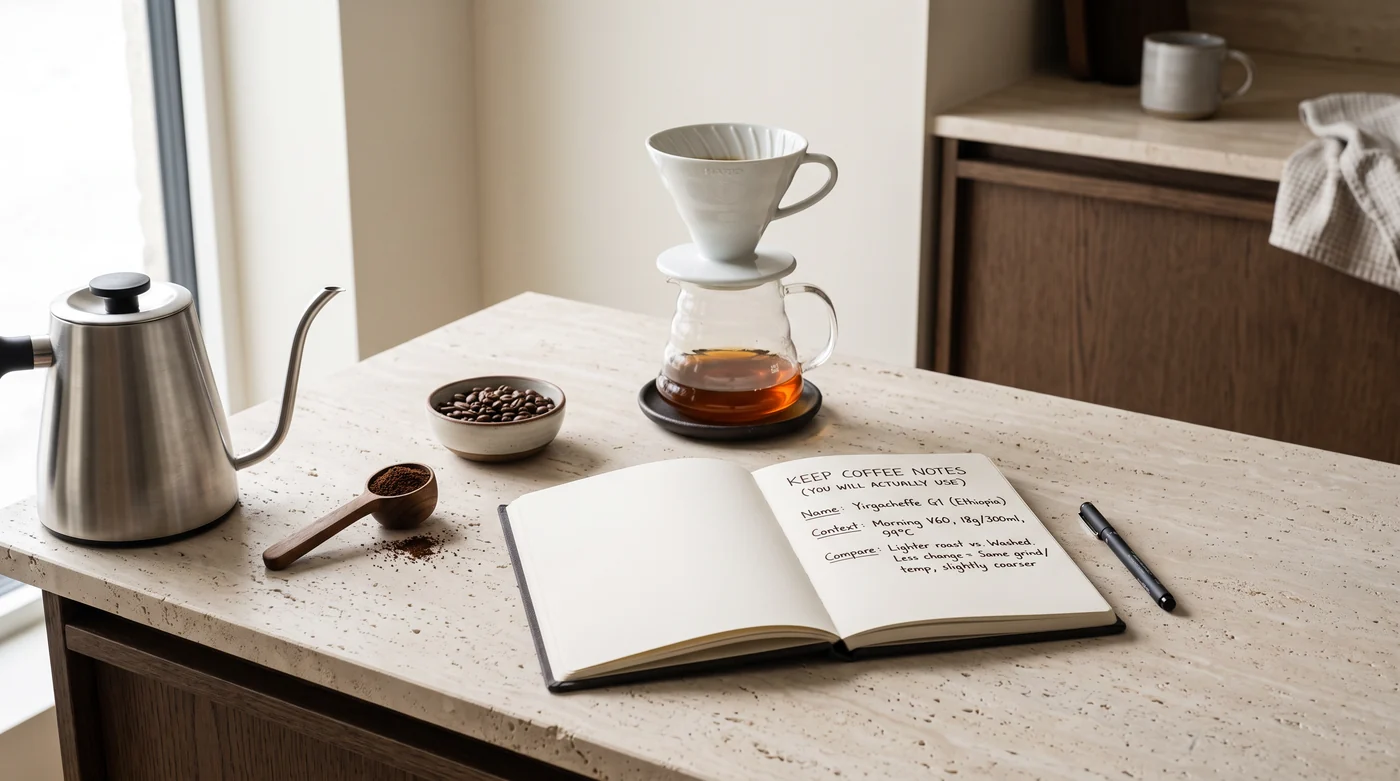
Record the bag name, brew method, water source and recipe. If you change the water between cups, mark that clearly. Otherwise a difference caused by brewing conditions may be attributed to the beans.
Compare while changing less
Try one intentional adjustment in the next brew. Leave the rest of the routine steady enough that the result is interpretable. A note such as “same coffee and water; a little coarser; easier finish” is useful even if it does not sound like a professional tasting sheet.
Shop from a description
Tell a roaster how you brew, whether you add milk and which flavors you enjoy or avoid. Ask for a small starting quantity. Species, origin and roast labels are clues, but none alone guarantees a particular cup in your kitchen.